The Largest Decline Since President Ford's Inauguration
"Tariffs Increase Uncertainty and Cause Market Turbulence"
The U.S. stock market recorded its worst performance in 50 years during the first 100 days of the 'Trump second term.'
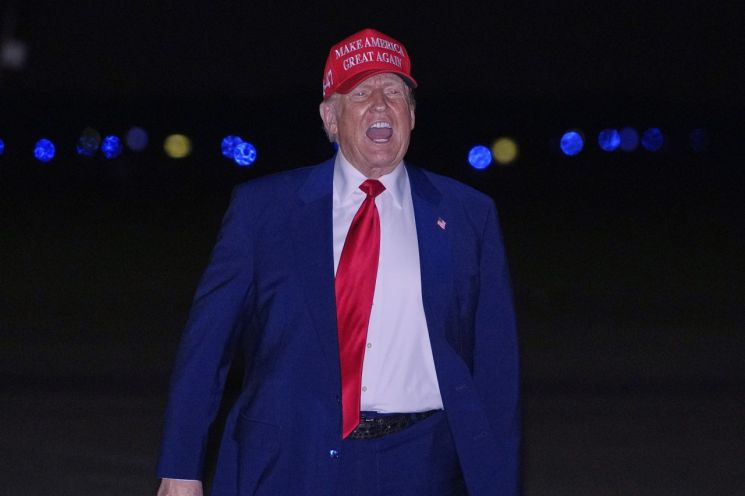
On the 29th (local time), the Financial Times (FT), citing data from financial information provider FactSet, reported that the S&P 500 index, which is centered on large-cap stocks, posted its largest decline in the first 100 days after President Donald Trump took office since the inauguration of former President Gerald Ford in 1974.
Wall Street analysts attributed the poor performance of the U.S. stock market to President Trump's aggressive reciprocal tariff policies, which disrupted global trade networks and caused turmoil in the world economy. Lisa Shalett, Chief Investment Officer (CIO) at Morgan Stanley, said, "Investors are feeling fatigued. President Trump's tariff policies have increased uncertainty and triggered market turbulence."
George Pearkes of Bespoke Investment also commented, "The current market is like a coyote running off a cliff, unaware of how far it has fallen."
According to Goldman Sachs, foreign investors held 18% of U.S. stocks at the beginning of the year, but have sold about $60 billion worth since last month. The outflow of European funds has been particularly pronounced, and both U.S. Treasury bonds and the dollar have also been affected.
Market analysts point to not only the tariff war triggered by the Trump administration but also the intensifying competition among major IT stocks as reasons behind the market decline. In particular, at the beginning of this year, Chinese artificial intelligence (AI) startup DeepSeek announced the development of a large language model (LLM) at a lower cost compared to existing big tech companies, further dampening investor sentiment toward technology stocks. While companies like Tesla, Nvidia, and Meta were noted for their high valuations until the end of last year, they have now become the focus of concentrated selling by investors, taking center stage in 'short positions.'
David Kelly, Chief Global Strategist at JPMorgan, noted, "Those who focused their investments on the Magnificent 7 (M7) found it especially difficult to avoid losses."
President Trump appears to attach little significance to the sluggish stock market following the announcement of his tariff policies. Thierry Wizman, strategist at Macquarie, said, "President Trump seems to be evaluating his first 100 days based on whether he has fulfilled his campaign promises, regardless of whether market outcomes are good or bad."
© The Asia Business Daily(www.asiae.co.kr). All rights reserved.












