Korea Energy Information & Culture Agency National Perception Survey Results
75.5% of Respondents Say "Nuclear Power Plants Are Safe"
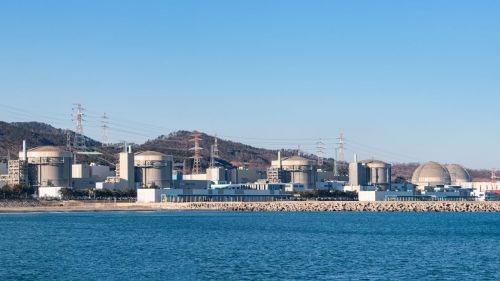
87% of South Koreans responded that nuclear power is necessary. Additionally, 75% said they perceive nuclear power plants as safe. These figures represent the highest levels recorded since the launch of the National Energy Perception Survey.
According to a telephone survey conducted on April 25, 2025, by Korea Energy Information & Culture Agency (CEO Lee Jusu) through Korea Research International, 87% of 2,000 respondents answered that "nuclear power generation is necessary." The proportion of respondents who believe nuclear power is necessary has shown a steady increase since the survey resumed in 2023, reaching its highest level in this latest poll.
Regarding the safety of nuclear power plants, 75.5% of the general public respondents said they are "safe," while 71.2% agreed with the "safety of radioactive waste management at domestic nuclear power plants." Both of these figures are the highest since the 2023 survey. Respondents cited overall trust in technology (37.6%), global operation of nuclear plants (22.6%), and thorough safety management (20.7%) as reasons for believing domestic nuclear power plants are safe.
On the continued operation of domestic nuclear power plants, 70.9% of general public respondents expressed support. Regarding the amount of domestic nuclear power generation, 60.1% said it should be "increased" compared to the current level. Nevertheless, if a nuclear power plant were to be constructed in their residential area, 51.3% said they would "oppose" it, surpassing half of respondents. Meanwhile, 46.2% said they would "support" it.
The main reason for opposition was "concerns about the risk of radiation exposure," cited by 60.0%. The main reason for support was "the need for energy self-sufficiency," cited by 48.0%.
Regarding the urgency of establishing a high-level radioactive waste disposal facility, 91.8% responded that it is "urgent," much higher than those who said it is "not urgent" (5.1%). As for the impact of overseas nuclear power projects on the domestic nuclear industry and economy, 76.4% responded "positive."
Meanwhile, when asked about the most pressing energy issues, respondents cited electricity rate stabilization (36.5%), achievement of carbon neutrality targets (24.4%), power grid stabilization, and energy security (each at 17.0%) in that order.
Regarding current electricity rates, 49.0% favored maintaining the current rates, 28.4% preferred a decrease, and 21.0% supported an increase. Respondents indicated that rate increases are needed in the industrial sector, while rate decreases are needed in the residential sector.
Regarding the feasibility of the 11th Basic Plan for Electricity Supply and Demand, finalized in February 2025, 43.6% said it was "low," while 40.4% said it was "high." The most cited reason for low feasibility (based on first priority) was a "lack of consistency in energy policy" at 43.9%.
According to the 11th Basic Plan for Electricity Supply and Demand, by 2038, the planned share of power generation by energy source in South Korea is: nuclear power 35%, renewable energy 29%, LNG 11%, coal 10%, and hydrogen and new energy 10%.
Lee Jusu, CEO of the Korea Energy Information & Culture Agency, stated, "The fact that the vast majority of the public agrees on the necessity and safety of nuclear power is highly significant. We plan to further strengthen communication with the public and foster an energy culture based on public trust."
© The Asia Business Daily(www.asiae.co.kr). All rights reserved.












