"Specific Meeting Date Still Being Coordinated"
U.S. and Japanese Finance Officials to Meet First in the U.S.
Main Agenda: Exchange Rate?... Diverging Positions Between the Two Countries
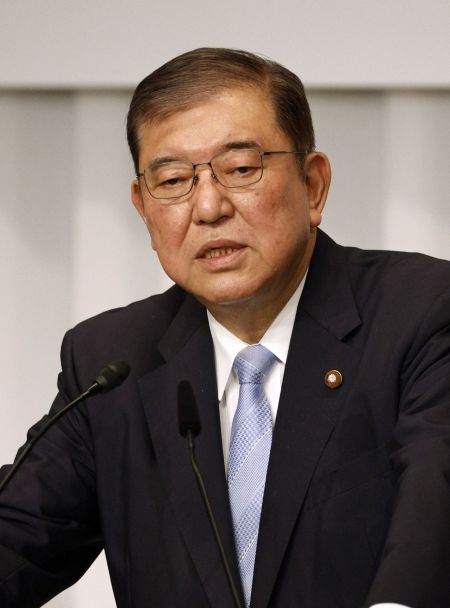
The second round of U.S.-Japan tariff negotiations is expected to begin around the 30th of next week. The specific schedule is currently being coordinated, and in Japan, May 1 is being considered the most likely date. While the Trump administration has emphasized that "the side that negotiates first has the advantage," Shigeru Ishiba, Prime Minister of Japan, has drawn a clear line by stating, "Japan will not rush into negotiations, nor does it plan to make major concessions."
According to NHK and Kyodo News on the 24th, Ryosei Akazawa, Japan's Minister for Economic Revitalization, who is in charge of the negotiations, will visit Washington, D.C. for three days from April 30 to May 2 for the second round of talks. The two media outlets reported that a senior member of the ruling party said the Japanese government had communicated this schedule to the ruling party.
The government has stated that it is currently coordinating the specific schedule with the United States. Yoshimasa Hayashi, Chief Cabinet Secretary, said at a press conference that the schedule for the second round of negotiations "has not been finalized yet and is still being coordinated with the U.S. side." However, NHK reported, "If coordination with the U.S. side proceeds, the second round of negotiations is expected to be held on May 1, Japan time."
Prior to the second round of negotiations, a preliminary meeting between the two countries' finance officials is also planned. Minister Hayashi stated that the schedule for a bilateral meeting between Katsunobu Kato, Minister of Finance, who is visiting the U.S. to attend the G20 Finance Ministers' Meeting, and U.S. Treasury Secretary Scott Besant, "is still being coordinated."
The two countries are showing differences in their positions regarding the main agenda items at the meeting between their finance officials. Kyodo News pointed out that monetary policy is expected to be a major agenda item at this meeting. Bloomberg News also reported that, before his departure, Minister Kato stated, "The goal of this meeting is to continue close discussions on the exchange rate issue."
The U.S. side, however, has presented the opposite stance, stating that there will be no discussion of the exchange rate issue. According to Bloomberg News, Treasury Secretary Besant told reporters after a speech at an event hosted by the Institute of International Finance (IIF) that "there are absolutely no currency targets" in negotiations with Japan, and that the Trump administration will not set any specific exchange rate targets. Instead, he reiterated that Japan should adhere to the long-standing agreements of the Group of Seven (G7). Akazawa, Minister for Economic Revitalization, also stated after the first round of tariff negotiations on April 16 that the exchange rate issue was not discussed.
Meanwhile, Akazawa held the first round of U.S.-Japan tariff negotiations in the United States on April 16. At that time, he met with U.S. President Donald Trump at the White House for about 50 minutes, followed by a 75-minute meeting with Treasury Secretary Besant, Commerce Secretary Howard Rutnick, and USTR Representative Jamison Greer. In the first round of negotiations, the U.S. and Japan set a goal of enabling their leaders to make an announcement as early as possible, ideally within 90 days.
© The Asia Business Daily(www.asiae.co.kr). All rights reserved.












