The European Union's Digital Markets Act (DMA) was enacted to prevent the abuse of market dominance by large platform companies and to foster a fair competitive environment by promoting interoperability. Since its implementation, positive changes have been observed throughout the platform ecosystem, and there is a growing call in Korea to encourage industrial innovation through 'healthy regulation.'
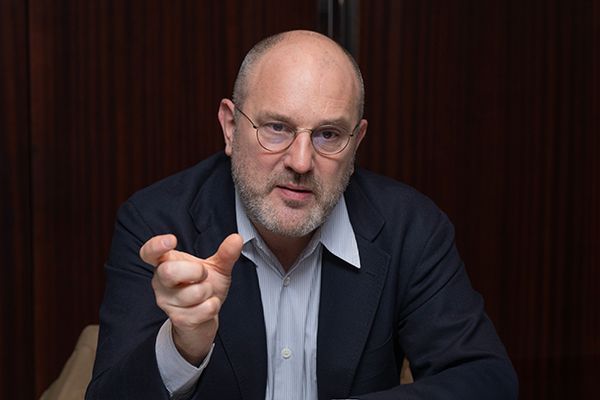
Legal Times recently spoke with Professor Alexander De Streel (pictured) of the University of Namur in Belgium, who attended a 'Dialogue with Experts' event co-hosted by the SNU Center for Competition Law and the SNU Law and Economics Research Center on April 16. The discussion focused on the key aspects of the DMA and its policy implications for Korea. Professor De Streel, who serves as the Academic Director of the EU Regulatory Center, has been deeply involved in the design and implementation of the DMA.
The DMA designates seven companies?Alphabet (Google), Amazon, Apple, Meta, Microsoft, ByteDance, and Booking.com?as 'gatekeepers' and imposes separate regulations on them. Professor De Streel introduced the European Commission's recent decision regarding Apple, explaining, "When a company that has developed a new device, such as a smartwatch, requests interoperability with Apple, Apple is obligated to analyze whether the request is technically feasible and respond accordingly."
He clarified, "This does not mean that Apple or Android must accept every request unconditionally; rather, it means that they must apply the same conditions to both their own products and those of other companies without discrimination." He added, "The DMA is a balanced regulation that can reconcile different interests."
Amid active discussions in Korea regarding a 'platform law,' some experts argue that, like the DMA, ensuring interoperability can lower entry barriers to closed ecosystems and drive new innovation. Regarding this, Professor De Streel stated, "The final decision on whether to introduce such a system rests with Korean lawmakers," but emphasized, "Interoperability and fair competition ultimately lead to 'innovation' and 'expanded user choice.'"
He explained, "Europe has acknowledged that it has fallen behind in innovation and has focused on precisely designing laws to overcome this," adding, "The most important aspects during the DMA discussions were accurately targeting the law and establishing a clear regulatory structure."
Professor De Streel also addressed concerns that excessive regulation could hinder innovation, offering a different perspective. He asked, "If regulation truly stifles innovation, why is Silicon Valley located in California, the state with the strongest regulations in the United States?" He argued, "It is not regulation itself, but 'bad regulation' that stifles innovation." He concluded, "The DMA is 'healthy regulation.' Such regulation will create a new competitive environment and establish a more fair and balanced market order."
Woo Bin, Legal Times Reporter
※This article is based on content supplied by Law Times.
© The Asia Business Daily(www.asiae.co.kr). All rights reserved.

![Clutching a Stolen Dior Bag, Saying "I Hate Being Poor but Real"... The Grotesque Con of a "Human Knockoff" [Slate]](https://cwcontent.asiae.co.kr/asiaresize/183/2026021902243444107_1771435474.jpg)














