Shared on GSA Google Drive for a Year
Accessible and Editable by Over 12,000 Employees
The floor plan of the White House was shared on the U.S. General Services Administration (GSA) Google Drive, exposing sensitive information to more than 12,000 current and former GSA employees.
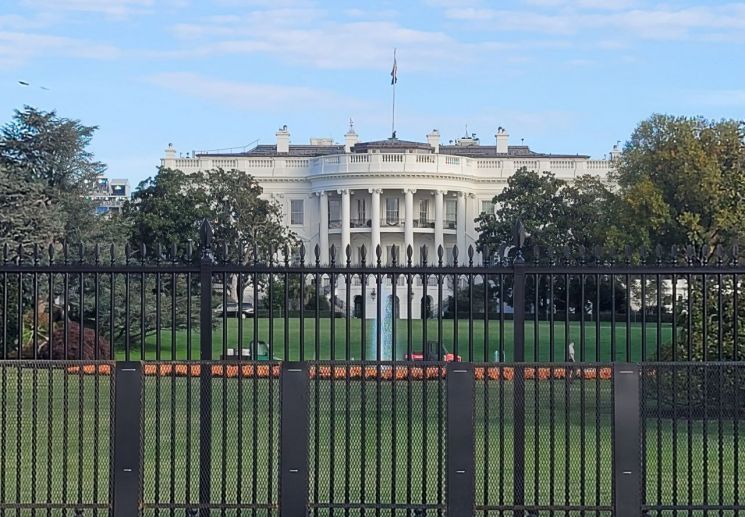 The floor plan of the White House was left unattended for a year while being shared on the U.S. General Services Administration (GSA) Google Drive. Yonhap News
The Washington Post reported on April 20 (local time) that the GSA Office of Inspector General recently discovered records of improper information management during a security audit of the agency’s use of Google Cloud services, including Google Drive.
During the investigation, the inspector general found that sensitive information, including the White House floor plan, had been left exposed for about a year and issued a written notification to the security department’s incident response team. The exposed materials included the blast-resistant door design for the White House Visitor Center, bank information of a company that supported press briefings during the Trump administration, and blueprints of the East Wing, which houses the President’s office and the First Lady’s office. These files were shared in a way that allowed anyone not only to search for them but also to edit them.
The Washington Post reported that while it is unclear whether all the information deemed "sensitive" by the GSA inspector general was classified, at least 9 out of the 15 shared files were labeled as "Controlled Unclassified Information (CUI)." CUI refers to sensitive information that does not meet the criteria for classification but still requires protection.
Steven Aftergood, a former security policy analyst at the Federation of American Scientists (FAS), pointed out that if the materials included undisclosed structures, passageways, or security devices of the White House, they could be considered classified. He emphasized, "Even if the information is not classified, it should be treated with a similar level of care."
Recently, the Trump administration has experienced a series of digital security incidents. On April 20, The New York Times reported that the U.S. Secretary of Defense shared information about military operations, including airstrikes in Yemen, in a private Signal chat room with his wife, brother, and personal attorney. His wife, Jennifer, is a civilian with no official position at the Department of Defense. While his brother and personal attorney hold government positions, The New York Times noted, "It is unclear why either of them would need to know about military strikes targeting the Houthi rebels in Yemen."
Last month, Jeffrey Goldberg, editor-in-chief of The Atlantic, revealed that he had been invited by White House National Security Advisor Mike Waltz to a Signal chat room for the Trump administration’s foreign policy and security team, where officials shared detailed attack plans against the Houthi rebels in Yemen. This led to criticism over the sharing of sensitive information via a commercial messaging app. Additionally, the use of a messenger app with a message deletion feature for sharing information raised concerns about potential violations of government record-keeping laws.
© The Asia Business Daily(www.asiae.co.kr). All rights reserved.












