"Due to Changes in Customs Regulations Requiring Formal Clearance Procedures"
Previously, Items Valued up to $2,500 Could Be Cleared with Simple Documentation
Policy Abolished for Shipments from China, Hong Kong, and Macau, but Maintained for South Korea
The fallout from the US-China tariff war, triggered by US President Donald Trump, has now spread to cargo delivery services.
According to the BBC and other outlets on April 20 (local time), international express delivery company DHL Express announced that, starting April 21, it will temporarily suspend deliveries to the United States of high-value goods exceeding $800 (approximately 1.13 million won) until further notice. DHL explained that the suspension is due to new US customs regulations requiring formal customs clearance procedures for all shipments valued over $800. The company added that while business-to-business (B2B) deliveries will continue, these shipments may also face delays. Deliveries of goods valued under $800 to businesses or consumers are not affected by this policy change.
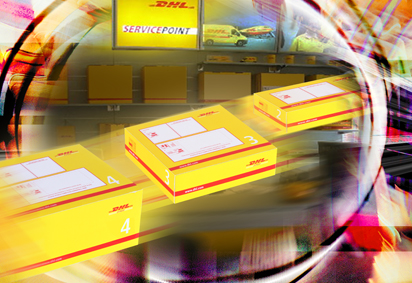 DHL Cargo. Photo by Asia Economy DB
Until now, items valued at up to $2,500 (about 3.56 million won) could be shipped to the US with only simple documentation. However, as of April 5, this threshold has been lowered to $800, and with the Trump administration's new tariff policy in effect, customs inspections have become significantly stricter. As a result, the proportion of goods entering the US that require formal customs clearance has increased substantially, leading to customs delays and, consequently, slower deliveries.
DHL stated, "We are responding around the clock as the number of formal customs clearance cases has surged," and explained, "While we are working to manage the situation, shipments valued over $800, regardless of country of origin, may take several days longer to deliver."
Separately, starting May 2, the US government will abolish the 'de minimis' exemption, which previously allowed goods valued under $800 to enter the US duty-free, and will instead impose a 120% tariff. As a result, the US plans to strengthen inspections of shipments under $800, particularly those sent from China and Hong Kong. The BBC reported that the end of the de minimis exemption is expected to deal a direct blow to Chinese e-commerce companies such as Temu and fast fashion retailer Shein, which have been exporting low-cost goods produced in Chinese factories to the US. Both Shein and Temu have stated that they will raise prices due to recent changes in global trade rules and tariffs. However, South Korea is not affected by this measure, and the de minimis exemption will continue to apply to shipments under $800.
The Trump administration claimed that "many Chinese shipping companies are concealing the true contents of shipments sent to the US by hiding illegal substances and engaging in fraudulent shipping practices." The administration further stated that the new customs measures are intended to completely block the illegal inflow of Chinese-made drug precursors. In response, China emphasized, according to the BBC, that the proliferation of drugs such as fentanyl is "entirely an American problem" and insisted that it enforces the world's strictest drug policies.
© The Asia Business Daily(www.asiae.co.kr). All rights reserved.











