Trump Scoffs at EU's 'Zero-for-Zero' Proposal
U.S. Firm on Tariff Withdrawal... Maintains Ambiguous Stance
EU Draws Red Line on U.S. Demands for Food and Digital Regulations
Both Sides Share Concern Over Global Steel and Aluminum Oversupply
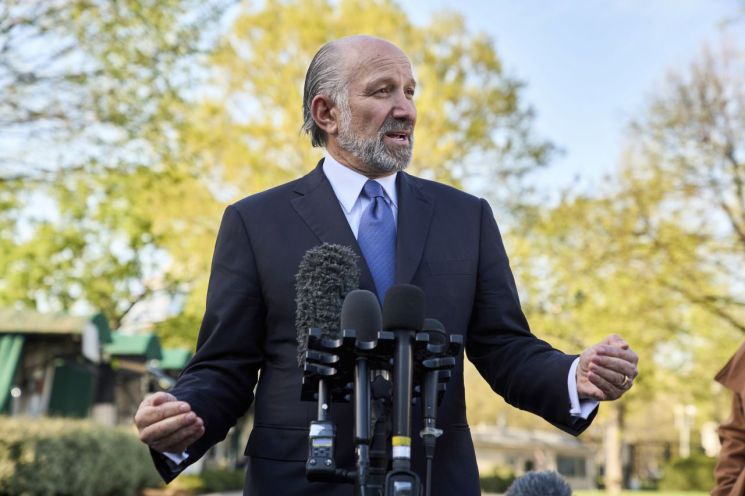 The United States and the European Union (EU) held negotiations on the 14th (local time) in Washington, USA. Photo by Howard Lutnick, U.S. Secretary of Commerce. AP Yonhap News
On the 14th (local time), the European Union (EU) once again brought the 'zero-for-zero' agreement, which applies mutual 'zero tariffs' on industrial goods including automobiles, back to the negotiation table in its first tariff talks with the United States. This is interpreted as a direct breakthrough attempt despite U.S. President Donald Trump explicitly expressing his rejection. Conversely, the EU has clearly drawn a 'red line' (negotiation limit) on food and digital regulations demanded by the U.S., making difficulties expected before the two sides reach an agreement.
Trump Scoffs at EU Proposal... U.S. Maintains Position in Negotiations
Olof Gj?rup, EU spokesperson, stated in a follow-up briefing on tariff negotiations on the 15th, "We have re-proposed the 'zero-for-zero' agreement to completely eliminate tariffs on industrial goods including automobiles." He also mentioned, "Issues such as overproduction in the steel and aluminum industries and securing supply chain resilience in semiconductors and pharmaceuticals were included in the discussion scope," but did not disclose specific details.
According to the European Commission, Maro? ?ef?ovi?, EU Commissioner for Trade and Economic Security, held tariff negotiations in Washington, U.S., the previous day with U.S. Secretary of Commerce Wilbur Ross and U.S. Trade Representative (USTR) Ambassador Katherine Tai. Commissioner ?ef?ovi? met with his U.S. counterparts for several hours. Subsequently, a separate high-level meeting with the U.S. Treasury Department was also held.
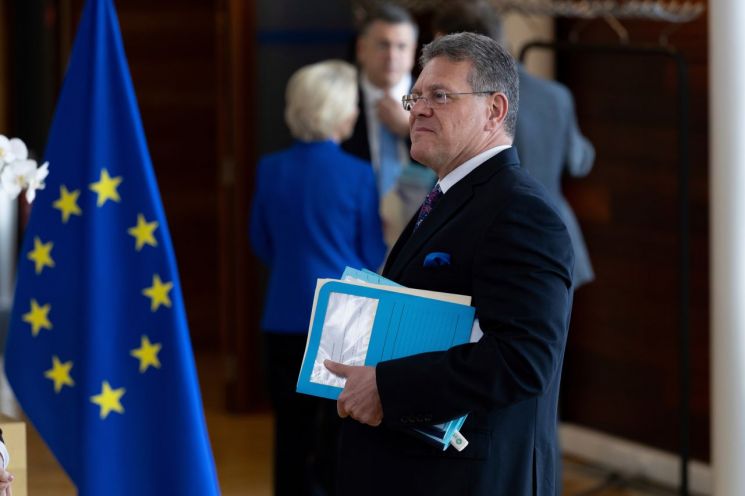
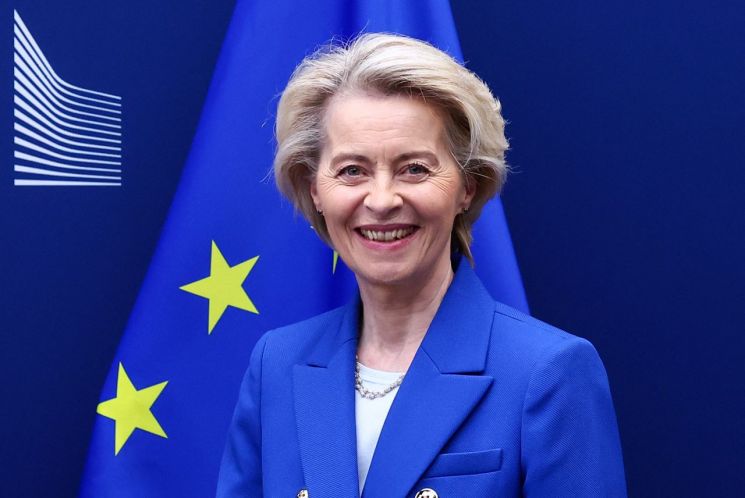
The EU had already proposed a zero-tariff agreement applicable to industrial goods such as automobiles and clothing to the U.S. weeks before the U.S. initiated the trade war. Commissioner ?ef?ovi? conveyed this during his first meeting with Secretary Ross on February 19. Since then, Ursula von der Leyen, President of the European Commission, stated, "This proposal has been delivered to the U.S. and remains valid."
The U.S. expressed a negative stance regarding this. President Trump said at a press conference on the 7th, "There will be no zero-for-zero tariff agreement," criticizing, "The EU has treated us very badly." He added, "They need energy and must buy it from us," noting, "Then we could earn $350 billion (about 500 trillion won) in just one week." The British daily The Guardian interpreted this as indicating the U.S. intends to leverage the EU's energy dependence as an economic lever.
This stark difference in perspectives between the U.S. and the EU was clearly reflected in the current negotiations. U.S. news agency Bloomberg cited anonymous government officials saying, "The U.S. side indicated that the '20% mutual tariffs,' temporarily reduced to 10% for 90 days, along with other tariffs targeting specific industries such as automobiles and metals, will not be fully withdrawn."
These officials also told Bloomberg, "The U.S. side insisted that industry-specific measures should be maintained but suggested that some automobile tariffs could be offset if investment, production, and exports increase within the U.S." However, they added, "If U.S. exports do not increase, tariffs may be raised again in the future."
EU Also Cannot Concede on Food and Digital Regulations Demanded by the U.S.
Conversely, there are areas where Europe cannot make concessions to the U.S. President Trump has strongly criticized the EU's trade conditions as unfair. The U.S. government claims that the EU restricts market access through complex regulatory systems. Complaints are particularly concentrated on sanitary and phytosanitary (SPS), quarantine, and digital sectors. Regarding this, spokesperson Gj?rup said in the briefing, "The EU's standards related to food, health, and safety are values that can never be compromised, and regulations related to technology and digital markets cannot be subjects of negotiation."
Meanwhile, the U.S. is observed to be creating confusion for the EU by adopting a strategically ambiguous stance. Gj?rup said, "The EU has done its part," adding, "Now it is time for the U.S. to clarify its position." He emphasized, "Further engagement from the U.S. is necessary. The ball is truly in the U.S. court now."
However, the only issue on which both the U.S. and the EU share common concern is the 'global oversupply of steel and aluminum,' so it is expected that reaching an agreement on this will not be difficult. This is interpreted as referring to China's overproduction. Last year, China, the world's largest steel producer, produced about 1.051 billion tons, accounting for 53.4% of global supply. Aluminum production was about 41 million tons, reaching 59%.
Meanwhile, the EU has declared that its prepared retaliatory measures target U.S. products worth approximately 21 billion euros (33 trillion won). It stated that these measures would be implemented immediately after 90 days if no satisfactory results are achieved in the negotiations. Additionally, separate retaliatory measures targeting U.S. big tech companies such as Google and Meta have been initiated, and efforts to conclude free trade agreements (FTAs) with countries worldwide are being accelerated.
© The Asia Business Daily(www.asiae.co.kr). All rights reserved.