Expectations Rise for Implant Alternatives
'Regenerative Teeth' with Functions Similar to Natural Teeth
A new tooth made from the patient's own cells, rather than implants or fillings, has become a possibility for actual oral transplantation. On the 13th (local time), BBC reported that researchers at King's College London (KCL) in the UK have succeeded for the first time in the world in culturing a human permanent tooth in the laboratory. The research team expects this technology to be an alternative to fillings used for partial tooth damage or implants placed when the tooth is completely lost.
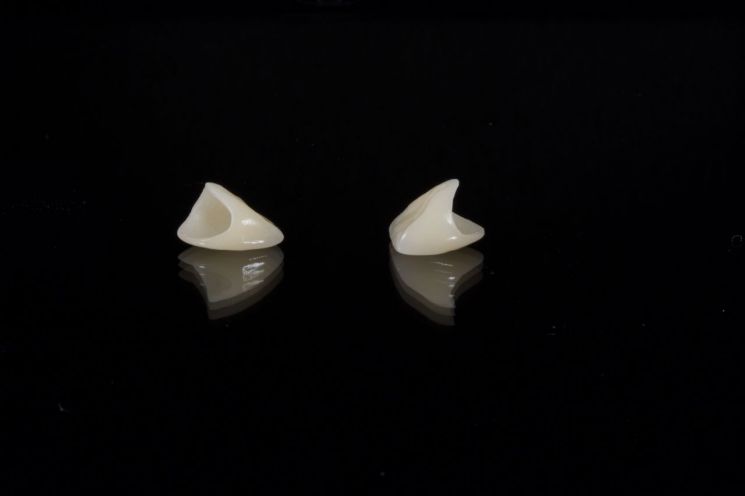 The possibility of transplanting new teeth made from the patient's own cells, rather than implants or fillings, into the actual oral cavity has opened up. On the 13th (local time), the BBC reported that researchers at King's College London (KCL) in the UK have succeeded for the first time in the world in culturing human permanent teeth in the laboratory. The photo is not related to the specific content of the article. Pixabay
Unlike some animals such as sharks and elephants, whose teeth continuously regenerate, humans have only one set of permanent teeth in their lifetime. Because of this, when existing teeth are lost due to cavities or gum disease, artificial teeth such as implants or fillings have been used as replacements. Natural teeth are supported by a human tissue called the periodontal ligament, but implants connect artificial teeth by embedding titanium into the jawbone. Therefore, implants may lose their fixation strength over time or cause long-term complications such as rejection reactions or infections. For these reasons, developing 'regenerative teeth' with functions and structures similar to natural teeth has been a long-standing goal in dentistry.
To solve this challenge, the KCL research team collaborated with Imperial College London for over 10 years to conduct this study. The team succeeded in culturing teeth by developing a special material that can transmit signals between cells, mimicking the tooth development environment. According to the research team, teeth cultured from the patient's own cells are expected to integrate with gum tissue and function like real teeth.
Shuchen Zhang, a researcher at KCL's Department of Oral and Maxillofacial Sciences, said, "Existing implants require invasive surgery and conditions such as good integration between the implant and alveolar bone." He emphasized, "Laboratory-cultured teeth can integrate into the bone like real teeth. This will provide a stronger, longer-lasting, and biologically more suitable solution without the risk of rejection, allowing longer use than fillings or implants."
 The remaining task is to successfully transplant such teeth into the gums. The research team is exploring ways to apply this technology in actual clinical practice through two methods in the future. The photo is not related to the specific content of the article. Pixabay
The remaining challenge is to successfully transplant these teeth into the gums. The research team is exploring two approaches to apply this technology in clinical practice in the future. One is to culture a complete tooth in the laboratory and transplant it, and the other is to directly transplant early-stage tooth cells into the patient's jaw to develop within the oral cavity. Researcher Zhang explained, "Both methods require starting the very early stages of tooth development in the laboratory."
Dr. Ana Angelova Volponi, head of regenerative dentistry at KCL, stated the significance of the research: "This innovative technology has the potential to revolutionize dental treatment and provide sustainable and effective solutions for tooth restoration and regeneration." However, more time is needed before this technology can be applied to patients. Dr. Shearser O'Toole of KCL expressed a cautious view, saying, "It is a very exciting and innovative technology, but it may not be commercialized within my lifetime," adding, "I hope it can be applied to the next generation."
© The Asia Business Daily(www.asiae.co.kr). All rights reserved.













