Sharp Drop in Jobs Due to 'Employment Cold Wave' in Manufacturing and Construction Sectors
Preference for Experienced Workers Among Companies Also a Factor
As the 'employment cold wave' continues in the manufacturing and construction industries, the preference for experienced workers among companies has intensified, leading to the largest decline in employment among people in their late 20s in about 12 years at the beginning of this year.
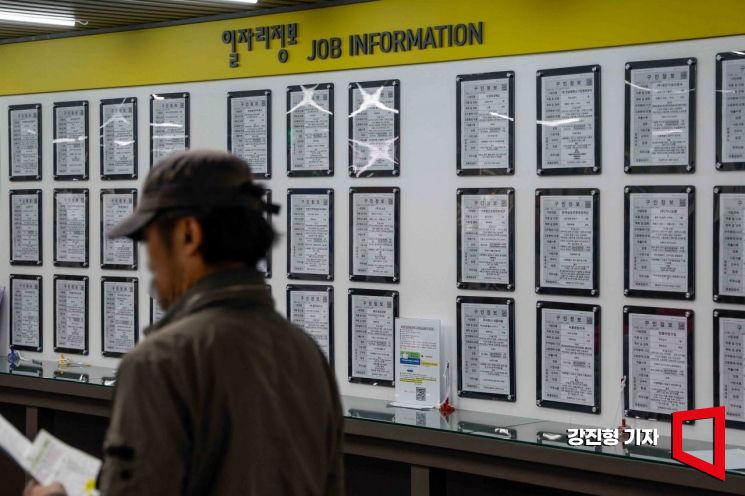 A job posting is displayed on the bulletin board of a Seoul employment center. Photo by Kang Jin-hyung
According to the National Statistical Portal (KOSIS) of Statistics Korea on the 14th, the number of employed people in their late 20s (ages 25-29) in the first quarter of this year was 2.42 million, a decrease of 98,000 compared to a year earlier. This is the largest decline since the third quarter of 2013 (-103,000). The decrease was more pronounced than in 2020, when employment dropped due to the COVID-19 pandemic.
Employment among people in their late 20s has decreased year-on-year for nine consecutive quarters since the first quarter of 2023. The scale of the decline has also expanded for three consecutive quarters, from 44,000 in the third quarter of last year, 62,000 in the fourth quarter, to the first quarter of this year.
Even considering the shrinking youth population, employment among people in their late 20s is sharply declining. The population of people in their late 20s decreased by 69,000 in the first quarter of this year. During the same period, the economically active population, which includes both employed and unemployed individuals, decreased by 85,000, and the economic participation rate dropped by 1.0 percentage point (p).
The number of unemployed people in their late 20s increased by 13,000, and the unemployment rate rose by 0.6 percentage points. The increase in both the number of unemployed and the unemployment rate was larger than in the previous quarter. Employment and the economically active population decreased more than the population decline, while unemployment and the unemployment rate increased.
The economically inactive population, neither employed nor seeking employment, increased by 16,000 in the late 20s age group in the first quarter. This is the first increase in the economically inactive population among this age group in four years since the first quarter of 2021. In particular, the number of people who neither worked nor sought jobs, classified as 'resting,' increased by about 18,000, continuing a rising trend for four consecutive quarters.
The employment slump among people in their late 20s is attributed to the decrease in employment in manufacturing and construction industries. Last month, the number of manufacturing workers fell by 112,000 compared to the same month last year, marking the largest decline in 4 years and 4 months since November 2020 (-113,000). This marks nine consecutive months of decline.
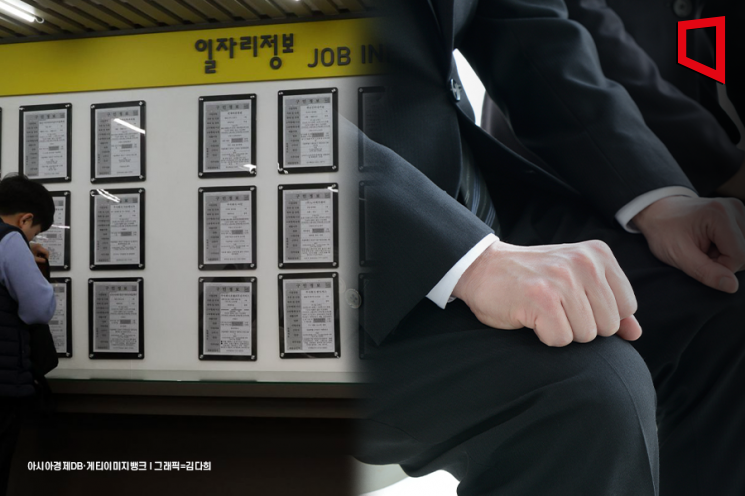
The decline in construction employment has also continued for 11 consecutive months. In particular, last month, construction employment plummeted by 185,000 compared to the same month last year, representing the largest decrease since related statistics began being compiled in 2013.
The tendency of companies to prefer hiring experienced workers over new recruits is also cited as a cause that worsens employment difficulties for young people. Amid worsening business conditions, companies increasingly prefer personnel who can perform tasks immediately. According to the report "Increase in Experienced Worker Hiring and Youth Employment," published last February by Cha Min-seok, head of the Employment Analysis Team at the Bank of Korea, and researcher Jang Su-jeong, the probability of non-experienced workers securing permanent positions within a month was only 1.4% on average, about half of the 2.7% average for experienced workers.
© The Asia Business Daily(www.asiae.co.kr). All rights reserved.







![$29 Monthly Subscription AI Plant Appliance... US Startup Challenges LG [CES 2026]](https://cwcontent.asiae.co.kr/asiaresize/319/2026010819285284553_1767868133.png)