Youth E-Cigarette Use Continues to Rise Each Year
'Popcorn Lung' Patients Face High Mortality Rate Within Five Years
A mother whose 17-year-old daughter, a school cheerleader, was diagnosed with a fatal lung disease has warned about the dangers of 'electronic cigarettes.' On the 8th, foreign media including the Daily Mail reported that Briann Cullen (17), who lives in Nevada, USA, was diagnosed with so-called 'popcorn lung' after experiencing breathing difficulties during cheerleading practice four months ago.
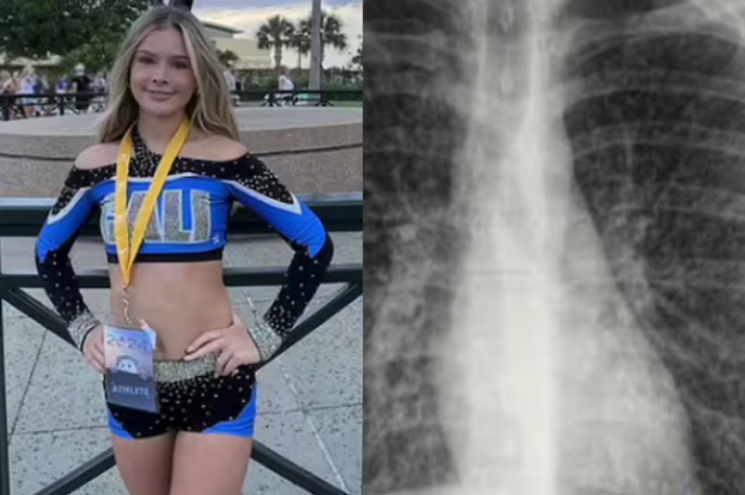 A mother warned about the dangers of "electronic cigarettes" after learning that her 17-year-old daughter, who was a school cheerleader, had developed a fatal lung disease. On the 8th, foreign media including the Daily Mail reported that Briann Cullen (17), who lives in Nevada, USA, experienced difficulty breathing during cheerleading practice four months ago and was diagnosed with the so-called "popcorn lung" after visiting the hospital. Daily Mail
Cullen, who was active as a cheerleader, suddenly felt shortness of breath and immediately called her mother repeatedly saying, "I can't breathe." Alarmed, her mother took her to a local emergency room. Medical staff diagnosed her with 'bronchiolitis obliterans.' This condition became known as 'popcorn lung' after a series of cases emerged among workers who had long been employed at popcorn manufacturing plants in the early 2000s in the United States.
Bronchiolitis obliterans is a rare type of lung disease caused by scarring in the small airways of the lungs, leading to fibrosis of the airways and significant loss of lung function. If the lungs close up, it can be fatal. In severe cases, a lung transplant may be necessary. Patients must receive lifelong treatment to manage symptoms and are advised to avoid polluted air and cigarette smoke.
Cullen's mother said, "I never expected to hear from the doctor that our daughter was dying," adding, "Because it was detected early, my daughter might fully recover, but it could later cause problems like cancer. 'Popcorn lung' is irreversible." She then shared her daughter's case as a warning message to ensure that teenagers do not use electronic cigarettes under any circumstances, hoping it would also raise awareness among parents.
She continued, "Manufacturers promote electronic cigarettes as harmless to health, but now we know the truth," criticizing, "Children can still easily buy e-cigarettes in stores. They are being exploited for profit." Cullen started using electronic cigarettes at the age of 14 to relieve anxiety after returning to school following the COVID-19 pandemic. She used e-cigarettes daily for three years. Currently, Cullen has quit e-cigarettes and uses an inhaler to help her breathing. Medical staff said, "There is almost nothing we can do. Quitting smoking is the only way."
Liquid-type Electronic Cigarettes Still a 'Headache' in Korea
Medical professionals believe that long-term inhalation of diacetyl, a synthetic flavoring component in electronic cigarettes, is the cause of 'popcorn lung.' Diacetyl is commonly used to give butter flavor to microwave popcorn. Although the European Union (EU) banned the use of diacetyl in electronic cigarettes in 2016, this chemical can still be found in e-cigarettes sold in the United States.
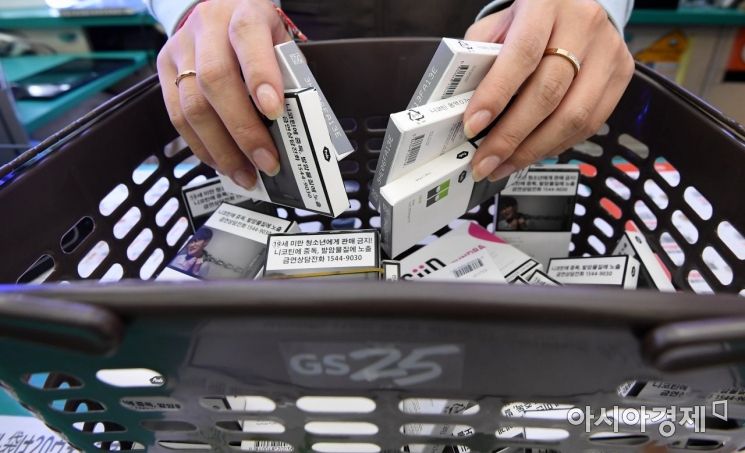 Since the Ministry of Health and Welfare recommended discontinuing the use of liquid-type e-cigarettes, which have been controversial for causing severe lung diseases, in 2019, the distribution industry has stopped selling liquid-type e-cigarettes. Currently, unmanned stores or vending machine outlets still sell synthetic nicotine after verifying adult identification, but among teenagers, places where they can easily buy synthetic nicotine by borrowing someone else's ID are being shared. Photo by Hyunmin Kim
The director of the Tobacco Treatment Clinic at Johns Hopkins University stated in 2022 that "patients diagnosed with 'popcorn lung' due to electronic cigarette smoking have up to a 95% chance of dying within five years," adding, "Obliterative bronchiolitis caused by e-cigarette smoking is more fatal than lung cancer." The problem is that the rate of e-cigarette use among teenagers continues to rise.
A survey conducted by the UK anti-smoking organization ASH targeting British youths aged 11 to 17 found that in 2023, the percentage of teenagers using electronic cigarettes (7.6%) was more than double that of those smoking conventional cigarettes (3.6%). In the United States, a survey showed that one in ten high school students had used an electronic cigarette at least once in the past month. In 2019, a 17-year-old boy in Canada developed 'popcorn lung' lesions after using e-cigarettes and had to undergo a lung transplant.
Meanwhile, liquid-type electronic cigarettes remain controversial in Korea. Liquid-type e-cigarettes containing synthetic nicotine are not classified as tobacco in Korea. Therefore, selling liquid-type e-cigarettes to teenagers is not punishable domestically. The problem is that this blind spot increases the risk of smoking exposure among youths. Stores selling synthetic nicotine only need to submit a business registration form and can operate like general retail businesses without issues.
Synthetic nicotine can be sold through unmanned stores or online without restrictions. Advertising and promotions are also allowed. Currently, unmanned stores and vending machine outlets require adult ID verification to sell synthetic nicotine, but among teenagers, places where others’ IDs are borrowed to easily purchase synthetic nicotine are shared. In effect, teenagers are left defenselessly exposed to harmful substances. A bill to classify synthetic nicotine as tobacco under the Tobacco Business Act has been proposed since 2016 regardless of political party, but it has failed to pass the National Assembly for ten years. Recently, it was reported that the revision failed due to concerns such as the 'indiscriminate expansion of tobacco retailers.'
© The Asia Business Daily(www.asiae.co.kr). All rights reserved.













