Seoul Announces 10 Additional Regulatory Abolitions
Major Citizen Proposals and Social Changes Reflected
Improved Floor Area Ratio Incentives for Public Facility Donations
The regulation requiring tenant consent for pet residency in Youth Safety Housing will be abolished. Additionally, the scope of incentives for maximum floor area ratio will be significantly expanded when public facilities are donated during maintenance projects.
On the 6th, the Seoul Metropolitan Government announced 10 additional regulatory abolition measures aimed at improving citizen convenience. Since January, Seoul has been working to alleviate daily inconveniences for citizens and remove obstacles to economic activities for businesses through a total of 113 regulatory abolitions and relaxations, striving to revive livelihoods.
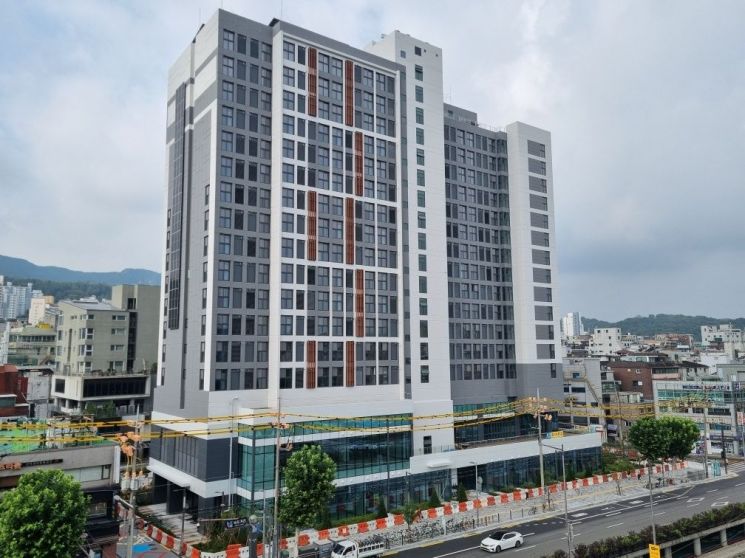 From now on, pets will be allowed to move into Youth Safe Housing. The photo is a bird's-eye view of the Youth Safe Housing in Daehak-dong, Gwanak-gu. Provided by Seoul City.
The 10 regulatory abolition measures announced that day cover various areas such as easing entry standards for various public facilities, improving convenience for vulnerable groups and strengthening social safety nets, and resolving resident inconveniences. First, the city will proceed with the "Abolition of the regulation prohibiting pet co-residency and entry in Youth Safety Housing" (No. 104). Until now, pets could only be kept with limited consent among tenants during tenant recruitment announcements, making co-residency practically difficult. Reflecting citizens’ proposals to accommodate the reality that one in five Seoul citizens live with pets, especially the increasing number of single-person households with pets, this will be applied starting from the tenant recruitment announcement in April.
No. 105 is the "Improvement of floor area ratio incentives for donation of public facilities." The core is to recognize design and supervision fees, in addition to construction costs, in the maximum floor area ratio incentives when donating public facilities such as public offices or social welfare facilities during reconstruction, redevelopment projects, and building permit processes.
Until now, design and supervision fees were included only for some buildings like public rental housing when calculating "public facility installation costs." This will be expanded and applied to all public facilities to ensure administrative consistency. For example, when promoting a project with a site area of 40,000㎡ through reconstruction or redevelopment and donating a public office building with a total floor area of 5,000㎡, it is expected that additional supply equivalent to three 24-pyeong apartments can be secured by recognizing design and supervision fees.
Administrative regulatory relaxation will also be pursued, including digitalization of design competitions and expansion of startup support. No. 106 mandates the "Digital transition of district-level design competitions" to reduce the burden of design competition review costs and address environmental issues. The use of "Project Seoul," currently used by Seoul City, will be expanded to district offices, and the "digital review hall" on the website will be further established.
No. 107 is the "Relaxation of entry conditions for the Seoul Women’s Development Center Startup Incubation Center." The current restriction limiting entry to startups within 2-3 years will be relaxed to within 7 years, providing a foundation for promising startups to continue growing.
The education method for freight transport workers will also change. Under regulatory abolition measure No. 108, education will be reorganized to focus on mobile (VOD) courses available at all times, allowing freight transport workers who operate nationwide and deliver on weekends to take mandatory legal education without time or environmental constraints.
Efforts will also be made to "simplify documentation for small-scale expenditures" (No. 109). By omitting the preparation of the "Calculation Basis Survey" for expenditures under 3 million won, rapid and efficient transactions between public institutions and small business owners are expected. Additionally, measures such as "Abolishing mandatory installation of document security software (SW) when providing restricted spatial information," "Temporary suspension of credit information provision for local tax delinquents," "Relaxation of maximum residency period limits for independent living housing for the disabled," and "Relaxation of support criteria for district-level residential neighborhood shared parking lot projects" will be pursued.
Kim Hyung-rae, Seoul City Planning Officer, stated, "We will continue to listen to citizens’ voices and reflect field opinions to promote regulatory improvements continuously," adding, "Through effective regulatory reforms, we will enhance citizens’ quality of life and create a policy environment that invigorates economic activities."
© The Asia Business Daily(www.asiae.co.kr). All rights reserved.












