Regulations Apply Only to Apartments in Land Transaction Permission Zones
11 Out of 32 Buildings in Hannam The Hill (Row Houses) Are Exempt
Officetels Like Tower Palace Marketed as "Gap Investment Possible"
Deadlines for Disposing of Existing Homes Differ by District
Although Seoul City expanded the designation of land transaction permission zones to district units such as the three Gangnam districts and Yongsan-gu, row houses and officetels were excluded. There are criticisms that the differing application of regulations within the same complex depending on the housing type is problematic, contrary to the purpose of preventing overheating.
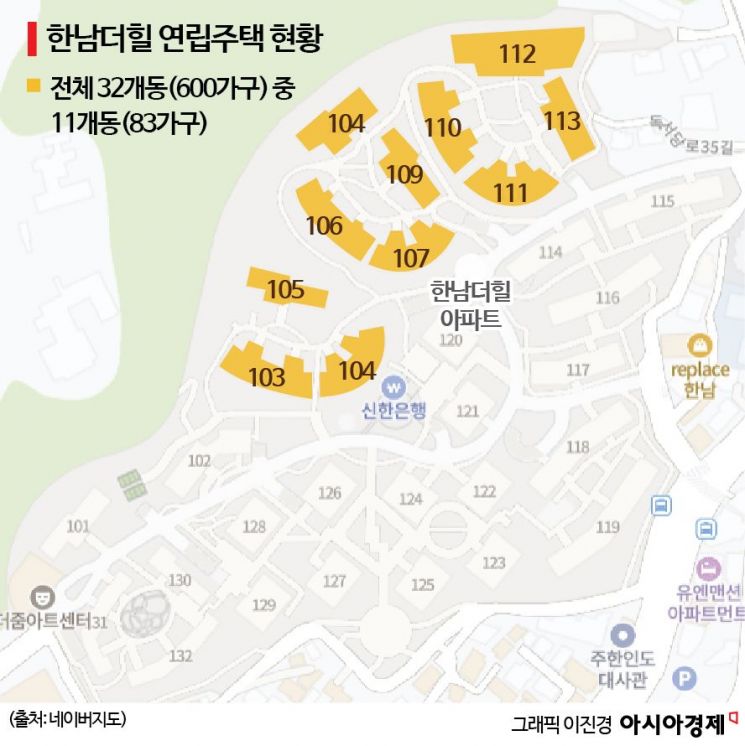
According to the Ministry of Land, Infrastructure and Transport's real transaction price disclosure system on the 2nd, the penthouse (243㎡) in Building 111 of Hannam The Hill, classified as a row house, recorded the highest price by being traded for 17.5 billion KRW on the 14th of last month. In addition, Hannam Yurim Villa, also a row house, was traded for 5 billion KRW for 174㎡. These transactions took place on the day the land transaction permission zone system was implemented, the 24th of last month.
Hannam The Hill consists of a mix of apartments and row houses, so the application of the land transaction permission zone varies by building. According to the building register of Hannam The Hill, out of 32 buildings (600 households), 11 buildings (83 households) are row houses. Under the Housing Act, apartments refer to buildings with five or more floors, while row houses refer to buildings used as housing with a total floor area exceeding 660㎡ and four or fewer floors. Even within the same complex, buildings classified as apartments require permission from the district mayor and can only be purchased for the purpose of actual residence for two years, whereas row houses can be purchased even as gap investments.
There are also cases where apartments and officetels are mixed. For example, Tower Palace D Building in Daechi-dong is classified as an officetel. Nearby real estate agencies emphasize the possibility of gap investment when introducing officetel listings. Additionally, Signiel Residence in Sincheon-dong, Songpa-gu (Lotte World Tower and Lotte World Mall officetel) is also classified as an officetel and is not subject to the land transaction permission zone.
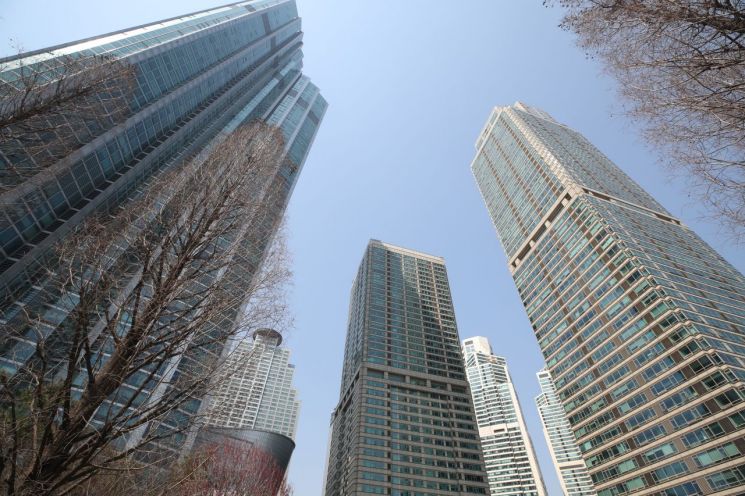 In the case of Tower Palace Phase 1 in Daechi-dong, it consists of 1,294 apartment units and 202 officetel rooms. Building D is classified as an officetel. Photo by Yonhap News
However, in the case of these high-end row houses and officetels, inquiries or transactions are not common as they are often sought for actual residence rather than investment demand. A representative from Anbu Real Estate Brokerage in Hannam-dong explained, "Since the loan regulations, the real estate market has become difficult around December, so there is not much buying movement, but rather a trend of seeking high-priced jeonse (long-term lease). Jeonse listings have been gradually accumulating, and recently there have been a few inquiries from tenants looking to sign jeonse contracts."
There are also complaints that property rights are infringed even in areas with little price increase impact due to being uniformly included in the land transaction permission zones. The Songpa-gu Maintenance Project Association requested Songpa-gu to selectively lift the land transaction permission system in areas where speculation is unlikely, in relation to the expansion of the designation to the entire Songpa-gu area.
Kim Hyoseon, Senior Real Estate Specialist at NH Nonghyup Bank, pointed out, "The land transaction permission zones are designated to prevent price increases when overheating occurs for a certain period or when maintenance projects progress rapidly, but now, some areas have been grouped together as apartments without accurate diagnosis just because prices rose in a short period. There may be more exceptional cases where different types coexist within the same complex, like Hannam The Hill."
Furthermore, the differing deadlines for disposing of existing houses when purchasing homes in the permission zones are also considered a loophole. Owners who purchase apartments within the land transaction permission zones must submit a plan for disposing of their existing homes. The disposal deadlines vary by district: one year in Gangnam and Songpa-gu, six months in Seocho-gu, and four months in Yongsan-gu. Seocho-gu even allows renting out the existing home without selling it. However, if purchasing a newly supplied home within the permission zone, it is possible to sign a jeonse contract without a two-year actual residence obligation.
Park Wongab, Senior Real Estate Specialist at KB Kookmin Bank, explained, "Setting the deadline for selling existing homes between four months and one year in the permission zones is very tight, so to ensure safe transactions, it is advisable to sell the existing home before purchasing."
© The Asia Business Daily(www.asiae.co.kr). All rights reserved.













