CNN: "It Will Take Years for Factories to Return... In the Meantime, the Automotive Industry Will Suffer"
U.S. President Donald Trump is pushing forward a policy to impose high tariffs on imported cars to revive domestic manufacturing, but there are forecasts that this could actually lead to a reduction in automotive-related jobs in the United States.
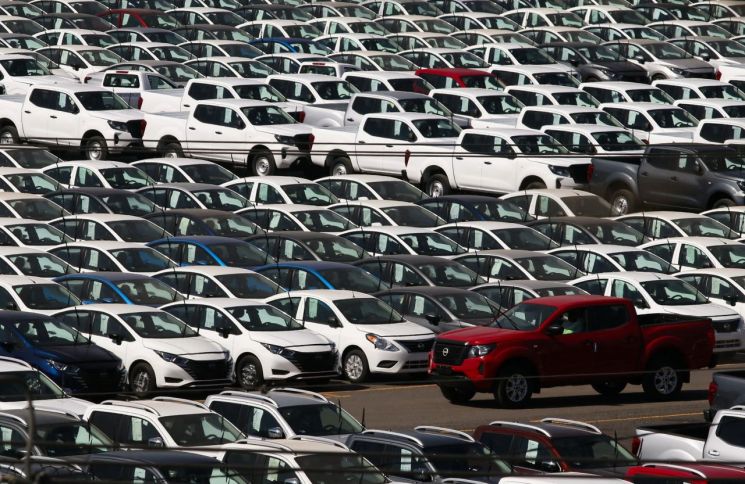
On the 31st (local time), CNN reported that if tariffs are imposed on imported cars in the U.S., retail prices would rise and manufacturers' profits would decrease, potentially leading to layoffs of workers employed in the automotive industry.
President Trump emphasizes that the tariff effect will bring factories producing cars and related parts back to the U.S., but experts predict that it will take years for this to materialize, during which the American automotive industry will suffer damage.
In particular, if assembly plants in Mexico and Canada close due to the impact of tariffs, U.S. companies exporting parts to these plants could be harmed, potentially leading to large-scale layoffs. CNN reported, "U.S. automotive parts suppliers employ about 550,000 people, nearly twice the size of the complete vehicle assembly plants."
Patrick Anderson, chairman of the U.S. think tank Anderson Economic Group, said, "Automakers are in serious trouble. They will have to make difficult decisions about what kinds of production to continue and what to stop," adding, "The implementation of tariffs is expected to affect jobs across the United States."
Furthermore, if Canada and Mexico retaliate against U.S. tariffs by imposing counter-tariffs on American-made cars, purchases of U.S. cars in those regions could shrink, leading to a decrease in domestic car production and jobs in the U.S.
John Hatline, who recently retired after working 50 years at U.S. automaker General Motors (GM), said, "Tariffs will not help the automotive industry at all," adding, "Tariffs will raise vehicle prices. If new car purchases slow down as a result, it will lead to layoffs and reduced production hours, affecting workers' wages."
John Bozzella, CEO of the Alliance for Automotive Innovation (AAI), also stated, "We are committed to building factories and investing in the U.S., but the related facilities and supply chains are vast and complex and cannot be relocated overnight," pointing out, "Before new jobs are created in the U.S., additional tariffs will reduce sales, leading to a decline in auto exports."
© The Asia Business Daily(www.asiae.co.kr). All rights reserved.












