50% of Remaining Salary Paid, Up to Three Years
Strong Self-Help Measures Demonstrate Commitment to Management Improvement
Hyundai Steel is implementing a company-wide voluntary retirement program. The company explained that this is part of emergency management measures. Industry insiders interpret this move as a response to deteriorating growth and profitability caused by the influx of low-priced Chinese imports, labor-management conflicts, and worsening external business conditions such as the U.S. tariff imposition followed by the European Union (EU)'s strengthened safeguard measures.
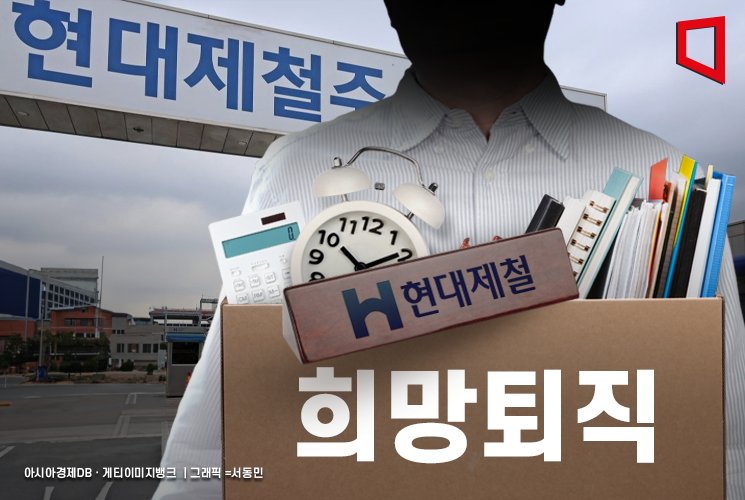
According to the industry on the 26th, Hyundai Steel will accept applications for voluntary retirement from this afternoon until July 18. The eligible candidates are general office workers, researchers, and technical staff aged 50 or older (born in 1975 or earlier). Those aged 60 are excluded. The voluntary retirement severance pay will be 50% of the remaining salary until retirement, up to a maximum of three years. Additionally, tuition support of 10 million KRW per child will be provided, up to three children.
Earlier, on the 14th, Hyundai Steel declared emergency management and announced cost-cutting measures such as a 20% reduction in executive salaries. At that time, the company stated that it was considering voluntary retirement for all employees. A company official explained, "The recent domestic and international business environment is heading toward a serious situation," adding, "This drastic measure was taken based on the judgment that management improvement would be difficult without strong self-help measures."
Hyundai Steel's emergency management is due to deteriorating profitability amid a complex domestic and international crisis surrounding the steel industry. According to the Financial Supervisory Service's electronic disclosure system, Hyundai Steel's operating profit on a separate basis last year was 15 billion KRW, a staggering 97.7% decrease from the previous year (650.4 billion KRW). Sales, considered an indicator of external growth, also recorded 18.6176 trillion KRW, down 13.8% from the previous year (21.6094 trillion KRW). The poor performance is largely attributed to the onslaught of low-priced Chinese steel products.
The bleak outlook for the future also intensifies Hyundai Steel's sense of crisis. In particular, the Trump administration in the U.S. decided on the 12th to impose a 25% tariff on steel and aluminum products, increasing export uncertainties. Furthermore, starting from the 1st of next month, the EU will strengthen and implement safeguard measures to limit steel imports, reducing the volume of steel that South Korea can export by up to 14%.
Hyundai Steel is also facing difficulties in wage negotiations with the labor union, which have continued since September last year. As negotiations have stalled over issues such as performance bonuses, the union has recently continued with general strikes, partial strikes, and temporary strikes. Hyundai Steel management proposed a performance bonus of an average of 26.5 million KRW per person (450% of base salary + 10 million KRW), but the union rejected this and is reportedly demanding a performance bonus at the level of Hyundai Motor Group's '500% of base salary + 18 million KRW.'
© The Asia Business Daily(www.asiae.co.kr). All rights reserved.












