Analysis Underway to Determine Pathogenicity
Results Expected in 2 to 5 Days
For the first time in South Korea, the 'H5 type avian influenza (AI)' antigen has been detected in a wild mammal.
According to the Ministry of Environment and the National Wildlife Disease Control Center on the 18th, the H5 type AI antigen was found in the carcass of a Korean leopard cat discovered near a reservoir (Seryangje) in Hwasun-eup, Hwasun-gun, Jeollanam-do on the 16th.
Whether it is highly pathogenic is currently under analysis, and the results are expected to take about 2 to 5 days.
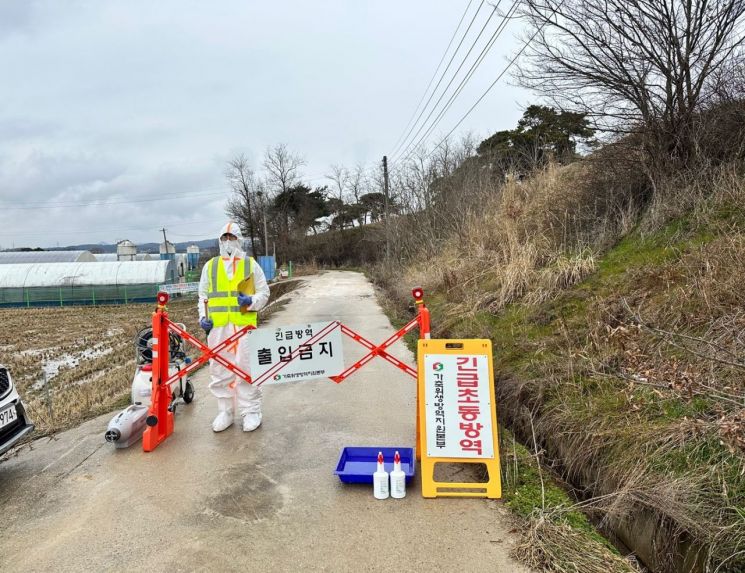
Immediately after the AI antigen was detected, the Ministry of Environment notified related agencies such as the Ministry of Agriculture, Food and Rural Affairs, and the agencies implemented emergency quarantine measures.
This is the first time AI antigen has been detected in a wild mammal in South Korea.
From April two years ago to March this year, investigations (355 cases) on carnivorous and omnivorous mammals such as Korean leopard cats and martens all tested negative.
If mammals prey on birds carrying the AI antigen, the antigen can also be detected in mammals.
According to the World Organisation for Animal Health (WOAH), cases of highly pathogenic AI infection in wild mammals in Europe, the Americas, Japan, and other countries were 111 cases (14 species) in 2022, 271 cases (32 species) in 2023, and 100 cases (28 species) in 2024.
In the United States, last year, dairy cattle were infected with the highly pathogenic N5N1 type AI virus, and there was also a case of transmission to humans.
© The Asia Business Daily(www.asiae.co.kr). All rights reserved.












