Israel Orders Attack After Ceasefire Proposal Rejected
First Phase of Ceasefire Ended on the 1st of This Month
U.S. Claims Hamas Provided Pretext for War
With no progress in the ceasefire extension negotiations between Israel and the Palestinian armed faction Hamas, Israel launched airstrikes on the Gaza Strip. This broke the fragile ceasefire between Israel and Hamas.
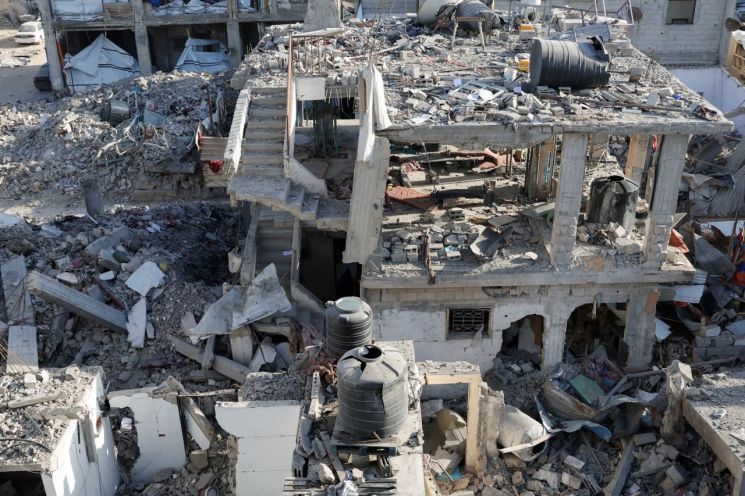
According to Reuters and the Financial Times (FT) on the 17th (local time), Gaza health authorities reported that at least 240 people were killed in the Israeli airstrikes that day. More than 150 people were reported injured.
The Gaza Civil Defense claimed that most of the deceased were children, women, and the elderly. The Israeli Prime Minister's Office stated that Prime Minister Netanyahu ordered strong measures targeting Hamas in the Gaza Strip. The Prime Minister's Office explained, "Hamas repeatedly refused to release hostages and rejected all proposals related to the ceasefire negotiations, leading to the order for the attack."
It also said, "Israel will now strengthen its military response against Hamas," and issued a school closure order for all schools near the Gaza Strip.
Israel's attack came amid rising tensions across the region, including the recent U.S. military strike against Yemen's Houthi rebels ordered by U.S. President Donald Trump.
The Trump administration said it consulted with Israel before the Gaza airstrikes. White House spokesperson Caroline Levitt told Fox News, "Those who threaten not only Israel but also the U.S., such as Hamas, the Houthis, and Iran, will pay a price."
Bloomberg reported that this airstrike is the most severe since the ceasefire agreement between Israel and Hamas took effect in January. It expressed concerns that Israel's airstrikes could also damage the ceasefire negotiations.
Israel and Hamas agreed to a ceasefire last January, but the 42-day first phase of the ceasefire ended on the 1st of this month, and both sides have been negotiating to extend the ceasefire since then.
Israel proposed extending the first phase of the ceasefire by 50 days, releasing half of the remaining hostages first, and then agreeing to a permanent ceasefire before releasing the rest. However, Hamas insists on moving to the second phase of the ceasefire, which involves releasing all hostages as originally promised and the complete withdrawal of Israeli forces.
Hamas protested immediately after the airstrikes, accusing Israel of unilaterally breaking the ceasefire negotiations. In a statement, Hamas pointed out, "Netanyahu and his extremist government decided to break the ceasefire negotiations, leaving the prisoners in Gaza to an unknown fate."
However, the U.S. claims that Hamas provoked this attack. Brian Hughes of the White House National Security Council (NSC) told the FT, "Hamas could have released hostages to extend the ceasefire but instead refused and chose war."
© The Asia Business Daily(www.asiae.co.kr). All rights reserved.












