First Monetary Policy Meetings Since Trump's Global Tariff Announcement
Expected to Serve as a Barometer for Economic Assessment and Policy Direction
As central banks of major countries such as the United States, Japan, and the United Kingdom decide on benchmark interest rates this week, the prevailing view is that most major central banks will choose to 'hold steady' due to the aftershocks of tariffs. Since this is the first monetary policy meeting held after the tariff war, initiated by U.S. President Donald Trump, began in earnest, it is expected to be an opportunity to gauge each central bank's economic assessment and monetary policy direction.
On the 17th (local time), Bloomberg surveyed 52 economists and predicted that the Bank of Japan (BOJ) is likely to keep its benchmark interest rate at 0.5% during the Monetary Policy Meeting scheduled for the 18th and 19th.
Bloomberg, citing sources, reported that "BOJ officials are leaning toward holding rates steady to have time to assess the impact of the January rate hike and to evaluate the flow of uncertainties sweeping through the global economy."
The BOJ ended its negative interest rate policy by raising the short-term policy rate in March last year for the first time in 17 years, then raised it to 0.25% in July of the same year, and again to 0.5% this January. Until last week, considering domestic factors such as wages and prices, there was speculation that the BOJ might opt for a rate hike in March. However, tariffs have become a variable. Since the 12th, President Trump has imposed a 25% tariff on all steel·and aluminum products imported into the United States, and has announced plans to impose reciprocal and sector-specific tariffs starting April 2.
Accordingly, market attention is focused on what signals BOJ Governor Ueda Kazuo will send regarding the timing of the next steps at this week's meeting, and whether there will be any warning remarks about the impact of U.S. tariff policies on the Japanese economy.
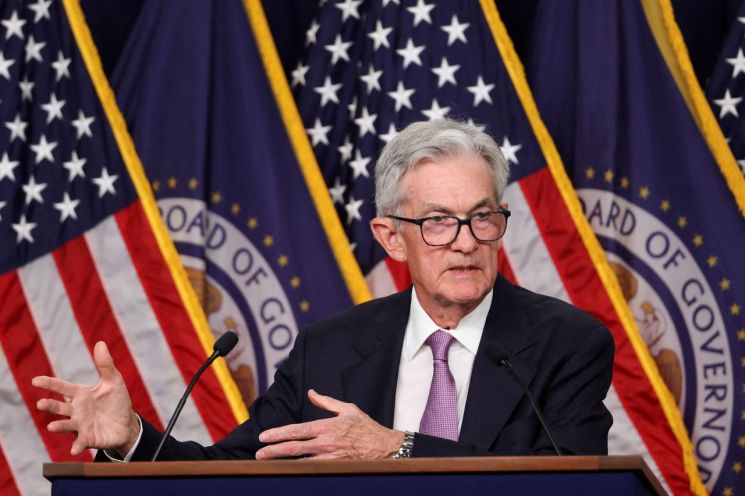
The U.S. Federal Reserve (Fed) will also hold its regular Federal Open Market Committee (FOMC) meeting on the 18th and 19th to decide on the benchmark interest rate. According to the Chicago Mercantile Exchange (CME) FedWatch Tool on the 17th, the probability of the FOMC holding rates steady is 98.0%. The rate hold is somewhat anticipated. Earlier, Fed Chair Jerome Powell said at a press conference after holding rates steady in January (4.25?4.50%) that "it is still uncertain what will happen regarding tariffs, immigration, fiscal policy, and regulation," and recently reiterated a cautious stance.
With the market largely pricing in a rate hold, attention is turning to the Fed's rate outlook. In a situation where concerns about inflation and fears of recession coexist, what Fed Chair Jerome Powell says about inflation and growth rates will provide insight into the future path of monetary policy.
The Bank of England (BOE), which will hold its monetary policy meeting on the 20th, is also expected to hold rates steady. Having cut rates last month and with President Trump's tariff onslaught darkening economic prospects, the BOE is expected to focus on market stabilization and keep rates unchanged. In a survey conducted last week by Reuters of 61 economists, all predicted that the BOE would maintain its benchmark interest rate at 4.5%.
Stephan Angrick, chief economist at Moody's Analytics, said, "Household finances are under pressure, and with the new trade war, global economic growth is reaching its limits, causing the economic outlook for 2025 to rapidly deteriorate."
© The Asia Business Daily(www.asiae.co.kr). All rights reserved.











