U.S. Department of Energy Report Details Incident from Over a Year Ago
Employee at Affiliated Research Institute Attempted to Transfer Export-Controlled Information to South Korea
Identified as One of Several Violations
Government to Negotiate Withdrawal with U.S. Before Enforcement on the 15th of Next Month
It was recently confirmed that an employee of a research institute under the U.S. Department of Energy was caught attempting to smuggle reactor design software, which had been banned from export 1-2 years ago, to South Korea. Amid various interpretations regarding the recent designation of South Korea as a sensitive country by the U.S., there is speculation that this incident may have influenced the decision.

According to a semi-annual report submitted to the U.S. Congress on the 17th (local time) by the Department of Energy’s Office of Inspector General, a contractor employee at the Idaho National Laboratory (INL) was caught boarding a flight to South Korea while in possession of information subject to export controls and was subsequently dismissed. The incident occurred between October 2023 and March 2024, the reporting period.
The Inspector General’s office explained that the information the employee attempted to take to South Korea was reactor design software owned by INL, which is patented information. The investigation revealed emails and messenger records confirming that the employee was aware that the information was subject to export controls. Communications between the employee and a foreign government were also uncovered. Since the employee tried to export reactor design materials to South Korea, the foreign government mentioned in the report appears to refer to the South Korean government.
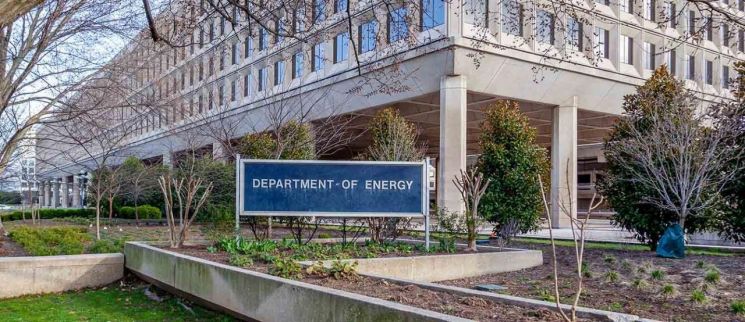
At the time of the report submission, the Federal Bureau of Investigation (FBI) and the Department of Homeland Security were conducting investigations into the matter.
Accordingly, there is an interpretation that this incident played a role in the Department of Energy’s recent designation of South Korea as a sensitive country. Earlier, the South Korean Ministry of Foreign Affairs stated regarding the Department of Energy’s inclusion of South Korea on the sensitive country list that "it is understood to be due to security-related issues concerning the research institute under the Department of Energy, not a matter of diplomatic policy."
However, it is reported that the South Korean government views the case cited in the report not as the sole security violation but as one among several violations.
Previously, on the 14th, the Department of Energy confirmed that South Korea was included in the lowest category, "Other Designated Countries," on the "Sensitive Countries and Other Designated Countries List (SCL)." The designation was made in early January during the previous Joe Biden administration, but no reasons for the designation were provided.
The Department of Energy designates countries as sensitive when there are concerns related to national security, nuclear nonproliferation, or terrorism support, requiring special policy considerations. Once designated as a sensitive country, nationals of that country must undergo stricter procedures when conducting joint research with the Department of Energy and its 17 affiliated national laboratories. There is also a possibility that technological cooperation between South Korea and the U.S. in advanced fields such as nuclear energy, artificial intelligence (AI), and quantum computing could be restricted.
South Korea was previously listed as a sensitive country by the Department of Energy in the 1980s and 1990s but was removed in July 1994 following South Korea’s corrective requests and changes in domestic and international circumstances.
Domestically, South Korea’s designation as a sensitive country is spreading as a political controversy. The opposition Democratic Party claims that the ruling party’s nuclear armament rhetoric and President Yoon Seok-yeol’s declaration of emergency martial law are the causes of the sensitive country designation. On the other hand, the ruling People Power Party sharply criticized the opposition, blaming their anti-American stance and impeachment attempts against government officials as the reasons.
The government plans to negotiate with the U.S. side to have South Korea removed from the sensitive country list before the designation takes effect on the 15th of next month. Minister of Trade, Industry and Energy An Deok-geun is scheduled to visit the U.S. this week to discuss energy issues with Energy Secretary Chris Wright, including this matter.
© The Asia Business Daily(www.asiae.co.kr). All rights reserved.












