Green Tea Helps Reduce Brain White Matter Lesions
Linked to Alzheimer's Disease and Others
Study Also Finds "Lower Risk of Cancer and Stroke"
A study has found that elderly people who consistently drink more than three cups of green tea a day have a lower risk of developing dementia compared to those who do not.
According to a report by the New York Post (NYP) on the 12th (local time), recent Japanese researchers announced that regularly drinking green tea in old age reduces 'brain white matter lesions,' a major indicator of dementia. Brain white matter lesions occur when cerebral blood flow deteriorates, causing problems in the brain's white matter, and are known to be associated with Alzheimer's disease, vascular dementia, and other conditions.
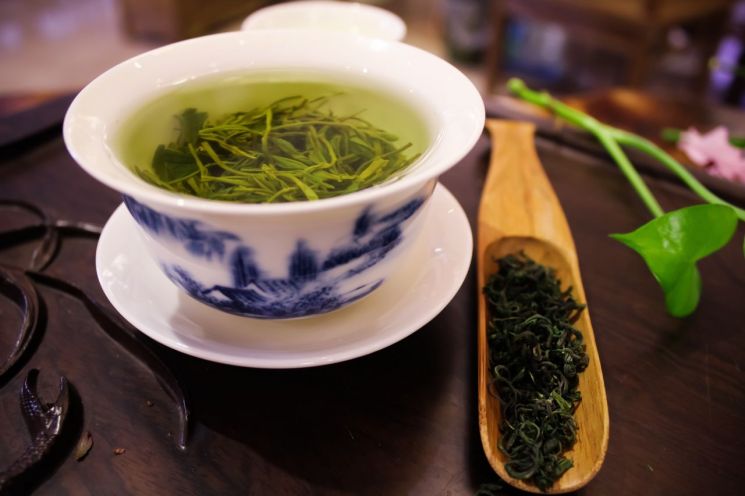
The researchers conducted a survey on coffee and tea drinking habits among 8,766 elderly people aged 65 and older from 2016 to 2018. They then analyzed the data using brain MRI (magnetic resonance imaging) and found a significant correlation between increased green tea consumption and a reduction in brain white matter lesions in elderly people without dementia. Those who drank three cups of green tea a day had white matter lesions about 3% smaller than those who drank one cup, and those who drank 7 to 8 cups had lesions about 6% smaller. The researchers stated, "We found no correlation with coffee consumption," and added, "Since black tea drinkers were a minority, they were not analyzed separately."
Green tea is rich in catechins, which have anti-inflammatory and cell-protective effects, helping to reduce the risk of cancer and stroke. It is also known that regular consumption lowers blood pressure and cholesterol levels, thereby improving heart health. NYP cited a 2023 study from China, stating, "There is a correlation between green tea consumption and reduced risk of stroke," and that "drinking 2 to 4 cups of green tea a day can reduce the risk of stroke by up to 24%."
Meanwhile, in March 2019, research results were also published showing that green tea improves memory impairment caused by dementia. At that time, the Zilka Neurogenetics Institute at the University of Southern California conducted an experiment by dividing 32 genetically modified mice exhibiting dementia symptoms into four groups. The results showed that the antioxidant EGCG found in green tea leaves helped with memory recovery. EGCG, a type of polyphenol, is a powerful antioxidant found in green tea as well as in carrots, tomatoes, and oats.
© The Asia Business Daily(www.asiae.co.kr). All rights reserved.












