Moves to Strengthen Management Evaluation of PEFs in Fund Selection
National Pension Service, Government Employees Pension Service, and Teachers' Pension Considering Changes
Political Circles Directly Criticize 'Moral Hazard'
Concerns Raised: "Excessive Hurdles Could Undermine Standards"
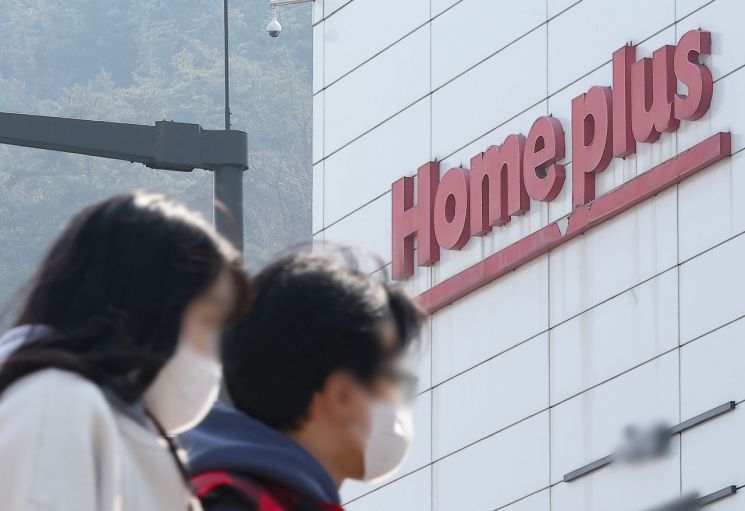
Major domestic pension funds and mutual aid associations are raising the hurdles for private equity funds (PEFs) they invest in. In response to growing criticism over MBK Partners' Homeplus corporate rehabilitation case, they plan to evaluate not only past investment returns but also management stability as assessment criteria.
According to the investment banking (IB) industry on the 13th, the Government Employees Pension Service (GEPS) is reviewing changes to its evaluation methods for this year's investment projects. A senior official at GEPS explained, "We view recent incidents like the MBK case, which caused social controversy, as undesirable," adding, "We are considering incorporating aspects such as management stability comprehensively into the evaluation for selecting fund managers." GEPS is considered one of the three major pension funds alongside the National Pension Service and the Teachers' Pension.
The National Pension Service is also reportedly considering measures to restrict investments in private equity funds that cause social controversies. When selecting alternative investment fund managers, they plan to award additional points based on whether responsible investment policies and guidelines have been established and their current status. While the National Pension Service currently applies a responsible investment scoring system in the stock and bond sectors, it is considering expanding this system to alternative investments.
The Teachers' Pension is also strengthening evaluations along the same lines. They intend to assess whether the invested companies can grow without issues. In particular, they are said to scrutinize whether PEFs operate separate corporate management organizations properly. The aim is to evaluate not only investment scale and capability but also the ability to manage the invested companies.
Other institutional investors are also contemplating increasing the weight of qualitative factors in evaluations, in addition to quantitative metrics. Some institutional investors are considering diversifying investments by splitting amounts among small and medium-sized fund managers rather than investing large sums in major managers at once. It is said that the stronger the government's influence, the greater the concerns have become. This is because political circles are also showing increased interest in the Homeplus case.
The political sphere views this incident not simply as an investment failure but as a 'moral hazard' of private equity funds. They point out that Homeplus, which was operating normally, filed for corporate rehabilitation citing poor business conditions and unclear investment recovery, causing employment insecurity among Homeplus employees and losses to individuals who invested in Homeplus bonds. The National Assembly's Committee on Finance and Economy plans to hold a plenary session on the 18th to conduct urgent inquiries related to Homeplus. Witnesses summoned include Kim Byung-joo, Chairman of MBK Partners; Kim Kwang-il, Vice Chairman of MBK Partners and Co-CEO of Homeplus; Cho Joo-yeon, Co-CEO of Homeplus; Geum Jeong-ho, President of Shin Young Securities; and Kang Kyung-mo, Vice Chairman of the Homeplus Store Association. The Seoul Regional Tax Office's Investigation Division 4, known as the 'Grim Reaper' of the business world, has also launched a tax investigation into MBK.
However, among IB experts, there are concerns about creating excessive barriers. While wrongdoing should be criticized and punished, changing the overall fund selection evaluation and criteria on that basis is seen as a different matter. A senior official at a mutual aid association confessed, "All investments carry the possibility of both failure and success, and there have always been cases of investment failure," adding, "I'm not sure if it is right to revise investment and evaluation standards every time this happens."
© The Asia Business Daily(www.asiae.co.kr). All rights reserved.












