February CPI Up 2.8% Year-on-Year, Below Expectations
Inflation Rebound Concerns Temporarily Eased
Potential for Price Rebound if Trump Tariff Effects Are Reflected
The U.S. consumer price index (CPI) inflation rate for last month rose less than expected, slowing to the 2% range. This has somewhat eased concerns about the entrenchment of high inflation due to the recent rebound in prices. However, analysts say it is too early to be reassured, as President Donald Trump's tariff policies, which are announced almost daily, remain a variable that could affect future price increases.
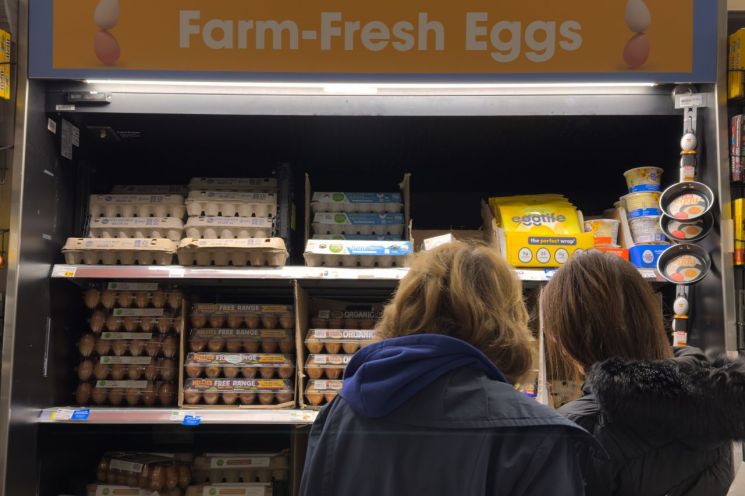
On the 12th (local time), the U.S. Department of Labor announced that the CPI for February this year rose 2.8% compared to the same period last year. This figure was below market expectations (2.9%) and showed a slowdown in the rate of increase compared to January (3.0%). Month-over-month, the CPI rose 0.2%, also below the previous month's figure (0.5%) and the forecast (0.3%).
The core CPI, which excludes the volatile energy and food sectors, increased by only 0.2% month-over-month. This was below both the previous month (0.4%) and the forecast (0.3%). Compared to one year ago, it rose 3.1%, falling short of both the previous month (3.3%) and market expectations (3.2%). The core CPI is a key indicator that shows the underlying trend of inflation and is closely watched by the Fed.
By category, housing costs, food, and used car prices all rose. Housing costs, which carry the largest weight of one-third in the CPI calculation, increased by 0.3% compared to the previous month. Although the rate of increase slowed compared to January (0.4%), housing still accounted for half of the total increase in all items. Food prices rose by 0.2%, with egg prices soaring 10.4% month-over-month and 58.8% year-over-year due to the impact of avian influenza. Gasoline prices fell by 1%, resulting in an overall energy price increase of only 0.2%, a significant drop from January's 1.1%. Transportation service prices fell by 0.8%, with airfares dropping 4%.
This CPI release is expected to calm inflation concerns for now. In January, the CPI inflation rate rebounded to the 3% range year-over-year, raising fears of entrenched high prices in the market. Especially at a sensitive time when concerns were spreading that President Trump's recent tariff measures could push prices up and cause an economic downturn, the slowdown in CPI inflation has brought some relief to the market. Kay Hi, Global Co-Head of the Bond and Liquidity Solutions division at Goldman Sachs Asset Management, evaluated that "February's CPI showed further signs of progress in core inflation alongside a slowdown in the pace of increase following the strong January data."

However, if the effects of President Trump's tariffs begin to be fully reflected in the economy, inflation indicators could shake the market again. As announced, President Trump imposed a 25% tariff on all steel and aluminum imports starting at midnight on the day. Additional tariffs of 10% each were implemented twice last month and earlier this month, totaling 20%, on all Chinese imports. Tariffs of 25% were imposed on Canada and Mexico but were delayed by one month; however, mutual tariffs on all countries are scheduled to be imposed starting April 2. There are concerns that if the U.S. expands its trade war globally, inflation could rise again.
The Fed is expected to keep the benchmark interest rate steady at the current 4.25?4.5% level at the March Federal Open Market Committee (FOMC) meeting scheduled for the 18th?19th. The monetary authorities are expected to monitor inflation and growth rates while assessing the impact of the Trump administration's trade policies. The Atlanta Federal Reserve Bank's 'GDP Now,' which provides real-time forecasts of U.S. economic growth, projects a 2.4% decline in growth for the first quarter compared to the previous quarter, fueling market concerns that stagflation (rising prices amid slowing growth) or a recession could materialize.
Senior strategist Ellen Zentner of Morgan Stanley said, "Today's lower-than-expected CPI reading brought a breath of fresh air, but we should not expect the Fed to start cutting rates immediately." She added, "Considering the uncertainties that trade and immigration policies pose to the economy, the Fed will want to see more than a month of favorable inflation data."
© The Asia Business Daily(www.asiae.co.kr). All rights reserved.