Not Even Broken Ground in 18 Years
Gyeongbuk Provincial Council's Administrative Inquiry
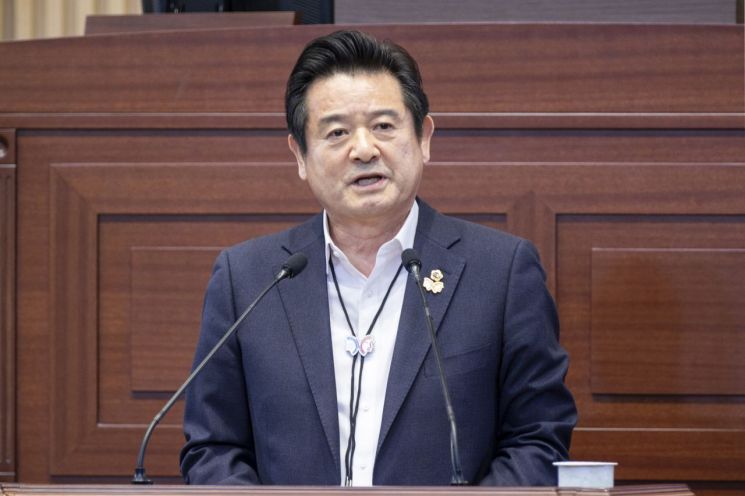
Gyeongbuk Provincial Council member Lee Chilgu (People Power Party, Pohang 3) urged Gyeongbuk Province to swiftly come up with countermeasures during the provincial administration's Q&A session at the temporary assembly held on the 11th, stating, "The Pohang Yeongilman Bridge construction project has not even broken ground in 18 years."
Lee Chilgu pointed out, "Although 455.3 billion KRW in national funding was secured this year, the review of the project's feasibility has been delayed for over two years, preventing even the start of construction," and requested that Gyeongbuk Province respond quickly to expedite the project.
The Yeongilman Bridge construction is a section of the Pohang-Yeongdeok Expressway project, which began in 2008 as one of the 'Top 30 Leading Projects for Regional Economic Development' to promote balanced national development and revitalize the local economy.
Lee emphasized, "Once completed, the Yeongilman Bridge will directly connect the currently disconnected north-south Donghae Expressway, resulting in significant economic ripple effects such as reduced logistics costs, shorter travel distances and times, and revitalized tourism," adding, "Approval for the project's feasibility review must be obtained within this year through close cooperation among related ministries."
Lee further argued that, to serve as the supporting port for the 'East Sea Deepwater Gas Field Development Project'?a national project underway since June last year?the expansion of Yeongilman Port and the enhancement of gas unloading facilities must be prioritized.
Lee pointed out, "The privately funded development section of Yeongilman Port is virtually halted due to companies' lack of financing," and called for Gyeongbuk Province to devise measures to convert the project to a government-funded one.
He also stated, "A more systematic response strategy to national projects is needed, not just at the level of the Gas Field Development Response Task Force established last November, but by creating a dedicated department," and emphasized that "support from the central government and Gyeongbuk Province is essential for the development of the POSCO-type hydrogen reduction steelmaking process, which requires massive investment." He also requested that Gyeongbuk Province strengthen its response measures to enhance the competitiveness of the steel industry.
The domestic steel industry is currently facing an unprecedented crisis due to the decline in market share of POSCO, the world's 7th largest crude steel producer, along with a 25% tariff on U.S. steel imports, low-priced Chinese steel, rising costs, and environmental regulations.
Lee urged, "Gyeongbuk Province should swiftly promote support for hydrogen reduction steelmaking technology development and infrastructure projects in line with the global trend toward decarbonized steel production policies."
Regarding the strengthening of the functions of the Gyeongbuk Provincial Government's Eastern Office, which opened in Pohang last year, Lee remarked, "The governor's original pledge to foster it as Gyeongbuk's second government office has become meaningless," and requested, "Instead of making it a subsidiary organization of the main office, please consider maximizing work efficiency by relocating departments related to steel, metals, energy, and marine resources to the Eastern Office."
© The Asia Business Daily(www.asiae.co.kr). All rights reserved.












