Average Inactivity Period is 22.7 Months
11% of Youth Remained Inactive for Over 4 Years
The proportion of young people remaining in a state of inactivity was higher among those with no work experience or longer periods of unemployment, and among those whose past jobs were low-wage, low-skilled, and unstable. In a situation where many young people chose inactivity due to the lack of desired jobs, there were also quite a few who complained of difficulties such as burnout or psychological and mental health issues. It was found that 7 out of 10 felt anxious during their period of inactivity.
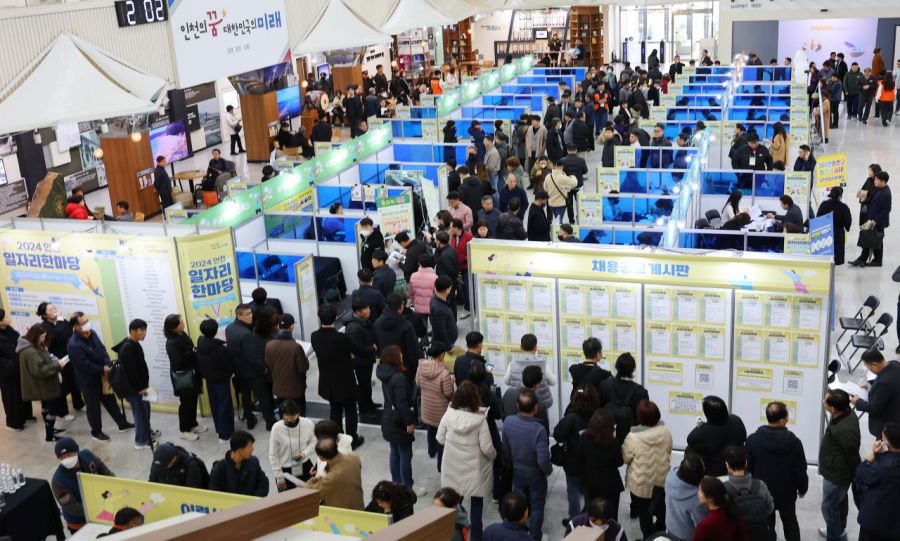
The Korea Employment Information Service announced these findings from a related survey at the first meeting of the 2025 Youth Employment Forum held at the Korea Institute for Vocational Competency Development in Jung-gu, Seoul. This meeting was organized by the Ministry of Employment and Labor to examine youth employment issues from multiple perspectives with academics and field experts and to discuss directions for policy improvement.
The Employment Information Service conducted a survey over two months from December last year to January this year targeting 3,189 unemployed youth aged between one year and less than three years. The results showed that ▲the less work experience ▲the longer the unemployment period ▲and the more the past job was low-wage, low-skilled, and unstable, the higher the proportion of youth remaining in a state of inactivity.
The average period of inactivity reported by respondents was 22.7 months, with about 11% of youth having been inactive for more than four years. The majority, 87.7%, had work income experience, and the average length of employment was 17.8 months. Regarding the wage level of their last job, 48.8% answered that it was between 2 million and 3 million KRW.
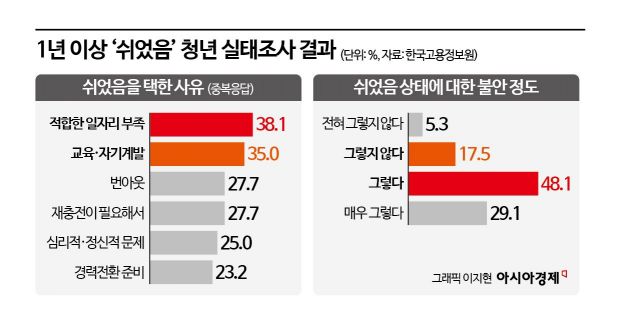
The main reasons for choosing inactivity were lack of suitable jobs (38.1%) and education/self-development (35.0%). However, significant proportions also cited burnout (35.0%), the need for recharging (27.7%), and psychological/mental health problems (25.0%). Considering multiple responses, these figures indicate considerable difficulties among the youth.
The proportion who felt anxious during inactivity reached 77.2%. The longer the inactivity period, the less it was perceived as time for recharging and more as "a difficult time that caused loss of job-seeking motivation." More than half (58.2%) described their inactivity period as "a financially and psychologically difficult time."
When asked about activities during inactivity, multiple responses showed that education/self-development (55.5%) and rest/recharging (52.1%) were the most common answers. However, 20.3% reported having no special activities, which is a significant proportion.
A hopeful factor is that these young people view the future positively. 84.6% of respondents said work is important in life. 57.3% believed they could move to better jobs in the future. Regarding government support needed for employment, more respondents emphasized vocational education and training (59.3%) and job placement/information provision (54.7%) over living expenses (50.6%).
"Youth frustration and wandering manifested as inactivity"
The Korea Labor Institute raised the issue that the gap in youth employment between the metropolitan area and other regions is linked to an increase in inactivity. Since 2018, the concentration of youth employment in the metropolitan area has intensified, apparently influenced by the decline of non-metropolitan manufacturing industries such as shipbuilding in Gyeongnam and the rise of knowledge-based industries in the metropolitan area. Subsequently, as youth focused on metropolitan knowledge-based industries and face-to-face service sectors, the number of inactive youth in these sectors has been increasing.
Committee members attending the meeting pointed out that psychological problems experienced by youth while working can lead to inactivity or that anxiety experienced during inactivity can increase the risk of isolation and withdrawal. To address this, they agreed on the need to expand psychological counseling support for youth and to intervene early in the initial stages of inactivity to prevent long-term inactivity.
Lee Jeong-han, Director of Employment Policy at the Ministry of Employment and Labor, said, "Youth frustration at the narrow employment gate or wandering after employment because the job was not what they wanted is manifesting as inactivity." He added, "Based on the findings of inactive youth identified through the forum, we will refine policies to help youth remain longer in the labor market."
© The Asia Business Daily(www.asiae.co.kr). All rights reserved.














