The outlook index for apartment occupancy in Seoul rebounded this month. It is analyzed that, due to growing expectations of rising home prices following the lifting of land transaction permit zones, more people are seeking to pay the final balance for new apartments.
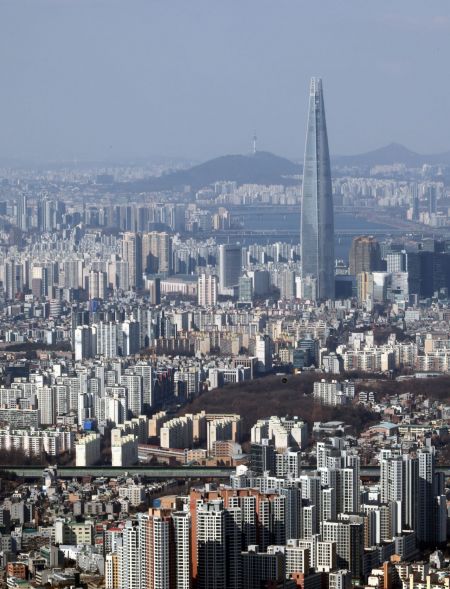
According to the Housing Industry Research Institute (HIRI) on March 11, the apartment occupancy outlook index for Seoul this month was recorded at 81.5, up 5.7 points from the previous month. The Gyeonggi region also rose by 8.3 points to 73.6. In contrast, Incheon dropped by 6.1 points to 62. This index predicts whether those who have purchased apartments will be able to pay the final balance and move in as scheduled. A score above 100 indicates that more respondents have a positive outlook on the occupancy market, while a score below 100 indicates the opposite.
The nationwide apartment occupancy outlook index was 73.8, down 1.8 points from the previous month. The Seoul metropolitan area rose by 2.6 points to 72.4, whereas major metropolitan cities fell by 3.4 points and provincial regions declined by 2.1 points.
HIRI explained that the 5.7-point rise in Seoul's figure was due to "the lifting of land transaction permit zones by the Seoul Metropolitan Government last month, which has led to rising housing prices and increased transaction volumes in Seoul, including the three Gangnam districts and key areas in neighboring Gyeonggi." The institute added, "With the easing of loan regulations, the occupancy outlook index for Seoul and Gyeonggi has also increased."
In the case of Incheon, the decline in occupancy outlook was attributed to a continued drop in sales prices, driven by the supply of new units in Yeonsu District and delays in the construction of the GTX-B metropolitan express railway line.
Among metropolitan cities, Daegu (down 9.4 points), Busan (down 8.4 points), and Gwangju (down 1.7 points) saw declines, while Ulsan (up 1.4 points) and Daejeon (up 0.6 points) posted slight increases. Among provincial regions, Jeonbuk (72.7→84.6), Jeonnam (37.5→69.2), and Gyeongbuk (60.0→91.6) saw significant rises, which were identified as a base effect following sharp declines over the past one to two months.
HIRI stated, "The reduction of the base interest rate and the lifting of land transaction permit zones have triggered increases in transaction volume and prices in some preferred areas. However, due to the overall economic downturn and ongoing political uncertainty, there are still latent risk factors. Therefore, it is necessary to closely monitor market conditions going forward and implement measures to prevent an excessive contraction in supply."
Last month, the nationwide apartment occupancy rate was 70.4%, up 6.9 percentage points from the end of last year. The rate has returned to the 70% range for the first time in a year, showing signs of recovery. In the Seoul metropolitan area, the rate rose by 6.1 percentage points from 74.1% to 80.2%, and in metropolitan cities, it increased by 12.4 percentage points from 57.2% to 69.6%.
Last month, the nationwide number of new apartment units available for occupancy was 21,404, a 37% decrease from the previous month, which is believed to have positively impacted the occupancy rate. In particular, the number of units available for occupancy in the Seoul metropolitan area was 7,250, about half of the previous month, and as apartment sales and rental prices rose, the occupancy rate recovered.
The main reasons for non-occupancy were: inability to secure final balance loans (37.9%), delays in selling existing homes (31.0%), inability to secure tenants (19.0%), and delays in selling pre-sale rights (5.2%). The proportion of cases due to inability to secure final balance loans increased by 11.6 percentage points, while delays in selling existing homes decreased by 11.1 percentage points, inability to secure tenants decreased by 2.1 percentage points, and delays in selling pre-sale rights decreased by 0.1 percentage points.
HIRI noted, "While the easing of loan regulations has reduced delays in existing home transactions, delays in occupancy are occurring for new apartments as it has become more difficult to secure final balance loans. It appears that the loan easing policies have not yet been fully reflected throughout the new housing market."
© The Asia Business Daily(www.asiae.co.kr). All rights reserved.












