Purchased 400 $100 Bills from Online Shopping Mall
Court: "Fake Money Could Be Identified by Bill Inscriptions"
Two foreigners who handed over several counterfeit 100-dollar bills to women they met for the first time in an attempt to appear wealthy were acquitted in the first trial. The reason for the acquittal was that the bills had inscriptions such as 'COPY,' indicating they were not real money.
The Jeonju District Court's 12th Criminal Division (Chief Judge Kim Dohyung) acquitted A (20) and B (20), both Kazakh nationals, who were indicted without detention on charges of using counterfeit foreign currency, according to a report by Yonhap News on the 8th.
The two friends were tried for handing over 12 counterfeit 100-dollar bills to three women at a vehicle and a lodging facility in Jeonju, Jeollabuk-do, in July of last year. It was revealed that before the crime, they purchased 400 counterfeit 100-dollar bills from an online shopping mall. A and B committed this act to win favor with women they met for the first time through social networking services (SNS). They told the women that they "had a lot of money" and gave each woman four counterfeit 100-dollar bills, totaling 12 bills.
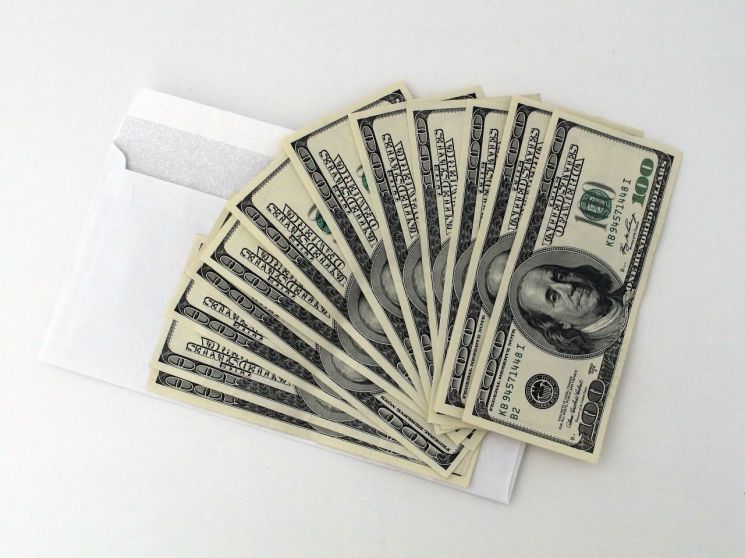
A and B argued that the counterfeit bills they handed over were not sophisticated enough to be mistaken for real currency, so the charge of using counterfeit foreign currency did not apply. In fact, the counterfeit bills they possessed bore inscriptions such as 'MOVIE PROP USE ONLY,' 'NOT LEGAL TENDER,' and 'COPY,' and lacked security features like holograms found on genuine bills. Additionally, all the serial numbers were the same: 'LL6203872F.' The court accepted their argument and ruled that the crime was not established.
The court explained, "The counterfeit bills handed over to the women had relatively large inscriptions clearly indicating they were 'fake money.' Although the bills were the same size as genuine 100-dollar bills, they lacked the silver or metallic strips found on originals, did not have the usual curvature of real bills, and all bore the same serial number." The court further stated, "Even if the recipients did not understand the full meaning of all the inscriptions, knowing basic English words like 'MOVIE' and 'COPY' would have made it easy to recognize that these were not genuine currency," explaining the reason for the acquittal.
© The Asia Business Daily(www.asiae.co.kr). All rights reserved.












