"Navy Readiness Assurance Act" Mentioned
There is an analysis that the U.S. Navy's future investment plans could present opportunities for the Korean shipbuilding industry.
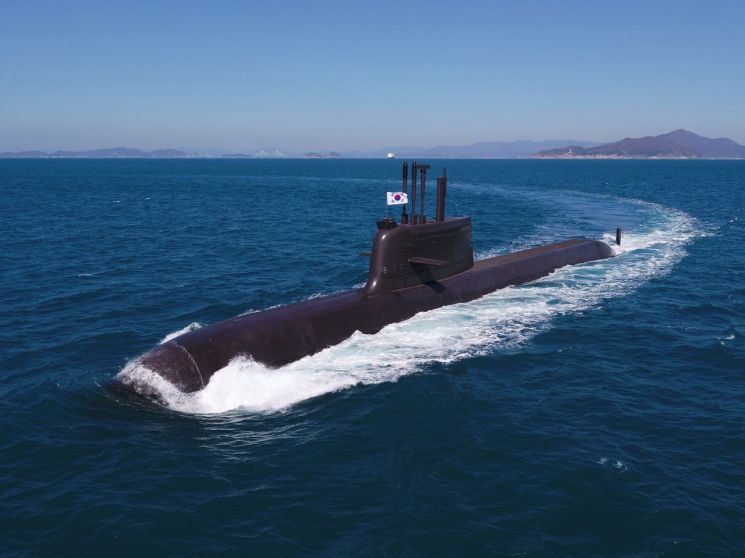
The Korea Trade-Investment Promotion Agency (KOTRA) published a report titled "Opportunities for Our Companies' Entry through Trends in the U.S. Marine Shipbuilding Market and Policies" on the 2nd, containing this information.
The report cited the "Navy Readiness Assurance Act," introduced in the U.S. Congress earlier this month, as an opportunity for the Korean shipbuilding industry, noting that if the bill passes, allied countries including South Korea could build U.S. Navy vessels at their domestic shipyards.
The U.S. Navy's future order plans are also estimated to exceed 40 trillion won annually. The U.S. has set a goal to expand its current fleet of 296 vessels to 381 by 2054 to strengthen naval power. According to a January report by the U.S. Congressional Budget Office (CBO), the U.S. Navy is expected to allocate an average annual budget of $30 billion (approximately 42 trillion won) to achieve this.
The report also emphasized that the U.S. Navy's ship maintenance, repair, and overhaul (MRO) market could be a target for the Korean shipbuilding industry’s entry.
According to the U.S. Government Accountability Office (GAO), as of last November, the U.S. deployed 149 surface combatants (excluding submarines and aircraft carriers), and the U.S. Navy spends between $6 billion and $7.4 billion annually (approximately 8.8 trillion to 10.8 trillion won) on MRO for these vessels.
Paying attention to these U.S. developments, domestic shipbuilders Hanwha Ocean and HD Hyundai have already set targets to secure MRO contracts for 6 vessels and 2 to 3 vessels, respectively.
However, the possibility that the U.S. could impose sanctions on domestic shipbuilders using Chinese steel was identified as a risk. The U.S. government’s potential sanctions against Korean shipbuilders using Chinese steel were mentioned, and the proportion of Chinese steel plates used by domestic shipbuilders increased significantly to 36.9% last year due to price competitiveness and other factors.
Additionally, concerns were raised about exchange rate volatility, as well as the outdated infrastructure and shortage of skilled personnel when producing locally in the U.S., which require careful review.
© The Asia Business Daily(www.asiae.co.kr). All rights reserved.











