Amendments to 14 Environmental Laws Passed in National Assembly
Legal Definition of "Extreme Climate" Established
The import and sale of devices that allow diesel vehicles to operate without using urea solution will be prohibited by law. A legal definition for 'extreme climate,' which is expected to become more frequent due to climate change, has also been established.
The Ministry of Environment announced that amendments to 14 environmental laws, including the Atmospheric Environment Conservation Act and the Framework Act on Carbon Neutrality, were passed by the National Assembly plenary session on the 27th. The amendment to the Atmospheric Environment Conservation Act primarily prohibits the import, sale, brokerage, and proxy purchase of 'urea solution neutralizing devices.'
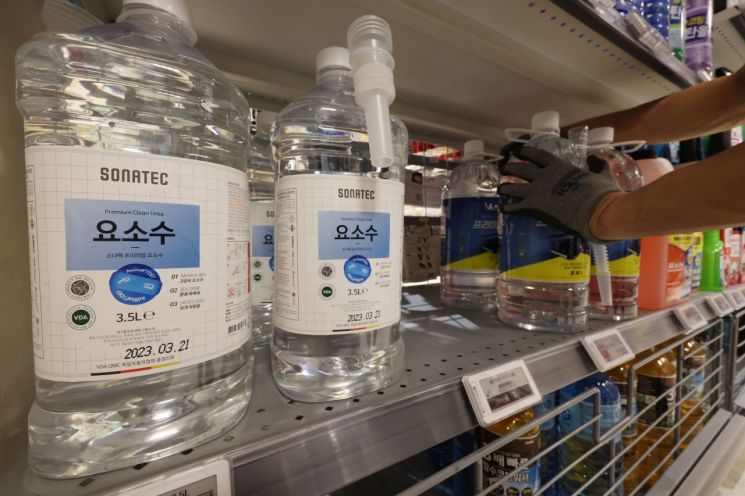
Diesel vehicles are designed to inject urea solution into selective catalytic reduction devices to reduce nitrogen oxides (NOx) in exhaust gases. However, some drivers have installed devices that prevent or reduce the injection of urea solution to save on purchasing costs, causing problems.
The amendment to the Atmospheric Environment Conservation Act stipulates that anyone importing or selling products intended to degrade the performance of emission-related parts, such as urea solution neutralizing devices, may face imprisonment of up to one year or a fine of up to 10 million KRW. A fine of up to 5 million KRW will be imposed for brokerage or proxy purchasing.
The amendment also includes provisions prohibiting construction machinery from degrading the performance of emission-related parts, similar to automobiles. The amendment to the Framework Act on Carbon Neutrality expands the current 'weather information management system' to a 'climate crisis monitoring and prediction management system' and defines what constitutes extreme climate events under surveillance. The amendment defines extreme climate as "a phenomenon where climate elements such as temperature and precipitation reach unpredictable extreme levels, causing or potentially causing harmful social and economic consequences."
On the same day, the National Assembly also passed an amendment to the Atmospheric Environment Management Act that establishes grounds to exclude medium and large-sized school buses from diesel vehicle usage restrictions in atmospheric management zones. Additionally, an amendment to the Resource Recycling Act, which imposes obligations on manufacturers of plastic products and containers to use recycled materials, passed the National Assembly. Currently, only PET raw material producers are required to use recycled materials.
An amendment to the Waste Management Act was also approved, allowing parking lots, logistics facilities, waste treatment facilities, and storage yards to be installed on closed waste landfill sites. Furthermore, an amendment to the Water Reuse Act was passed, permitting the reuse of warm water discharged not only from power plants but also from factories. Additionally, an amendment to the Meteorological Act was processed in the National Assembly plenary session, allowing the head of the Korea Meteorological Administration to request disaster damage status caused by meteorological phenomena from related agencies and to dispatch personnel such as forecasters to support central administrative agencies or local governments upon request. The amendment to the Climate Change Monitoring and Prediction Act, which mandates the government, local governments, and public institutions to utilize the 'National Climate Change Standard Scenario' when preparing climate crisis countermeasures, also passed.
© The Asia Business Daily(www.asiae.co.kr). All rights reserved.












