Ministry of Health and Welfare: Majority of 16 Estimation Committee Members to Be Recommended by Medical Community
Plan Allowing University Presidents to Adjust Next Year's Admissions Quota Deleted
As discussions over the composition of the Health and Medical Workforce Supply and Demand Estimation Committee (Estimation Committee), which will determine the quota for medical schools, face difficulties, the government has proposed an amendment to establish the Estimation Committee under a separate organization rather than under the Health and Medical Policy Deliberation Committee (HMPDC). The government also decided not to pursue a plan allowing university presidents to adjust the number of medical school admissions for the 2026 academic year.
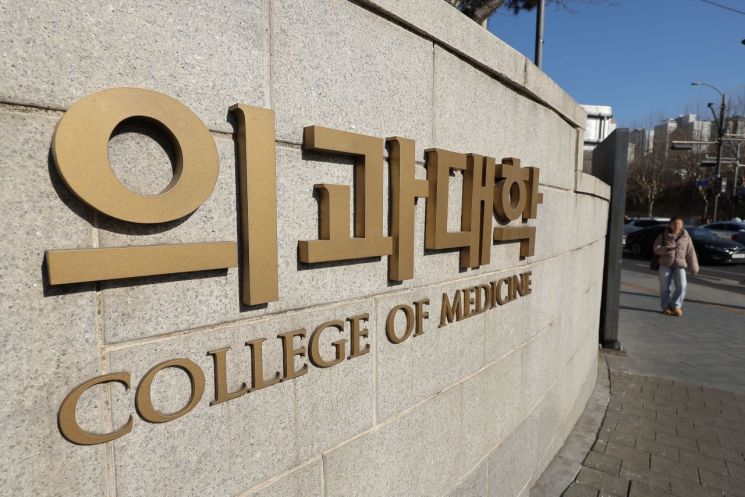
According to the government and medical circles on the 26th, the Ministry of Health and Welfare submitted an amendment to the National Assembly the day before concerning six bills proposed by ruling and opposition lawmakers to establish the Estimation Committee (amendments to the Health and Medical Workforce Support Act and the Framework Act on Health and Medical Services). The amendment is known to have significantly reflected the existing demands of the medical community.
First, regarding the composition of the Estimation Committee, the government proposed establishing a separate social consensus body called the 'Medical Workforce Training Committee (Training Committee)' and placing the Estimation Committee under it. Previously, the government suggested placing the Estimation Committee under the Ministry of Health and Welfare, but stepped back after the medical community opposed it, citing concerns over compromised independence.
The total number of Estimation Committee members will increase from the existing maximum of 15 to 16, with experts recommended by the medical community constituting a majority of 9 members. The 4 members recommended by healthcare consumers and 3 members recommended by academia will be maintained.
Government officials will not participate in the Estimation Committee. Additionally, the Training Committee must respect the deliberation results of the Estimation Committee, and when the Minister of Health and Welfare consults with the Minister of Education regarding the scale of medical workforce training, the deliberation results of the Training Committee must be reflected. The Training Committee will be under the Ministry of Health and Welfare, with the Minister of Health and Welfare serving as its chairperson, as proposed.
The government also added a provision to the supplementary rules stating that if the Estimation Committee fails to determine the medical school quota for the 2026 academic year by April 15, the current laws will apply. The clause stating that "university presidents can autonomously decide the number of medical school admissions" was deleted due to its controversial nature. The amendment also includes shortening the enforcement period of the law from "three months after promulgation" to "immediate enforcement" to enable the Estimation Committee to operate early.
The Korean Medical Association (KMA) viewed the government's amendment positively for reflecting the medical community's demands but insisted that the independence of the Estimation Committee must be fully guaranteed. They argued that if the newly established Training Committee ultimately falls under the Minister of Health and Welfare, the independence of the Estimation Committee cannot be ensured. Kim Seong-geun, spokesperson for the KMA, pointed out, "If the newly established Training Committee is ultimately under the Minister, it is no different from the Estimation Committee being under the HMPDC."
© The Asia Business Daily(www.asiae.co.kr). All rights reserved.












