Total Fertility Rate Rebounds to 0.68, Number of Births Rises to 13,063... Up 197 or 1.5% from Previous Year
"Busan-style Integrated Care 'Dangsincheoreom Aejijungji',
Fruitful Results from Marriage, Childbirth, Parenting, and Care Policies"
Busan City (Mayor Park Hyung-jun) announced on the 26th that last year, the total fertility rate in the Busan area was temporarily estimated at 0.68, and the number of births was 13,063, marking a rebound for the first time in nine years.
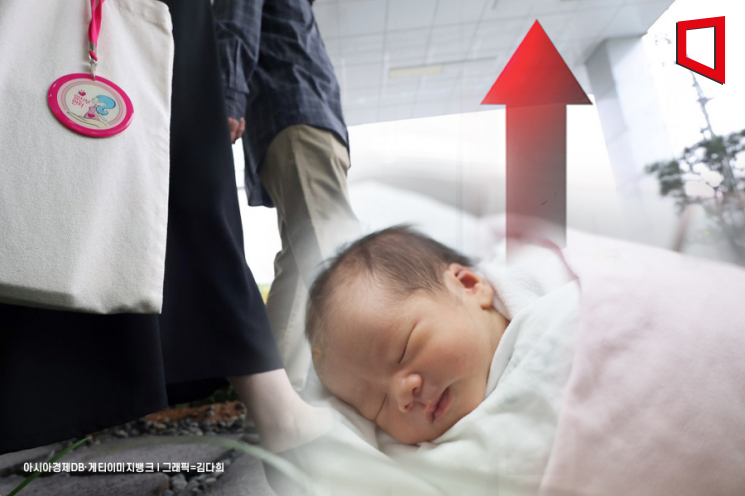
According to the "2024 National Population Trends" released by Statistics Korea on the 26th, the total fertility rate in the Busan area last year was 0.68, an increase of 0.02 from the previous year (0.66). This is the first rebound in nine years after a decline since 2015 (1.14).
The total fertility rate is the average number of children a woman is expected to have during her childbearing years (ages 15-49).
Also, the number of births in the Busan area last year increased by 197 from the previous year (12,866) to 13,063, a 1.5% increase. This is also the first increase in the number of births since 2015.
So far, Busan City has promoted comprehensive policies supporting marriage, childbirth, parenting, and care to create a "Busan, a city good for having and raising children." The city believes that these active policy efforts have led to achievements such as being selected as the "No. 1 city nationwide for children's quality of life in Korea" last year, winning the grand prize at the "SDG City Awards" (Deullaknallak), and now the rebound in total fertility rate and number of births.
Last year, the city implemented the Busan-type integrated care project "Dangsincheoreom Aejijungji," which provides all-day, wholehearted care from birth to elementary school graduation, establishing a seamless care system for the first time nationwide.
Additionally, Busan created 105 "Deullaknallak" children's complex cultural spaces where children can enjoy both analog and digital content within a 15-minute living radius at any time.
Furthermore, to respond to low birth rates, the city has promoted differentiated Busan-type leading policies such as ▲ housing loans and interest support for newlyweds ▲ Lucky 7 House support for newlyweds ▲ Mama Call, a call taxi service for pregnant women ▲ an additional 1 million KRW childbirth support fund for second and subsequent children ▲ multi-child education support points ▲ free public transportation for children, distinguishing itself from other cities and provinces.
Starting this year, the city is implementing new Busan-type policies to address low birth rates.
Key policies include ▲ Busan-type postpartum care cost support ▲ expanded necessary expense support for daycare centers (additional field trip expenses for 2-year-olds) ▲ "Lifelong Together Youth Everyone (家)," which provides lifelong public rental housing rent support for newlyweds with two or more children ▲ "Ijoa Busanjoa," which offers up to 1.5 million KRW electric vehicle purchase subsidies for families with newborns ▲ and support for small weddings at public wedding halls.
The national total fertility rate was 0.75, up 0.03 from the previous year (0.72), and the number of births was 238,343, an increase of 8,315 from the previous year (230,028). Among the nationwide cities and provinces, 14 places including Busan, Seoul, and Incheon showed increases, while three places including Gwangju and Gangwon showed decreases.
Mayor Park Hyung-jun said, "We plan to make continuous efforts to sustain the difficult-to-achieve rebound trend in total fertility rate and number of births by improving perceptions of marriage, childbirth, and parenting, creating a childcare environment where all children in Busan can grow up happily, and continuing cooperation between local governments and companies to spread a culture of work-family balance."

© The Asia Business Daily(www.asiae.co.kr). All rights reserved.













