Ruling and Opposition Parties Face Final Disagreement Over 1 Percentage Point in Income Replacement Rate
If Negotiations Fail This Week, Opposition May Push Ahead While Ruling Party Expected to Exercise Veto
Next Step of 'Structural Reform' Discussions Hinges on Outcome of Negotiations
Negotiations between the People Power Party and the Democratic Party of Korea on the fundamental reform of the National Pension Service are expected to take place this week over whether to raise the income replacement rate to 44% or 43%. As the two parties narrow their differences on the introduction of an automatic adjustment mechanism, the outcome of the income replacement rate negotiations will likely determine whether the next step, structural reform discussions, will proceed.
According to political circles on the 24th, the People Power Party and the Democratic Party of Korea reached a consensus at the first meeting of the ruling-opposition-government policy council held at the National Assembly Sarangjae on the 20th to introduce an automatic adjustment mechanism subject to parliamentary approval. The automatic adjustment mechanism, a system that automatically adjusts contribution rates and income replacement rates according to demographic and economic conditions, has faced opposition from civic groups and opposition parties due to concerns that pension benefits may be reduced because of a decrease in pension subscribers caused by demographic changes and increased life expectancy. However, it is reported that Lee Jae-myung, the Democratic Party leader, expressed willingness to accept it if it is subject to parliamentary approval.
With agreement reached on raising the contribution rate (from the current 9% to 13%) and the automatic adjustment mechanism, the key issue in the fundamental reform now remains a compromise on the rate of increase in the income replacement rate. The People Power Party has maintained that without structural reform linking other pensions such as those for public officials, military personnel, and private school teachers, the income replacement rate (currently 40%) can only be raised to 42%, but if the automatic adjustment mechanism is accepted, they are willing to raise it up to 43%. On the other hand, the Democratic Party insists on raising the income replacement rate from the current 40% to 44%. Ultimately, the tug-of-war over this 1 percentage point is expected to be a turning point for whether structural reform will proceed.
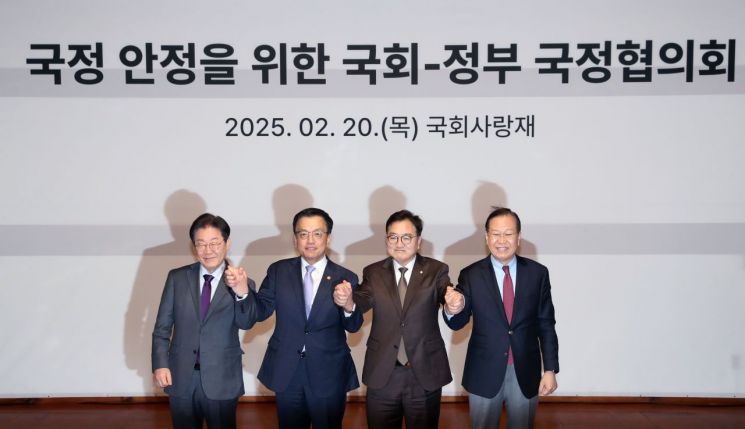
The People Power Party and the Democratic Party of Korea plan to continue steady negotiations at the level of the policy committee chair until the end of this month, which the government has presented as the appropriate time for pension reform. However, if negotiations break down, it is anticipated that the Democratic Party will push forward with the opposition’s proposal unilaterally. At the Democratic Party’s Supreme Council meeting held at the National Assembly that morning, Leader Lee emphasized the need for swift action, stating, "As I have said many times, we must carry out the reform of the National Pension Service to overcome the crisis of low birthrates and aging." Jin Sung-jun, chair of the Democratic Party’s policy committee, also said on MBC radio that morning, "If the difference is about 1%, I think unilateral passage is possible." In such a case, the People Power Party may request the exercise of the right to demand reconsideration (veto), and Choi Sang-mok, acting Deputy Prime Minister and Minister of Economy and Finance, may have to decide whether to exercise the veto.
© The Asia Business Daily(www.asiae.co.kr). All rights reserved.












