Of 49 Schools Closing, 43 Are in Provincial Areas
About 140 Elementary Schools Nationwide Unable to Hold Entrance Ceremonies
Due to the decline in the school-age population caused by low birth rates, a total of 49 elementary, middle, and high schools nationwide are scheduled to close this year. Among them, 43 schools, accounting for 88% of the total, are located in provincial areas.
According to the 'Status of School Closures by 17 Metropolitan and Provincial Offices of Education Nationwide' submitted by the Ministry of Education to Jin Sun-mi, a member of the National Assembly's Education Committee from the Democratic Party of Korea, 49 elementary, middle, and high schools are scheduled to close this year. The number of school closures, which was 33 in 2020, decreased to 24 in 2021 and 25 in 2022, then dropped to 22 in 2023, before sharply rising again to 33 last year.
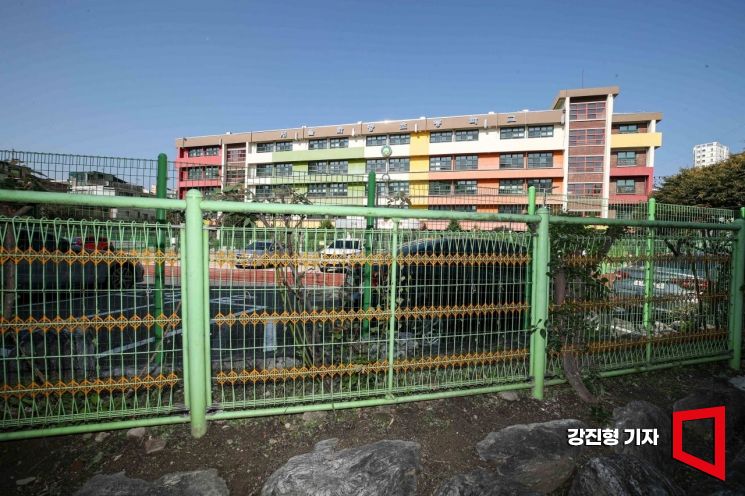 Hwayang Elementary School in Gwangjin-gu, Seoul, was the fourth school to be closed in Seoul. The school is located an 8-minute walk from Konkuk University Station, a transfer station between Seoul Subway Line 2 and Line 7. It is currently open as a resident-only parking lot and a community sports space.
There were no closures in Seoul, and six schools in Gyeonggi-do are scheduled to close. The region with the most schools scheduled for closure is Jeollanam-do with 10 schools. This is followed by Chungcheongnam-do (9 schools), Jeollabuk-do (8 schools), and Gangwon-do (7 schools). Among special and metropolitan cities, Busan (2 schools) and Daegu (1 school) were included.
By school level, 38 elementary schools are scheduled to close. Eight middle schools and three high schools are also set to close.
Among elementary schools preparing for new admissions, a total of 112 elementary schools nationwide had no new students last year (excluding temporarily closed or closed schools). According to the 'Status of Elementary Schools Without New Students' as of April last year, provided by the Ministry of Education to Assemblywoman Jin, Jeollabuk-do had the highest number with 34 schools. This was followed by Gyeongsangbuk-do (17 schools), Gyeongsangnam-do (16 schools), Jeollanam-do and Chungcheongnam-do (12 schools each), and Gangwon-do (11 schools).
This number is expected to increase further this year. According to the status compiled by each metropolitan and provincial office of education, Gyeongsangbuk-do had 42 elementary schools without new students, followed by Jeollanam-do with 32, Jeollabuk-do with 25, Gyeongsangnam-do with 26, and Gangwon-do with 21. Nationwide, the number of elementary schools without new students, where entrance ceremonies are not held, reaches about 170. The only regions where all elementary schools have incoming students are Seoul and Gwangju.
There are also many schools with only 10 new students. In Busan alone, the number of elementary schools with fewer than 10 new students has increased to 29, and schools with zero new students have appeared for three consecutive years.
© The Asia Business Daily(www.asiae.co.kr). All rights reserved.












