Seoul to Announce Ordinance in the First Half of the Year
Reducing Property Losses in Areas with Overlapping Regulations
Transferor Areas to Include Zones Around Cultural Heritage Sites
Seoul-type TDR Pilot Project to Consider Residents' Opinions
Starting from the second half of this year, Seoul will introduce the country's first 'Transfer of Development Rights (TDR)' system. This system allows the transfer of unused floor area ratio (FAR) from one area to another due to regulations or preservation restrictions. In areas where development has been blocked by overlapping regulations, such as zones around cultural heritage sites, property losses will be reduced, and areas with development potential will be able to receive transferred FAR to construct high-rise buildings.
On the 23rd, the Seoul Metropolitan Government announced that it will enact and publicly announce the 'Ordinance on the Operation of the Seoul Metropolitan Transfer of Development Rights System (tentative name)' in the first half of this year and officially implement the 'Seoul-type Transfer of Development Rights System' starting in the second half.
Transfer of Floor Area Ratio from High-Density Restricted Areas to Other Areas
The Seoul-type Transfer of Development Rights System allows unused FAR in areas subject to additional density restrictions imposed by laws other than the Land Planning Act's zoning-based FAR to be transferred to other areas.
The city plans to develop and apply an executable model of the 'Seoul-type Transfer of Development Rights System' through expert consultations and research in urban planning and law. At a regulatory abolition forum held last month, a citizen expressed the opinion that a 'floor area ratio transfer' system should be introduced, and the city confirmed the necessity of the system and plans to accelerate its implementation.
One Vanderbilt in New York was developed as a super high-rise building (93 floors, about 3000% FAR) by acquiring FAR from nearby Grand Central Terminal and Bowery Saving Building through TDR. In Tokyo, six buildings including the Shin-Marunouchi Building (38 floors, about 1760%) and Grand Tokyo (43 floors, about 1300%) were constructed as high-rise buildings by purchasing FAR from the Tokyo Station, which is designated as a cultural property. However, the TDR systems implemented in New York and Tokyo have different legal frameworks from Korea, making it difficult to apply domestically.
The city is currently finalizing a test of the actual transfer process using the combined building system under the Building Act in the Gangdong-gu Gupundari Station area revitalization project, which is preparing a business plan. Based on this, the city plans to complete an executable model.
In Seoul, there is a 'combined building' system that allows two separate lots to be developed as one maintenance zone, but due to strict conditions and limitations, its utilization is low. An example of development using this system is 'Imun I-Park Xi,' which combined Imun 3-1 and 3-2 zones for development.
Selection Focused on Areas with Difficult Regulatory Relaxation, Such as Around Cultural Heritage Sites
The core of the 'Seoul-type Transfer of Development Rights System' is the selection criteria for transferor areas eligible to transfer unused FAR to other regions. Since the system is in its early stages, the city plans to select transferor areas mainly in △zones around cultural heritage sites and △long-term restricted areas such as obstacle surface restriction zones where regulatory relaxation is difficult.
These areas have faced overlapping density restrictions due to additional regulations on top of zoning-based FAR, making development difficult, and public support has been insufficient due to financial constraints.
The city plans to alleviate property losses in areas burdened by overlapping regulations and promote development in areas with potential, thereby rationally redistributing urban development density. To ensure sustainable operation of the system, reasonable methods for calculating floor area value, efficient transfer procedures, and stable public announcement methods will also be incorporated.
The city will also promote a 'Seoul-type Transfer of Development Rights Pilot Project' to establish the system. The city will prioritize residents' opinions in selecting pilot areas and develop commercialization plans tailored to local characteristics.
Priority considerations for pilot area selection include △areas with high regulatory intensity where relaxation is difficult and TDR introduction is urgently needed, △areas with severe aging and high development pressure, and △areas that align with the system's objectives and have significant pilot project significance.
Once selected as a pilot area, the city will fully support the entire TDR process by establishing a public-private cooperation system. Through the pilot project, detailed operational standards will be established, and proposals for legal and enforcement ordinance amendments to stabilize the system will be continuously pursued.
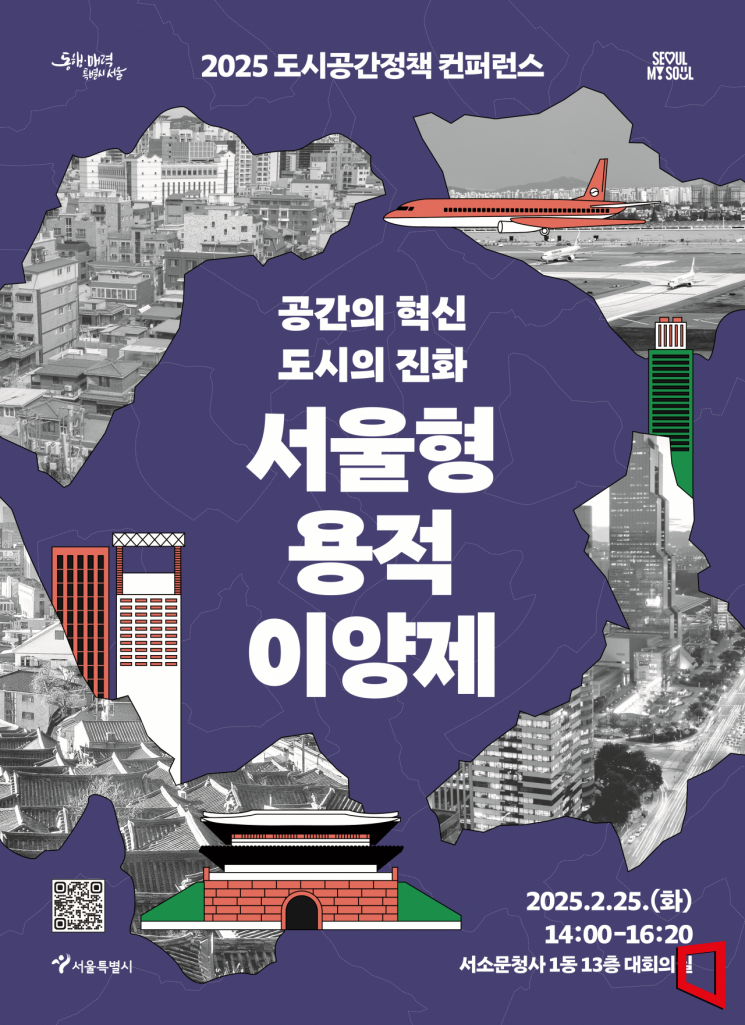
On the 25th at 2 p.m., the city will hold an urban policy conference titled 'Innovation of Space, Evolution of the City: Seoul-type Transfer of Development Rights' at the Seosomun Building of Seoul City Hall. The conference aims to build consensus on the system and explore reasonable executable models.
Professor Nam Jin of the University of Seoul will present on 'New Strategies for Transfer of Development Rights to Enhance Urban Competitiveness,' and Professor Kim Ji-yeop of Sungkyunkwan University will present on 'Legal and Institutional Introduction Plans for Realizing Transfer of Development Rights.' Panel discussions and Q&A sessions will follow.
Jo Nam-jun, Director of the Seoul Metropolitan Government's Urban Space Headquarters, said, "The Seoul-type Transfer of Development Rights System will preserve historical and natural assets while promoting growth in areas requiring development, opening a sustainable future for Seoul. We will continue discussions and research to establish this system as a means to relieve the constraints of overlapping regulation areas that were difficult to resolve under current systems and to lead balanced urban development."
© The Asia Business Daily(www.asiae.co.kr). All rights reserved.













