Government: "All Will Be Accepted If They Request to Come to South Korea"
Repatriation to Home Country Is the Principle, but There Are Precedents for Transfer to Third Countries
As North Korean soldiers deployed to Russia and captured by the Ukrainian military publicly express their desire to go to South Korea, attention is focused on how their legal status will be defined during the defection-related negotiations. Even though the procedures for repatriating prisoners of war and defectors from North Korea differ, the South Korean government maintains that it can accept them if they wish to come to South Korea.
Prisoners of War Are Principally Subject to 'Repatriation to Their Home Country' under International Law
Under international law, the principle for prisoners of war is 'repatriation to their home country.' Article 4 of the Third Geneva Convention on the Treatment of Prisoners of War defines prisoners of war as members of the armed forces of a party to the conflict who have fallen into the hands of the enemy. Since North Korea has not officially acknowledged dispatching troops to Russia, the prisoners' home country is likely to be Russia. If Russia demands repatriation, the North Korean prisoners of war may be returned to North Korea via Russia.
However, exceptions apply to the principle of repatriation if there are concerns such as human rights abuses. The Geneva Convention stipulates that the transfer of prisoners must be conducted humanely and with consideration for the prisoners' interests. Since prisoners who have publicly expressed their intention to go to South Korea could face danger if returned to North Korea, their wishes are given top priority, leaving open the possibility of repatriation to South Korea or another third country.
Last month, North Korean soldier Ri Mo, captured by the Ukrainian military, said in an interview with the Chosun Ilbo, "Being a prisoner in the People's Army is like betrayal," and when asked if he would face various hardships if he returned to the North now, he replied, "Of course."
In fact, during the Korean War, there were cases where North Korean and Chinese prisoners of war who refused repatriation to their home countries were sent to South Korea, Taiwan, and other places to avoid returning to North Korea or China.
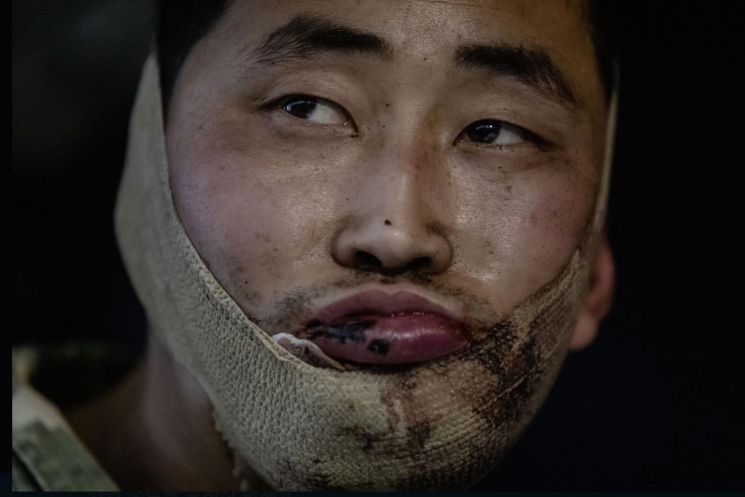 North Korean soldiers captured by the Ukrainian military last month in the Kursk region of western Russia. Ukrainian President Zelensky revealed images of the North Korean prisoners of war through his X account. Yonhap News Agency
Possibility of Acceptance under Defector Status
Although the government uses the general term 'prisoners,' the legal status of North Korean prisoners of war such as Ri has not yet been recognized as 'prisoners of war' under international law. Accordingly, there is a possibility that the government may bring North Korean prisoners of war under the status of defectors rather than as prisoners of war under international law. If North Korean prisoners of war are classified as defectors, defection negotiations can proceed under the Act on the Protection and Settlement Support of Residents Who Have Defected from North Korea. This law deals with the protection and support of residents north of the Military Demarcation Line who express their intention to receive protection from the Republic of Korea.
However, since the North Korean prisoners of war were deployed to the battlefield, controversy is expected over whether they can be considered protected persons in terms of the potential for causing harm. Article 9 of the Act on the Protection and Settlement Support of Residents Who Have Defected from North Korea, which was the basis for the 2019 repatriation of North Korean fishermen, states that persons who have committed serious non-political crimes such as murder may not be designated as protected persons. The fact that the North Korean prisoners of war were unaware of their participation in the war can be taken into consideration. In a public interview, Ri said, "I came because I heard I would be training as an exchange student," and "I did not know I would participate in combat."
Meanwhile, the Ministry of Foreign Affairs has conveyed to Ukraine that it will accept all North Korean prisoners of war if they request to go to South Korea. A Foreign Ministry official said on the 19th through the media, "According to the basic principle and relevant laws that we will accept all if they request to come to South Korea, we will provide necessary protection and support," and added, "We have already communicated this position to the Ukrainian side and will continue necessary consultations."
© The Asia Business Daily(www.asiae.co.kr). All rights reserved.












