More American Households Raising Chickens at Home
Amid Soaring Egg Prices and Avian Influenza Spread
In the United States, as avian influenza (AI) spreads and egg prices soar, more people are raising chickens directly in their backyards.
On the 16th, Yonhap News cited the latest data from the American Pet Products Association (APPA) via the U.S. internet media Axios, reporting that the number of American households raising chickens in their backyards recently reached 11 million.
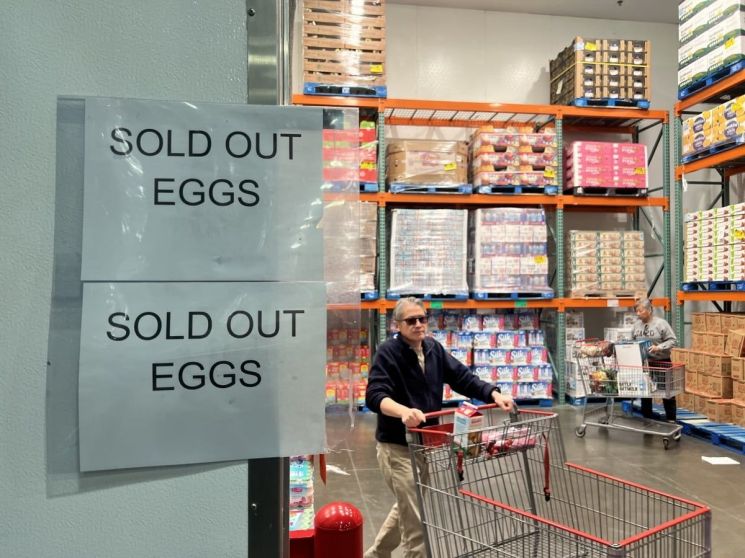 A "Sold Out Eggs" notice is posted at a Costco store in California, USA. Many local grocery stores are limiting the quantity of eggs that can be purchased. Photo by AFP Yonhap News
Considering that the estimated number of households raising chickens was 5.8 million as of 2018, this figure has doubled in just over six years. Chickens have become the third most popular pet in the United States.
According to the U.S. Department of Agriculture, egg prices nearly doubled since December last year. This was a result of rising prices nationwide combined with the outbreak of avian influenza (AI), which led to the culling of tens of millions of poultry and a sharp drop in supply. This caused an "eggflation" phenomenon, a portmanteau of egg and inflation.
According to the U.S. Centers for Disease Control and Prevention, since the spread of the AI virus in the U.S. from January 2022, more than 150 million poultry have been affected. In December last year alone, 13.2 million laying hens were culled, and the AI outbreak continues into the new year.
For this reason, many American households have started raising chickens themselves. However, the media noted that raising chickens instead of buying eggs from stores may not actually help reduce costs, as there are expenses involved in preparing chicken coops and other necessities.
Jen Tompkins, co-owner of Rent the Chicken, a company that rents hens to people who want to raise chickens in their backyards for eggs, explained that in "mild spring and fall weather, raising two hens under three years old can yield 8 to 14 eggs per week."
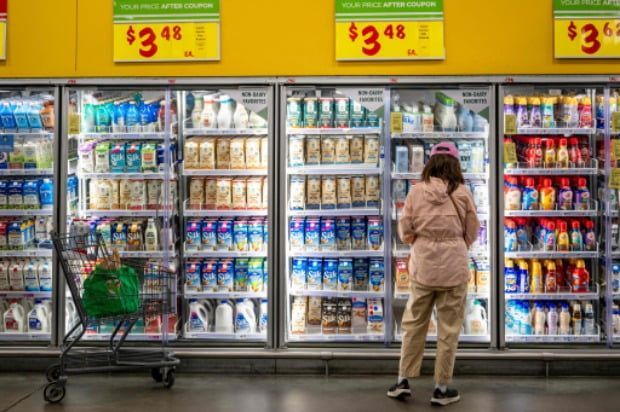 The soaring egg prices are increasing concerns among American consumers. A customer is browsing the shelves at a supermarket in Austin, Texas, USA. Photo by AFP Yonhap News
Building a chicken coop and preparing for raising chickens typically costs around $500 (approximately 720,000 KRW), and thereafter, feed and maintenance expenses amount to about $20 (approximately 29,000 KRW) per month. Considering the effort required to clean chicken droppings as well, even though the price of a dozen eggs reached a record high of $4.95 (approximately 7,100 KRW) last month, this may not be an attractive option at present.
However, Axios explained that egg prices in the U.S. continue to rise, and it is possible to reduce the production cost per egg by forming cooperatives or increasing the number of chickens raised.
Meanwhile, rising prices are affecting the overall U.S. economy, and some regions are even experiencing egg shortages. In particular, in Pennsylvania, an incident occurred where eggs loaded on a truck were stolen. The stolen eggs numbered 100,000, valued at $40,000 (approximately 58 million KRW).
© The Asia Business Daily(www.asiae.co.kr). All rights reserved.













