Morgan Stanley Forecasts Humanoid Robot Market to Reach $60 Trillion
Samsung, Hyundai Motor, Naver, and Other Korean Companies Named as Key Players
Intensifying Competition Among AI Semiconductor, Battery, and Robotics Technology Firms
In the ‘Humanoid 100’ report released by global investment bank Morgan Stanley, numerous domestic companies were selected as key players in the robotics industry. Morgan Stanley forecasted that humanoid robots will emerge as a major area of technology investment over the next decade, with the related market size reaching up to $60 trillion.
According to industry sources on the 16th, the recently published report by Morgan Stanley included major Korean companies such as Samsung Electronics, Hyundai Motor Company, Naver, SK Hynix, Samsung SDI, and LG Energy Solution as leading companies in the humanoid robot industry.
Morgan Stanley divided the humanoid industry into three sectors: ▲Brain ▲Body ▲Integrators, analyzing the roles of each company accordingly.
The Brain sector includes companies developing technologies that serve as the ‘brain’ of humanoid robots, such as AI chips, software, and semiconductors. Among domestic companies, Samsung Electronics and SK Hynix were selected. They were evaluated as core companies in AI semiconductor and software development alongside Nvidia, Meta, Alphabet, and Microsoft.
The Body sector comprises companies responsible for hardware. Domestically, Samsung SDI and LG Energy Solution were recognized for their battery technology and selected. High-efficiency battery technology is essential for the commercialization of humanoid robots. Samsung SDI and LG Energy Solution are expected to play important roles in the AI robotics industry based on their accumulated battery technologies in electric vehicles and energy storage systems (ESS).
The Integrators sector includes companies that combine AI and hardware to actually develop humanoid robots. Domestically, Naver, Samsung Electronics, Hyundai Motor Company, and LG were selected, while global companies such as Tesla, Apple, Amazon, and Sony were also named. Naver was recognized for possessing numerous core technologies necessary for humanoid robots, including AI large language models (LLM), cloud, digital twin, and robot operating systems (OS).
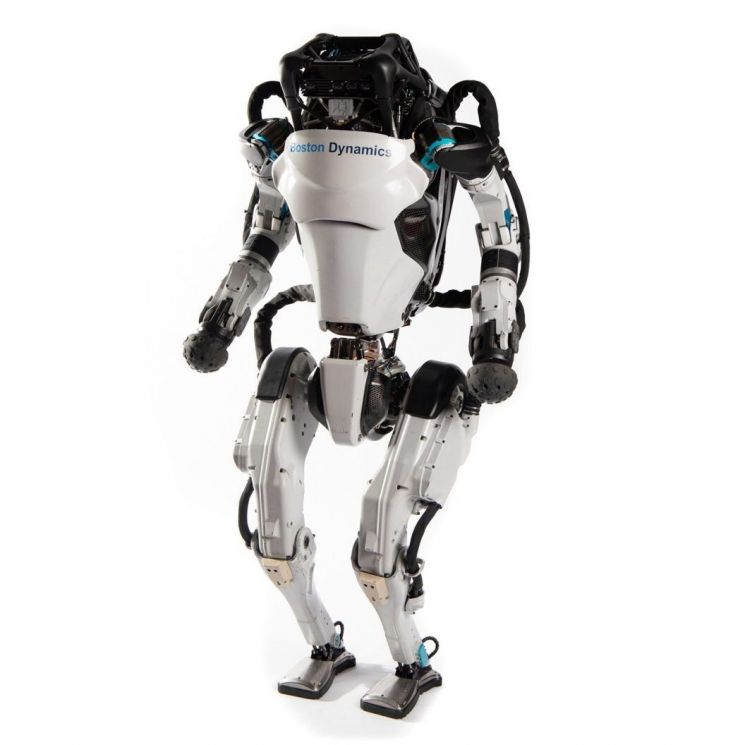
Hyundai Motor Company is strengthening its robotics business by developing the quadruped robot ‘Spot’ and humanoid robot ‘Atlas’ through its subsidiary Boston Dynamics. Samsung Electronics, as the largest shareholder of Rainbow Robotics, is actively investing in robot technology, and LG is expanding research and development of humanoid robots beyond household robots such as robotic vacuum cleaners.
Morgan Stanley projected in the report that “humanoid robots will be a core theme of technology investment over the next decade, with the related market size reaching up to $60 trillion.” In particular, not only global companies but also Korean companies are establishing themselves as key players based on AI semiconductors, batteries, and robotics technologies, and their competitiveness in the future humanoid robot market is expected to attract more attention.
© The Asia Business Daily(www.asiae.co.kr). All rights reserved.












