Survey Conducted with 502 Food Service Business Owners
Domestic self-employed business owners consider delivery app commissions the biggest burden in the food service industry, and as a result, half of them have raised menu prices.
On the 14th, Yonhap News reported the results of a survey conducted by the Consumer Public Interest Network targeting 502 food service business owners. The biggest burden felt by food service business owners in operating their establishments was delivery app commissions (5.68 out of 7 points). This was followed by taxes (5.46), ingredient costs (5.41), utility bills (5.38), employee wages (5.34), and rent (5.30).
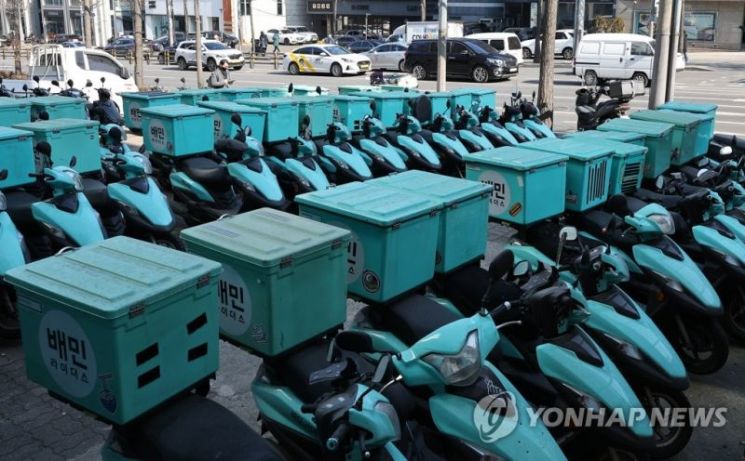
In particular, non-franchise businesses (5.77) felt a greater burden from delivery app commissions than franchise businesses (5.56), and the metropolitan area (5.72) felt more burden than non-metropolitan areas (5.63). By industry, cafes, bakeries, and dessert businesses (6.07) were analyzed to feel the greatest burden from delivery app commissions.
The burden of delivery app commissions led to price increases. 47.6% of business owners reported having experience raising sales prices, and 34.8% introduced a ‘dual pricing’ system where different prices are applied in offline stores and on delivery apps. Additionally, 34.8% raised the minimum order amount.
The cases of price increases were most common in individually operated cafes and bakeries in the metropolitan area, while the introduction of dual pricing was most common in non-franchise Chinese restaurants in the metropolitan area.
The average price increase that consumers have to bear due to delivery app commissions was also significant. In cases of simple price increases, the average increase was 1,858 KRW, and when introducing dual pricing where prices are raised only on delivery apps, the average increase was 2,114 KRW.
Only 26% of business owners believed that the ‘differential fee system’ to be applied from the 26th would reduce the burden. 44.4% of business owners evaluated the activation of public delivery apps positively.
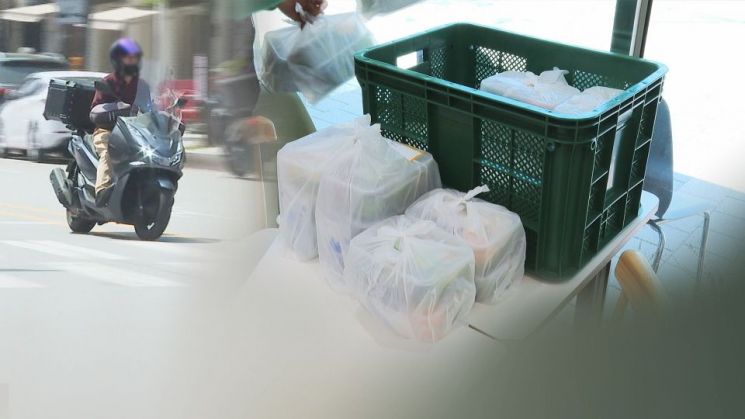 In the food service industry, delivery app fees have emerged as the biggest burden, surpassing rent and labor costs. Photo by Yonhap News
Earlier, four major delivery platform operators, four associations and organizations of tenant businesses, the government, and public interest commissioners launched the ‘Delivery Platform-Tenant Business Win-Win Council’ in July last year. Accordingly, Baedal Minjok will implement a win-win plan to reduce brokerage commission rates starting on the 26th, and Coupang Eats will implement it from the end of next month.
The core of the win-win plan is the ‘differential fee system.’ Baedal Minjok plans to reduce the current 9.8% delivery commission to 2~7.8% depending on sales scale and apply it differentially. For the top 35% in sales, the rate will be 7.8%, for 35~80% it will be 6.8%, and for the bottom 20% it will be 2%.
On the other hand, delivery fees will increase. For establishments in the top 35% of sales transaction volume, a 500 KRW increase will be applied, and for 30~50%, a 200 KRW increase will be applied. For establishments in the 50~100% transaction volume range, the current 1,900~2,900 KRW will be applied.
© The Asia Business Daily(www.asiae.co.kr). All rights reserved.













