Agreement with Fraunhofer IWES in Germany, Visit to Hydrogen Facilities
Exploring Policy and Technology Reviews for Advancing as a Hydrogen-Specialized City
Gwangyang City in Jeollanam-do, together with the city council, will visit Germany?a global model for urban energy systems through the advancement of its hydrogen ecosystem?to explore practical ways to apply these experiences to the creation of a hydrogen city in Gwangyang.
From the 16th to the 22nd, for seven days and five nights, a delegation of 14 including Kim Gihong, Deputy Mayor of Gwangyang, Choi Daewon, Chairman of the Gwangyang City Council, members of the council's Industrial and Construction Committee, and relevant officials, will tour Germany’s leading renewable energy infrastructure and collaborate on strategies for building a hydrogen city and distributed energy systems.
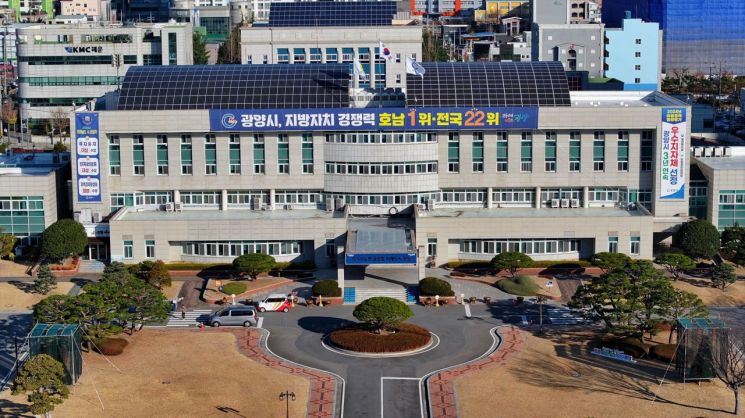
This visit is focused on verifying the appropriateness of the revised master plan, which was updated following changes in hydrogen production and utilization conditions after Gwangyang was selected as a first-phase hydrogen city in 2022. The delegation will also explore hydrogen production methods and the use of hydrogen in various sectors such as industry, residential buildings, and mobility, in line with the Ministry of Land, Infrastructure and Transport's Hydrogen City 2.0 strategy.
Currently, Gwangyang City is conducting a feasibility study for hydrogen production facilities in line with plans to introduce clean hydrogen manufacturing equipment. The city is planning to sign an advisory agreement with the Fraunhofer IWES research institute in Germany regarding hydrogen production facilities, and will visit the polymer electrolyte membrane (PEM) electrolysis production line at Siemens Energy’s Berlin plant.
Additionally, the delegation will visit Linde’s PEM electrolyzer plant at the Leuna chemical complex to examine the distribution structure connecting supply points (such as hydrogen charging stations) via pipeline networks. They will also review the energy self-sufficient smart city model of Heidelberg Bahnstadt, the world’s largest passive house district.
Based on the data collected during this visit, the city plans to compare and analyze domestic technological maturity for hydrogen production methods and facility construction, and reflect the introduction of commercially viable equipment in the hydrogen production facility feasibility study. The city also plans to lay the groundwork for policy decisions through expert consultation and the Hydrogen Industry Promotion Committee.
Through these efforts, Gwangyang City aims to go beyond the stage of a hydrogen city that uses hydrogen as a primary energy source, in accordance with the government’s Hydrogen City 2.0 strategy, and transition into a hydrogen-specialized city equipped with urban infrastructure for both residential and industrial applications.
A city official stated, "The water electrolysis hydrogen production method is currently in the phase of overcoming technical and economic challenges. Since various verification channels are needed for the introduction of facilities suitable for our city’s power generation capacity at the time of commercialization, it is essential to keep up with industry and technology trends and to benchmark advanced models."
Choi Daewon, Chairman of the Gwangyang City Council, said, "It is a very important process for the city and the city council to jointly set policy directions and conduct joint benchmarking from the early stages of hydrogen city infrastructure development. This visit will greatly help build consensus on Gwangyang City’s hydrogen industry policies."
© The Asia Business Daily(www.asiae.co.kr). All rights reserved.












