Financial Investment in National University Hospitals and Others to Revitalize Regional Healthcare
81.2 Billion KRW Allocated for Modernizing Severe and High-Difficulty Medical Infrastructure
Project Aims to Strengthen Local Final Treatment Capabilities and Reduce Reliance on Seoul's Big 5 Hospitals
The Ministry of Health and Welfare announced on the 13th that it will provide 81.2 billion KRW in national funding this year for the advanced modernization project of severe and high-difficulty medical treatment infrastructure to strengthen the final treatment capabilities of regional responsibility medical institutions in 17 metropolitan cities and provinces.
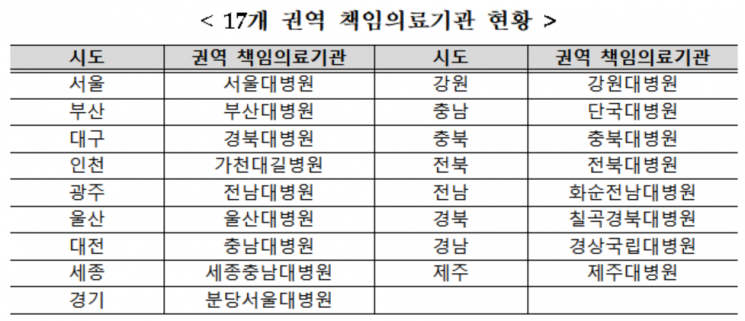
Regional responsibility medical institutions are hospitals that provide high-difficulty essential medical care and plan and coordinate cooperative systems among medical institutions within their regions. They have been designated since 2019, centered on regional national university hospitals, and currently, every metropolitan city and province has a regional responsibility medical institution.
Earlier, in October 2023, the Ministry of Health and Welfare announced the 'Essential Medical Care Innovation Strategy,' stating a policy direction to develop regional responsibility medical institutions such as national university hospitals to the level of the Big 5 hospitals in the Seoul metropolitan area, so that severe and emergency care can be completed locally without having to visit large hospitals in the capital area.
Through this project, the government will support the modernization of operating rooms at regional responsibility medical institutions, the establishment of advanced equipment for treating severe diseases, improvement of intensive care unit facilities and equipment, and expansion of specialized intensive care units. To enhance the effectiveness of financial investment, customized investments tailored to on-site demands will be made based on project plans prepared by each regional responsibility medical institution.
Each regional responsibility medical institution should prepare a project plan, consult with local governments, and then submit it to the Ministry of Health and Welfare. Afterwards, the ministry will form an evaluation committee composed of relevant experts to review the validity of the project plans and, after deliberation, finalize the support scale for each institution.
Jung Tong-ryeong, Director of Public Health Policy at the Ministry of Health and Welfare, emphasized, "To establish a regionally complete essential medical care system, regional responsibility medical institutions must have solid clinical leadership," adding, "Through the medical reform financial investments to be actively promoted from this year, we will drastically enhance the final treatment capabilities of base hospitals and accelerate the expansion of regional medical care that the public can feel."
© The Asia Business Daily(www.asiae.co.kr). All rights reserved.













