Performance Bonuses and Early Lunar New Year Drive Sharp Drop in Other Loans
Bank Mortgage Loans Rise by 1.7 Trillion Won, but Low Growth Expected to Continue
Last month, bank household loans decreased for the second consecutive month. While mortgage loans (Judaemdae) continued a moderate increase amid a decline in housing transactions, other loans such as credit loans significantly decreased due to the combined effects of year-beginning performance bonuses and holiday factors. Given the sluggish housing sales transactions, mortgage loans, which lag by 2 to 3 months, are expected to maintain a low growth rate for the time being.
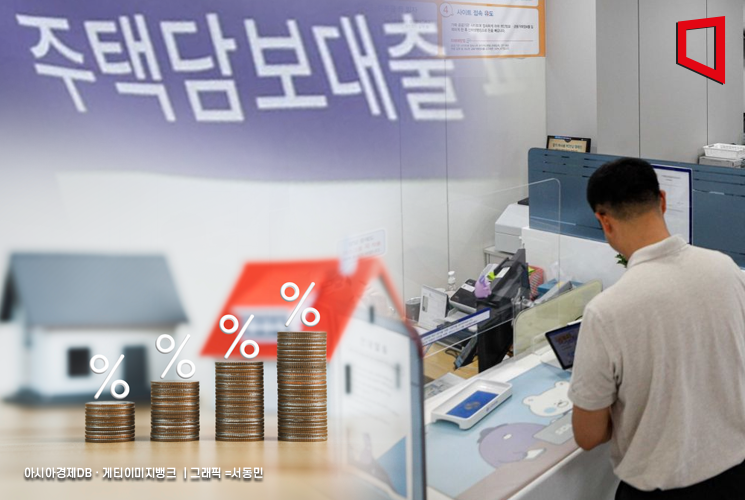
According to the "Financial Market Trends in January 2025" released by the Bank of Korea on the 12th, the outstanding balance of bank household loans stood at 1,140.5 trillion won at the end of last month, down 50 billion won from the end of the previous month. It decreased by 40 billion won in December last year, marking the first decline in nine months, and the downward trend has continued for two months.
Among bank household loans, mortgage loans increased by 1.7 trillion won to 904.3 trillion won. Despite the resumption of household loan issuance by banks at the beginning of the year, the slowdown in housing transactions led to a relatively low growth rate. Park Min-cheol, Deputy Head of the Market General Team at the Bank of Korea’s Financial Market Department, said, "We need to closely observe the flow of household loans across the entire financial sector, including non-bank institutions. Overall, mortgage loans increased last month, but the 'balloon effect' of shifting loans to non-bank sectors that continued until December last year has decreased." He added, "Compared to the annual increase of 57 trillion won in mortgage loans across the financial sector including non-bank institutions last year, the 3 trillion won increase last month is considered a low growth rate." Nationwide apartment sales transactions amounted to 27,000 units in December last year, marking a decrease for two consecutive months. During the same period, apartment sales in Seoul remained at around 3,000 units, continuing the previous month's level. Jeonse loan balances increased by 400 billion won.
Other loans decreased by 2.1 trillion won. This significant decline is attributed to the inflow of year-beginning performance bonuses, holiday effects such as the early Lunar New Year, and other factors. Other loans include general credit loans, credit line loans (overdraft loans), commercial real estate mortgage loans, deposit-secured loans, and stock-secured loans.
Household loans in February are expected to turn to an increase again, but the scale is not expected to be large. Deputy Head Park said, "In February, the Lunar New Year bonuses already received last month may reduce the decline in other loans, potentially leading to an overall increase." However, he forecasted, "Considering the movement in housing sales transactions, the trend of slowing household loan growth is likely to continue."
Meanwhile, bank corporate loans increased by 7.8 trillion won last month. This increase is explained by seasonal factors at the beginning of the year. Large corporate loans rose by 6.1 trillion won due to short-term factors such as the reissuance of credit line loans temporarily repaid for year-end financial ratio management and funds demand for the Lunar New Year. Loans to small and medium-sized enterprises also increased by 1.8 trillion won, driven by short-term factors such as value-added tax payments and funds demand for holiday bonuses.
Regarding fund raising through direct finance, corporate bonds saw net issuance increase from 300 billion won in December last year to 1.8 trillion won last month, influenced by the resumption of institutional fund management at the beginning of the year. Commercial paper (CP) and short-term bonds increased by 9.1 trillion won. This large net issuance is explained by the reissuance of year-end temporary repayments and expanded working capital demand from some large corporations. Deputy Head Park said, "As domestic and international uncertainties increase, investment has contracted, reducing long-term fund raising, and this trend is expected to continue for the time being."
Bank deposits in January decreased by 33.3 trillion won after increasing by 16.5 trillion won in December last year. The decline was mainly driven by demand deposits. Demand deposits significantly decreased, especially corporate funds (down 32.3 trillion won), due to outflows of temporarily inflowed funds for year-end financial ratio management and value-added tax payment demands.
Time deposits slightly decreased by 2.4 trillion won as the incentive for banks to raise funds diminished due to the slowdown in loan growth. Asset management company deposits turned to an increase of 38.1 trillion won, mainly driven by money market funds (MMF) and bond funds. MMFs increased by 19.9 trillion won as funds withdrawn for year-end capital ratio management flowed back in. Bond funds also saw a large inflow of 8.6 trillion won. Equity funds and other funds continued their growth, increasing by 5.4 trillion won and 3.4 trillion won, respectively.
© The Asia Business Daily(www.asiae.co.kr). All rights reserved.












