Royal Tombs and Palaces Office Publishes Report on Neunghaeng Research
211 Royal Tomb Visits Recorded... Donggureung Most Frequently Visited
'Hwaseong Haenghaengdo Palcheop Byeong (華城行幸圖八疊屛)' is an eight-panel folding screen depicting the event when King Jeongjo of Joseon visited the tomb of his father, Crown Prince Sado, at Hyeryungwon (顯陵園) in Hwaseong. It is also called 'Hwaseong Neunghaengdo Byeong (華城陵行圖屛)' or 'Suwon Neunghaengdo Byeong (水原陵行圖屛)'.
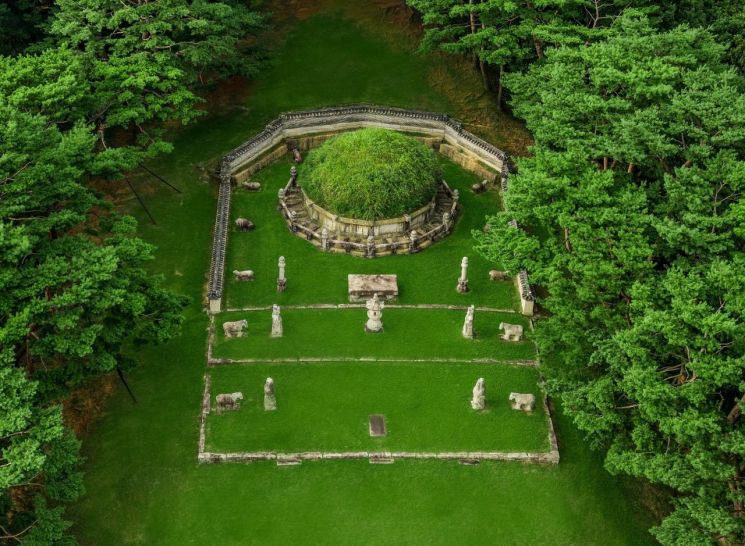 The place where the Joseon kings visited most frequently is Donggureung, where Geonwonneung is located. Yonhap News
'Neunghaeng' refers to the royal procession of a Joseon king to perform ancestral rites or pay respects at the tombs of previous kings or queens. The Cultural Heritage Administration’s Office of Royal Palaces and Tombs announced on the 12th that it published a report presenting the results of an in-depth study conducted last year to clarify its actual nature.
According to the report, Joseon kings visited royal tombs more frequently than Jongmyo Shrine from the 17th century onward. Most often, they first visited their father’s royal tomb. Through rituals such as Chinje (親祭, ancestral rites performed by the king), Jakheon (酌獻, offering a cup of wine), Jeonal (展謁, bowing at the tomb), Saryeong (辭陵, notifying of departure), and Bongsim (奉審, inspecting and caring for the royal tomb), they emphasized political legitimacy.
Neunghaeng also served as an opportunity to emphasize the ruler’s closeness to the people. Since it was almost the only occasion for the king to travel outside the capital, he met with commoners to inquire about agricultural conditions and hardships, thereby gauging public sentiment. Sometimes, military activities such as hunting and Jinbeop (陣法, military formation) training were conducted.
The total number of royal tomb visits by Joseon kings reached 211. The frequency increased after King Hyojong established the principle of conducting neunghaeng twice a year. The most frequently visited site was Donggureung, with 89 visits.
Besides this, the report includes the practical management methods of royal tombs, records of royal processions (haenghaeng, the king’s travels outside the palace) by successive kings, and trends in neunghaeng throughout the Joseon period. An official from the Office of Royal Palaces and Tombs stated, "We plan to actively utilize this in planning new programs for the Joseon Royal Tombs Trail or developing cultural content within the royal tomb complexes."
© The Asia Business Daily(www.asiae.co.kr). All rights reserved.












