Introduction of Smart City Technologies such as Digital Twin
From Crowd Management and Flood Prevention
to Rapid Disaster Response
Detailed Design Completed, Full-Scale Implementation Begins This Year
Goyang Special City in Gyeonggi Province (Mayor Lee Dong-hwan) is innovatively improving its disaster response system through a smart city development project.
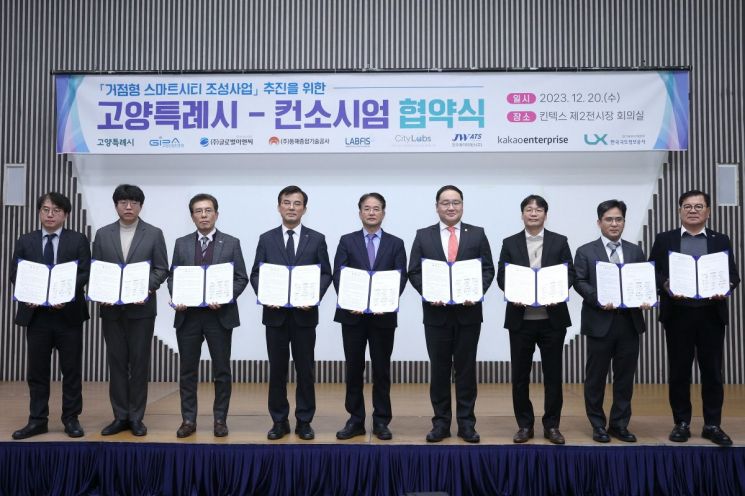 Consortium Agreement Ceremony between Goyang Special City and Consortium for the Hub-type Smart City Development Project. Photo by Goyang Special City
According to Goyang Special City on the 11th, the hub-type smart city project, which began with 20 billion KRW in national funding through a government public contest, focuses on establishing a system that uses advanced technologies such as artificial intelligence (AI), Internet of Things (IoT), and big data to monitor disaster situations in real time within the city and respond swiftly to crises.
In particular, the project has attracted attention by introducing systems that can prevent large-scale disasters like the Itaewon tragedy in Seoul and the flooding accident in the Osong underground passage in Chungbuk.
The Itaewon tragedy in 2022 was a disaster caused by a massive crowd gathering in narrow alleys. It was pointed out that if there had been a system to monitor the crowd in real time and immediately alert the police or related agencies when the risk level was reached, the accident could have been prevented.
To address this issue, Goyang City is introducing a real-time floating population monitoring system through the smart city development project. This system uses CCTV, AI video analysis, and IoT sensors to grasp the population density in specific areas in real time, and when the pre-set risk level is reached, it automatically sends warning messages or requests dispatch to the police or fire station.
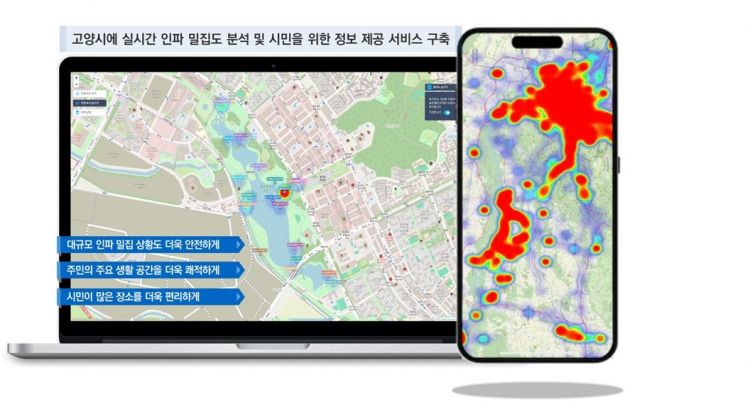
An official from the city said, “Goyang is a city visited by many people for events such as the Goyang International Flower Festival and large concerts, especially with performances by famous domestic and international artists like Coldplay and Oasis, increasing the risk of large crowds gathering at once.” He added, “To prevent heartbreaking tragedies like the Itaewon disaster from happening again, we plan to build a real-time monitoring system and apply it intensively to areas where large crowds gather to prevent accidents in advance.”
In 2023, a flooding accident occurred in the Osong underground passage in Chungbuk when heavy rain caused a levee to collapse, submerging the underpass. It was an accident that could have been prevented if a system had been in place to monitor rainfall and flooding risks in real time and automatically lower barriers when a dangerous water level was predicted.
To solve this problem, Goyang City is implementing digital twin technology to create a virtual world identical to the real city and introducing an IoT sensor- and AI-based smart disaster management system. This system monitors rainfall, river water levels, and flooding risks in underground passages in real time and can predict flood damage in advance. When a risk situation is predicted, it automatically sends warning messages and takes measures such as lowering barriers.
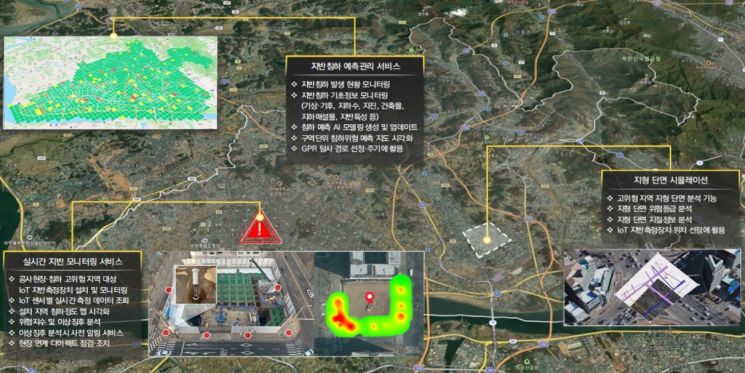
Since 2022, the city has been conducting barrier installation work in underground passages to block vehicle entry when water exceeds 10 cm. With the establishment of the smart city, it is expected that disaster prevention will be possible by advancing further through digital twin technology to predict flood-prone areas and damage situations.
Additionally, low-lying areas such as Tanhyeon, which are vulnerable to flooding due to the geographical characteristics adjacent to the lower Han River and heavy rains, are expected to become safer through ground subsidence monitoring after the system is introduced.
The city is also building a ‘Drone Valley’ by installing and operating drone stations at key points throughout the city to enable faster disaster monitoring and response using drones.
In Drone Valley, when the areas and times requiring monitoring are set, drones autonomously fly and transmit large amounts of information. When various disaster situations such as wildfires, fires, or floods occur, drones quickly identify the situation and approach the site to efficiently respond to rescue operations and situation management.
Previously, one drone was operated and controlled by one person, but once Drone Valley is completed, drone operation will be possible without manpower limitations. Drones equipped with thermal cameras can immediately detect early wildfires and send dispatch signals to fire stations, and drones patrolling the Han River at night can detect suicidal intentions using infrared cameras and motion recognition functions to send alerts.
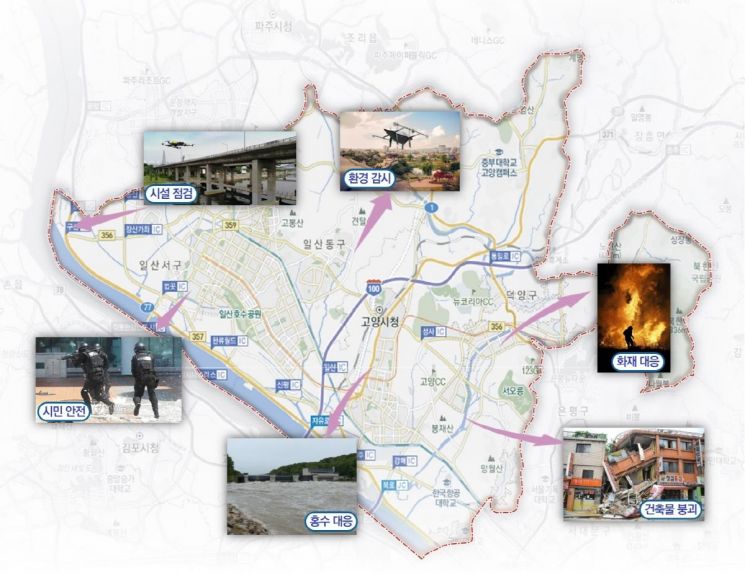
With the establishment of Drone Valley, the city plans to utilize drones for various purposes such as wildfire monitoring, missing person searches, and disaster site monitoring by establishing a rapid on-site access system.
Mayor Lee Dong-hwan of Goyang said, “A smart city is not only a convenient city but also one that protects the safety and lives of its citizens,” adding, “Since preparation that predicts accidents is more important than quick action after an accident occurs, we will do our best to create a safe Goyang City where tragedies like the Itaewon disaster and Osong underground passage flooding accident never happen again.”
© The Asia Business Daily(www.asiae.co.kr). All rights reserved.