Chinese Tycoons Invest Billions to Establish Private Universities
Aiming to Foster Talent and Advance Technological Innovation Amid U.S.-China Competition
Chinese tycoons are liquidating their private assets to establish universities. This is in line with the Chinese government's emphasis on technological self-reliance in advanced fields such as semiconductors and artificial intelligence (AI), and they see universities as a new business domain.
Hong Kong's South China Morning Post (SCMP) reported on the 10th that Zhong Shanshan, one of China's richest tycoons and the founder of the bottled water company Nongfu Spring (農夫山泉), plans to establish a private university with an investment of 40 billion yuan (approximately 8 trillion won).
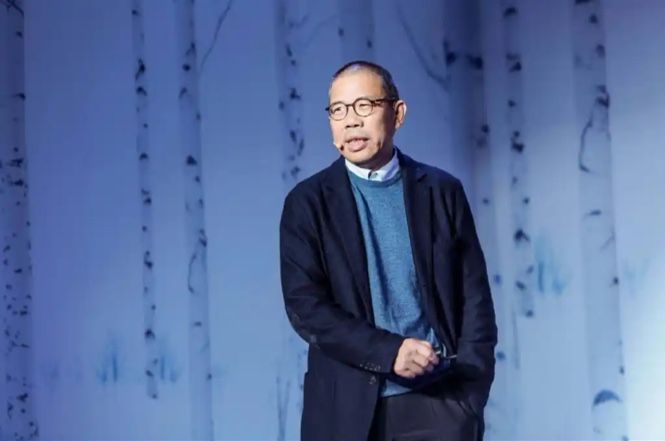
The Qiantang (錢塘) University, which Chairman Zhong announced he would establish by donating 40 billion yuan over about 10 years, is expected to be located in Hangzhou City. The name 'Qiantang' appears to be derived from the Qiantang River, a symbol of Hangzhou City.
Hangzhou is home to Zhejiang University, which produced Liang Yuanpeng, the founder of DeepSeek, a Chinese generative AI that recently surprised the world. Many recently notable robotics and AI startups, including DeepSeek, are based in Hangzhou, earning it the nickname "cradle of AI talent." Hangzhou also hosts Xihu (西湖) University, a private science and engineering university founded in 2018 with donations from Tencent founder Ma Huateng and real estate tycoon Wang Jianlin, chairman of Dalian Wanda Group.
According to a plan announced by Hangzhou City at the end of last year, Qiantang University aims to train 150,000 professionals annually, attract 500 researchers, and educate 350,000 students.
Chairman Zhong revealed the university establishment plan at his company's annual event last month, stating, "Our university's mission is to guard the forefront of knowledge and drive scientific progress from '0 to 1,'" adding, "We will advance scientific research and cultivate top-tier talent."
Having endured hardships from a boycott campaign last year due to controversies involving pro-Japanese companies, he showed tears at the event, saying, "Our money is clean." He then announced the university establishment plan to calm the critical public opinion.
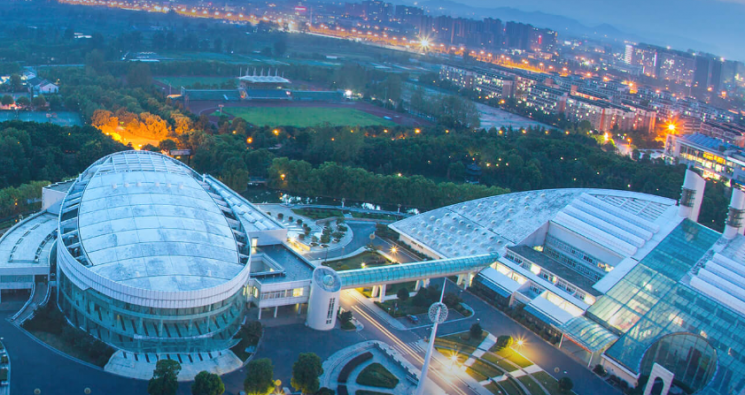
There is also a manufacturing magnate who has stepped forward, aiming to benchmark Stanford University in the United States, famous worldwide for producing the most entrepreneurs.
Recently, the Chinese government approved student enrollment at Fuyao University of Science and Technology (FYUST), established by Fuyao Group, China's leading glass manufacturer. Cao Dewang (曹德旺), founder of Fuyao Group, known as the "Glass King" and the protagonist of the documentary film "American Factory" produced by former U.S. President Barack Obama and his wife, invested 10 billion yuan (about 2 trillion won) to establish the university in his hometown, Fuzhou City, Fujian Province.
Amid intensifying technological competition between China and the United States, Chairman Cao has set a goal to nurture practical scientific and technological talent that can be utilized in advanced manufacturing sites. Fuyao Glass headquarters is located in Fuzhou City.
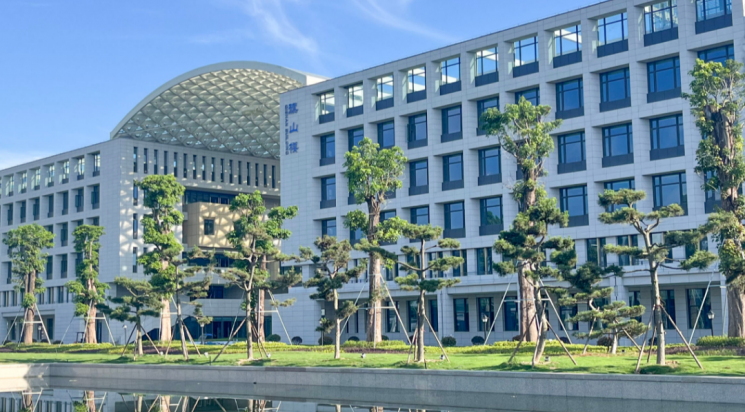
Dongbu Institute of Technology (EIT), funded by Wei Er Semiconductor founder Wei Runlong, admitted its first doctoral students in 2022 and plans to accept its first undergraduate students by the end of this year.
According to the "2024 China Philanthropy List" by Hurun Research Institute, known as the "Chinese Forbes," 70% of China's top donors prioritized donations to the education sector. This is a significant increase from 58% in 2023.
SCMP pointed out that this trend is "a result of changes in how China's capable entrepreneurs utilize their wealth."
Li Mingbo, deputy director of the Guangzhou Institute in the Greater Bay Area, said, "Without a new generation of experts, China risks falling behind in global technological competition," adding, "Today, technological innovation is led more by companies than universities, so it is natural for entrepreneurs to step up to bridge that gap."
© The Asia Business Daily(www.asiae.co.kr). All rights reserved.














