Domestic semiconductor companies are expanding their 'company stock performance bonus' systems, raising expectations for attracting talent. The industry is focusing on the possibility that the semiconductor workforce, which has been shrinking due to the outflow of STEM talents, could be revitalized through company stock compensation.

According to the industry on the 10th, recently SK Hynix had 124 executives voluntarily choose to receive their performance bonuses in company stock. The company stock they received amounts to about 8.3 billion KRW. SK Hynix operates a shareholder participation program where members can receive from a minimum of 10% up to a maximum of 50% of their Profit Sharing (PS) in company stock. A company official said, "The internal response is positive." Accordingly, on the 7th, the company additionally granted 30 shares of company stock under the name of a 'New Start Encouragement Bonus.'
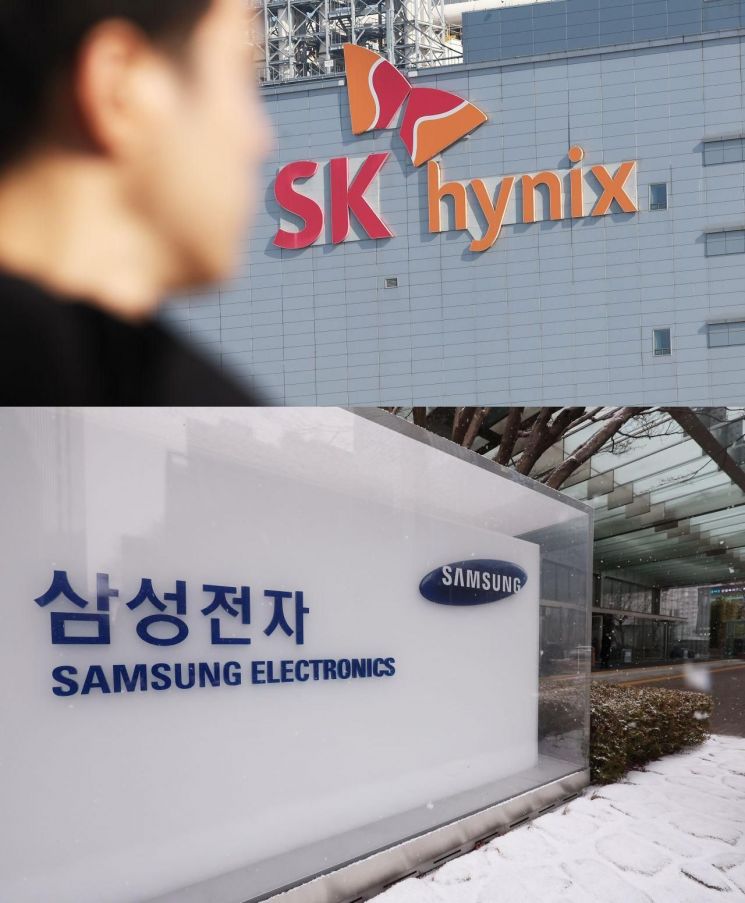
Samsung Electronics executives also recently decided on the ratio of receiving part of their Overperformance Incentive (OPI) in company stock. Samsung Electronics set the performance bonus distribution so that general managers receive at least 50%, vice presidents at least 70%, and presidents at least 80% in company stock. Senior executives who received company stock as performance bonuses generally accepted it willingly, calling it part of "responsible management." DB HiTek also established a system allowing employees to choose up to 50% of their Productivity Incentive (PI) in company stock and has completed performance bonus payments.
This is evaluated as a successful first step. If the company stock performance bonus system successfully settles in the future, it is expected to serve as a mechanism to attract talent. An industry insider said, "Global companies such as Meta, Tesla, and TSMC already attract and retain talent through company stock performance bonus systems," adding, "This will be a new lifeline for the semiconductor industry, which has been greatly concerned about talent shortages." The Korea Corporate Governance Forum also noted this point, commenting that the introduction of company stock performance bonuses is "the first step toward an advanced country-type compensation system."
◆Taiwan where people join TSMC to receive company stock= The most frequently cited example regarding the talent attraction effect of 'company stock performance bonuses' is Taiwan's TSMC. TSMC implements a Restricted Stock Award (RSA) system for executives and provides subsidies to employees when purchasing company stock. It is also reported that when receiving company stock as a performance bonus, employees can get it at a price lower than the market price. This information is widely known externally, and every year, before the job application season, talents flock to TSMC.
People are attracted by the prospect of receiving high salaries and high-yield company stock when joining TSMC. After TSMC implemented the company stock performance bonus system, large corporations in Taiwan are reportedly following suit. However, this has caused a side effect of polarization, where Taiwan's top talents concentrate only in large companies like TSMC, while small and medium-sized enterprises face difficulties in securing personnel. Global big tech companies in the U.S. also pay part of their performance bonuses in company stock to boost employee motivation and attract talent. According to the Korea Corporate Governance Forum, Meta distributed company stock worth 17 trillion KRW to employees as compensation in 2022. Tesla provides new engineers fresh out of university with stock compensation worth over 100 million KRW upon joining. Apple, Nvidia, Alphabet, and Amazon are also known to use similar systems.
◆"Clear pros and cons, need to strike the right balance"= Experts emphasize that the 'company stock performance bonus' system has "clear advantages and disadvantages," and companies must operate it with precise objectives to gain real benefits. Oilseon, director of the CXO Research Institute, said, "Because there are pros and cons, company stock performance bonuses cannot be seen as entirely positive or necessarily negative," adding, "From the company's perspective, the effects will become clear depending on why they decided to pay part of the performance bonus in stock. From the employees' perspective, whose performance bonuses are directly linked to salary and living conditions, it is desirable to expand the options for performance bonuses, such as '100% cash' or 'partial stock payment.'"
However, there are many criticisms regarding Samsung Electronics' method linked to stock prices. Samsung Electronics requires executives to receive company stock as performance bonuses one year later, and if the stock price falls during that period, the amount of company stock paid is reduced accordingly. For example, if the stock price drops by about 10% after one year compared to the agreed price, the number of shares received is reduced by 10%. This is a strong 'carrot and stick' measure intended to increase executives' accountability for management performance. However, the industry voices that since performance bonuses are a form of reward for achievements, the method should be more aligned with incentives rather than penalties. A business insider emphasized, "Stock prices have uncertainties that executives cannot control no matter how hard they try," warning, "Linking performance bonuses to stock prices could rather lower motivation."
© The Asia Business Daily(www.asiae.co.kr). All rights reserved.













