32 Medical Schools Nationwide Decide to Start Semester in March
Among the 40 medical schools nationwide (including medical graduate schools), 80% postponed the start of the new semester to March this year.
On the 7th, Yonhap News reported this citing data on the "Status of Re-enrollment and Registration of Medical Students Nationwide" submitted by the Ministry of Education to Go Min-jeong, a member of the Education Committee of the Democratic Party of Korea. Out of 40 medical schools nationwide, 32 schools start their semester after March. Although it is generally common for medical schools to start in February, due to the prolonged conflict between the medical community and the government, adjustments to the academic schedule are expected to be inevitable this year as well, following last year.
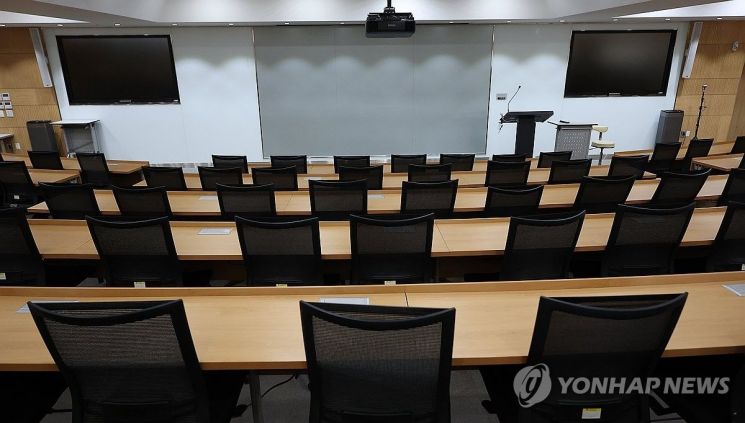 The Korean Medical School and Graduate School of Medicine Student Association (Udae-hyeop) announced on the 5th through a notice that "following the resolution of the expanded general student representative meeting held on November 15 last year, Udae-hyeop will proceed with the 2025 academic year struggle by submitting leave of absence applications." Yonhap News
The medical schools starting after March include Gachon University, Catholic Kwandong University, Catholic University, Kangwon National University, Konkuk University, Konyang University, Keimyung University, Korea University, Kosin University, Dankook University, Daegu Catholic University, Dongguk University, Dong-A University, Pusan National University, Sungkyunkwan University, Soonchunhyang University, Ajou University, Yonsei University (branch campus), Ulsan University, Wonkwang University, Eulji University, Ewha Womans University, Inha University, Jeju University, Chosun University, Chonnam National University, Chonbuk National University, Chung-Ang University, Chungnam National University, Chungbuk National University, Hallym University, and Hanyang University.
The medical curriculum is divided into the pre-medical course (2-year program) and the medical course (4-year program). Even if the pre-medical course starts in March, it is common for the medical course, which mainly consists of practical classes, to begin in January or February. In fact, at Seoul National University, 3rd and 4th-year medical students started on January 20, and 2nd-year medical students started on the 3rd of this month.
However, as the conflict between the medical community and the government has lasted for over a year, delaying the return of medical students to classes, universities have postponed the start of the first semester this year as well. Medical students have been engaging in collective actions such as boycotting classes since last year in opposition to the government's increase in medical school quotas.
Only three universities?Kyungpook National University, Yeungnam University, and Inje University?start the 4-year medical course in January or February. Five universities?Gyeongsang National University, Kyung Hee University, Seoul National University, Yonsei University, and CHA University?start only some grades of the medical course in January or February.
Meanwhile, it was reported that 95% of medical students nationwide opposed to the government's expansion of medical school quotas have taken a leave of absence. According to the status of medical students (as of January 9) submitted by the Ministry of Education to Jin Sun-mi, a member of the National Assembly Education Committee of the Democratic Party of Korea, 18,343 students took a leave of absence from 39 medical schools nationwide. This corresponds to 95% of the total enrolled medical students nationwide (19,373). This is a 59% increase compared to the number of medical students on leave (11,584) counted by the Ministry of Education in November last year.
Out of 1,030 enrolled medical students, only 723 actually attended classes. The remaining 307 students did not apply for leave but are effectively boycotting classes. Among the 39 medical schools nationwide, 11 schools had fewer than 10 medical students attending classes, and one school had zero attendance of medical students.
© The Asia Business Daily(www.asiae.co.kr). All rights reserved.












