KPAHA: "Policy Interest and Support Are Absolutely Necessary"
# The parents of A, a boy aged 1 year and 7 months, visited a pediatric hospital in Uijeongbu, Gyeonggi Province last month. Born prematurely at 24 weeks, A was an extremely low birth weight infant with weak organs and body from birth. He had severe bronchopulmonary dysplasia, making him highly susceptible to progressing to severe pneumonia even from a mild cold. Due to his frail condition, he was extremely vulnerable to infections and had to use a single room, incurring about 1 million won in treatment costs each time he was hospitalized. Eventually, A had to be hospitalized again for a cold just three days after being discharged, but since then, he has not even visited for outpatient care, according to the hospital.
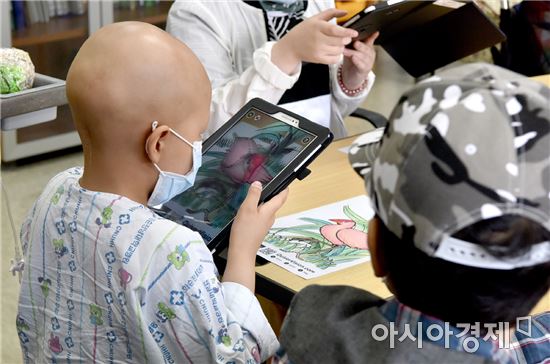 Patients attending 'Yeomisa Love Hospital School' inside Hwasun Chonnam National University Hospital are taking smart classes using tablet PCs.
According to the medical community on the 10th, there is a continuous call within the medical sector, including the Korean Pediatric and Adolescent Hospital Association (KPAHA), to expand policy support for children with chronic diseases. Due to the nature of chronic illness in children, it is difficult to care for them with the existing special calculation system alone. The KPAHA stated, "Children with chronic diseases cause suffering not only to themselves but also to their families," and appealed that "there is an urgent need for expanded policy development and support."
Children with chronic diseases mainly refer to those with congenital or long-term illnesses requiring ongoing treatment. They often need lifelong medication or experience frequent worsening of their condition as they grow. Their bodies are inherently weak, and even if they maintain a good condition, sudden critical illness can occur. These children frequently visit hospitals from birth but often find it difficult to enroll in general insurance due to their chronic conditions.
The government operates a special calculation system for such chronic patients, but the association's position is that pediatric patients do not receive sufficient support. The special calculation system is designed to reduce the medical expenses burden for patients with severe, rare, or intractable diseases. When designated as a special calculation beneficiary, the burden of outpatient and inpatient medical fees and medication costs is significantly reduced. Typically, the patient's share of outpatient and inpatient fees and eligible medications is reduced from about 20-30% to 5%. However, non-covered items and nursing care fees are not supported.
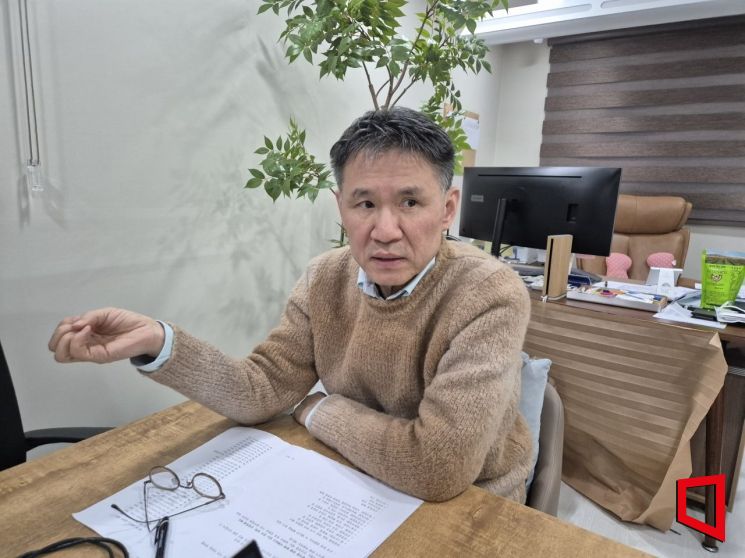 Choi Yong-jae, President of the Korean Pediatric and Adolescent Hospital Association, is answering questions at his office in Ttuntun Children's Hospital in Uijeongbu, Gyeonggi Province on the 9th. Photo by Choi Tae-won
Choi Yong-jae, president of the KPAHA, said, "Policy interest and support are absolutely necessary so that children with chronic diseases and their caregivers can receive treatment more stably," adding, "Even now, many children with chronic diseases are unable to receive proper treatment due to economic burdens and other reasons and are passing away."
He continued, "The scope of special calculation application should be expanded, the out-of-pocket maximum adjusted, support for non-covered items strengthened, and nursing care fees supported," adding, "In particular, for extremely low birth weight infants and severely ill chronic patients who inevitably require single rooms, policies to reduce single room costs through expanded isolation room policies or separate support measures are needed."
Psychological counseling and social welfare services are also necessary not only for patients but also for their families. President Choi emphasized, "Since many children with chronic diseases are newborns or infants, additional costs such as nursing care fees arise during hospitalization. Because of this, cases of giving up treatment or family breakdowns are increasing," and added, "Families of patients are easily exhausted emotionally and physically, face restrictions in social activities, and may experience depression or loneliness, so measures need to be prepared."
© The Asia Business Daily(www.asiae.co.kr). All rights reserved.











