Costco Membership Fee Hike in Korea Draws Criticism
Japanese Fee Increase Remains Lower Than Korea
Consumers Complain of Unfair Burden and Profit Outflow

American warehouse discount retailer Costco announced that it will raise its annual membership fees in South Korea by double digits starting this May, while the membership fee increase rate in Japan remains in the single digits, drawing criticism from domestic consumers.
According to Yahoo Japan on the 4th, Costco Wholesale Japan, which operates Costco stores in Japan, announced that it will raise the prices of its three types of annual memberships (Gold Star, Business, Executive) starting May 1.

Accordingly, including tax, the Gold Star membership (individual) will increase from 4,840 yen to 5,280 yen, the Business membership (corporate) from 4,235 yen to 5,280 yen, and the Executive membership, which earns a certain percentage of purchase amounts as rewards, from 9,900 yen to 10,560 yen. The increase rates are 9% for individuals, 24.7% for corporations, and 6.5% for Executive members.
Regarding this price increase, Costco Wholesale Japan stated, "We have adjusted the annual membership fees to continue providing high-quality products and services at affordable prices." In other words, the fee increase is intended to maintain service quality.
Despite Costco's explanation, some consumers reacted negatively to the price hike. A customer who has been using Costco for 15 years told local media, "There aren't many special discount benefits just because you are a member," adding, "I think this is about the limit. If the annual fee rises from 6,000 yen to 7,000 yen, it would be a bit burdensome." Another customer said, "I subscribe to monthly services like YouTube Premium, Netflix, and Costco," and added, "Those subscriptions cost about 10,000 yen per month. Since the economy is tough, I think I have to cancel at least one."
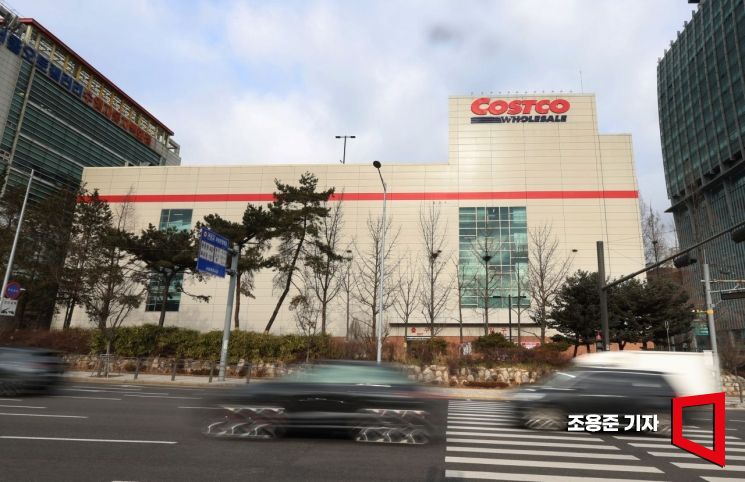
There are also voices of dissatisfaction among domestic consumers in South Korea. They particularly pointed out that despite Costco recording annual sales exceeding 6 trillion won in Korea and generating huge profits every year, it significantly raised domestic membership fees, increasing the burden on Korean consumers. Previously, Costco headquarters raised the Business membership fee (corporate) from 33,000 won to 38,000 won, a 15.2% increase, and the Gold Star (individual) from 38,500 won to 43,000 won, an 11.7% increase. The Executive membership, which earns 2% of purchase amounts as rewards, was raised from 80,000 won to 86,000 won, a 7.5% increase.
Comparing Korea and Japan, the Gold Star increase was 11.7% (Korea) versus 9% (Japan), and the Executive was 7.5% versus 6.5%, with Korea being higher in both cases. For Business memberships, Japan's increase was higher at 24.7% compared to Korea's 15.2%. Considering that individual members are the majority, the fee increase rate in Korea was higher than in Japan. Also, compared to the 8.3% increase in the US and Canada last year, there are complaints that "only Korean consumers are being taken advantage of."
One customer recently wrote on social media, "I know the enormous profits made in Korea last year. But there is no sign of sharing profits with Korean consumers, and now they are raising the membership fees, so I am considering canceling my membership." Another user criticized, "If profits are high, they should lower the membership fees, not raise them."
In the Korean market, Costco ranks third among large domestic marts and is rapidly closing in on Homeplus, the industry's second largest. According to the Financial Supervisory Service, Costco Korea recorded sales of 6.53 trillion won for the 2024 fiscal year (September 2023 to August 2024), a 7.6% increase from the previous year. Operating profit during the same period rose 15.8% to 218.5 billion won. About half of this is covered by membership fees. Net profit reached 224 billion won, up 58.1%.
However, Costco Korea focuses more on paying the headquarters rather than reinvesting profits earned in Korea back into the country. Most of the net profit is paid out as dividends to the US headquarters. Dividends were 70.8 billion won in the 2022 fiscal year, 200 billion won in 2023, and 150 billion won in 2024. The 2023 fiscal year dividend to headquarters reached 141.2%.
On the other hand, social contributions are relatively low. They were 1.28 billion won in the 2022 fiscal year, 1.18 billion won in 2023, and about 1.22 billion won in 2024, with the proportion of net profit decreasing from 1.3% in 2022 to 0.8% in 2023 and 0.5% in 2024. As Costco faces criticism from domestic consumers along with membership fee increases, attention is focused on whether customer churn will continue.
© The Asia Business Daily(www.asiae.co.kr). All rights reserved.