Trends in Industrial Activity for 2024 and December
Retail Sales Decline for Third Consecutive Year
Semiconductor Sector Drives Industrial Production Growth
Facility Investment Rebounds, Construction Performance Weakens
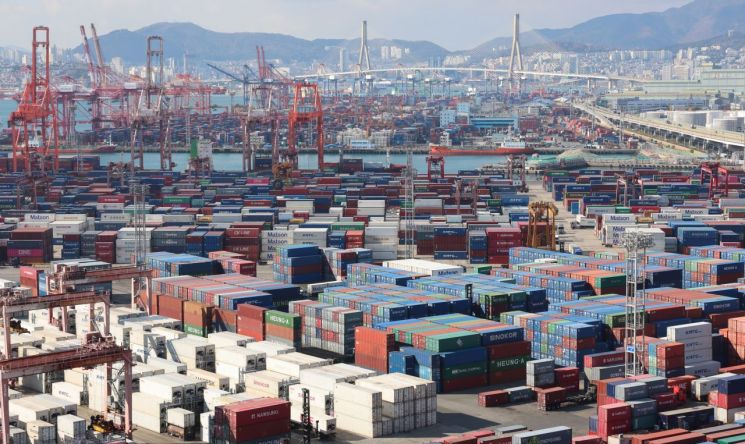
Due to the prolonged high interest rates and high inflation, retail sales declined for the third consecutive year last year, marking the longest period of stagnation since statistics began. Industrial production increased thanks to a strong semiconductor sector, and facility investment also returned to an upward trend.
In December last year, industrial production rose, but retail sales fell due to factors such as weakened consumer sentiment following the December 3 emergency martial law incident.
According to the 'December 2024 and Annual Industrial Activity Trends' released by Statistics Korea on the 3rd, total industrial production last year increased by 1.7% compared to the previous year. Industrial production, which had sharply declined in the first year of the pandemic (global outbreak), has increased for four consecutive years since 2021 (5.5%).
Production increased in both manufacturing and service sectors. Mining and manufacturing production decreased in areas such as electrical equipment and primary metals but increased in semiconductors and pharmaceuticals, resulting in a 4.1% rise compared to the previous year. Service sector production declined in wholesale and retail but increased in transportation and warehousing, finance, and insurance, leading to a 1.4% increase year-on-year.
The average operating rate of manufacturing was 72.9%, up 1.0 percentage point from the previous year.
Retail sales, which indicate consumer trends, fell by 2.2%. This is the largest decline in 21 years since the 2003 credit card crisis (-3.2%). The annual decline continued for the third consecutive year, marking the longest period of decline since statistics began.
Sales decreased across durable goods such as passenger cars (-3.1%), non-durable goods such as food and beverages (-1.4%), and semi-durable goods such as clothing (-3.7%).
By retail type, sales increased in non-store retail (2.4%) and duty-free shops (3.1%), but decreased in specialty stores (-3.4%), passenger car and fuel retail stores (-4.1%), supermarkets and miscellaneous goods stores (-5.9%), department stores (-3.3%), and large discount stores (-2.3%).
Facility investment returned to an increase of 4.1%. Construction performance decreased by 4.9%, marking the largest decline since 2021 (-6.7%).
Looking at December alone, industrial production rose 2.3% month-on-month. Mining and manufacturing production led the increase with a 4.6% rise, supported by growth in semiconductors (5.6%) and automobiles (10.7%). Telecommunications and broadcasting equipment declined by 12.9%.
The average operating rate of manufacturing rose 1.9 percentage points month-on-month to 73.5%.
Service sector production decreased in accommodation and food services (-3.1%) but increased in finance and insurance (5.3%) and wholesale and retail (2.8%), resulting in a 1.7% month-on-month increase.
Retail sales fell 0.6% month-on-month. Sales of non-durable goods such as cosmetics increased by 1.0%, but sales of durable goods such as passenger cars (-4.1%) and semi-durable goods such as entertainment, hobbies, and sporting goods (-0.6%) declined.
Facility investment increased 9.9% month-on-month. Construction performance, which shows the actual amount of construction completed by construction companies, rose 1.3% month-on-month. Construction orders (current prices) fell 26.0% compared to the same month last year. This was due to decreases in orders for civil engineering such as railroads and tracks (-49.3%) and buildings such as offices and stores (-1.6%).
The coincident index of economic indicators, which reflects the current economy, remained flat month-on-month, while the leading index, which predicts future economic conditions, fell 0.2 points month-on-month.
© The Asia Business Daily(www.asiae.co.kr). All rights reserved.












