Kim Mi-ae Proposes Reciprocity in Health Insurance
Over 700,000 Chinese Nationals Received Domestic Benefits Last Year
Calls for Legislation to Prevent Free-Riding by Foreigners
Last year, among the 1.33 million foreigners who received domestic health insurance benefits, about 710,000 were Chinese, accounting for more than half.
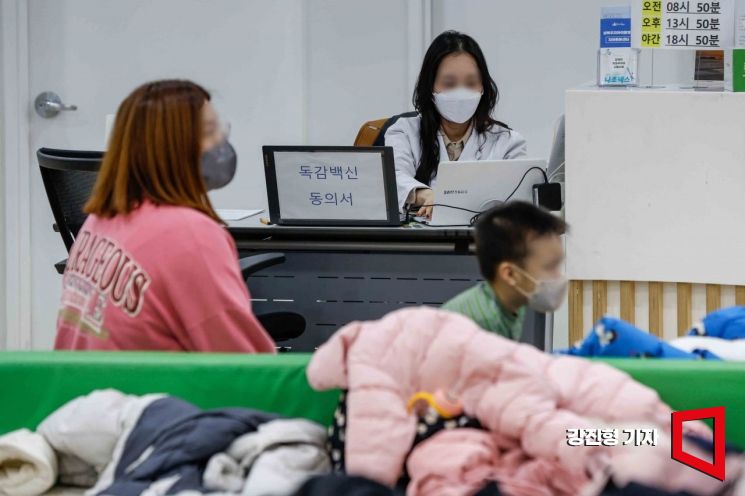 On the 13th, as influenza, COVID-19, and respiratory syncytial virus (RSV) are simultaneously spreading, a children's specialty hospital in Seongbuk-gu, Seoul is registering patients for influenza vaccinations amid heightened respiratory health concerns. The photo is not related to the specific content of the article.
According to data titled 'Status of Foreigners Receiving Domestic Health Insurance Benefits by Year from 2017 to 2024,' obtained by Kim Mi-ae, a ruling party secretary of the National Assembly's Health and Welfare Committee from the National Health Insurance Service, the number of foreigners receiving domestic health insurance benefits was approximately 1.33 million in 2024. This represents an increase of nearly 40% over seven years from about 960,000 in 2017.
By nationality, Chinese accounted for 714,028 people, representing 53.7% of all foreigners receiving health insurance benefits. They were followed by Vietnamese with 111,267, Uzbeks with 56,387, Americans with 48,434, and Nepalese with 40,404.
As of 2023, the number of foreign dependents with a domestic stay period of less than six months was 50,474. The average benefit paid per person among them was 630,325 KRW, with a total expenditure of approximately 31.815 billion KRW.
As the number of foreigners receiving domestic health insurance benefits without paying or paying little insurance premiums increases, issues of fairness with domestic citizens have been consistently raised. In particular, the Chinese health insurance fund has recorded deficits every year. According to data from the Ministry of Health and Welfare, the deficit amounts were -98.7 billion KRW in 2019, -23.9 billion KRW in 2020, -10.9 billion KRW in 2021, -22.9 billion KRW in 2022, and -64 billion KRW in 2023.
In response, the 'Foreigners Health Insurance Free-Riding Prevention Act' was proposed. On the 21st, Representative Kim submitted a revision bill to the National Health Insurance Act that would prohibit nationals of countries that do not provide health insurance benefits to our citizens from enrolling in Korea’s health insurance. The intent is to apply the principle of 'reciprocity' from diplomatic and trade relations?where responses correspond to how the counterpart country treats its own citizens?to the health insurance system.
Representative Kim stated, "To prevent the leakage of our citizens’ hard-earned health insurance premiums and taxes, reciprocity should be applied to health insurance as part of a more fundamental and structural reform."
© The Asia Business Daily(www.asiae.co.kr). All rights reserved.












