Frequently Asked Questions on Housing Fund Deductions Introduced by the National Tax Service
The National Tax Service (NTS) selected frequently asked questions regarding income and tax deductions for housing funds during year-end tax settlement and introduced them on the 20th.
An NTS official explained, "For the 2023 year-end tax settlement, 4.22 million out of 20.85 million workers (20.2%) filed for housing fund income and tax deductions. Since about one in five workers receive this deduction, we are providing guidance on precautions to ensure accurate reporting of housing fund income and tax deductions so that taxpayers do not miss out on the benefits."
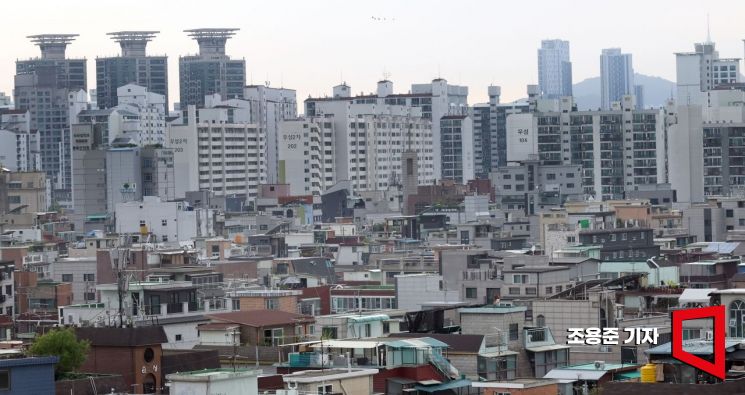 A residential complex in downtown Seoul featuring both apartments and houses. Photo by Jo Yongjun jun21@
Starting from this year's year-end tax settlement, interest payments on long-term housing mortgage loans can be deducted up to a maximum of 20 million KRW. The requirements for tax deductions on monthly rent have also been relaxed, allowing workers with a total annual salary of 80 million KRW to receive tax credits up to 1.5 million KRW. For inquiries regarding housing fund and monthly rent deductions, please refer to the comprehensive year-end tax settlement guide on the NTS website or use the National Tax Counseling Center’s 24-hour phone consultation service, which employs artificial intelligence (AI).
Below are answers to frequently asked questions about housing fund deductions introduced by the NTS.
▲ Households owning more than one house are only eligible for deductions on interest payments of long-term housing mortgage loans. Homeowners are not eligible for principal and interest repayment deductions on housing lease funds or monthly rent deductions.
▲ Only principal and interest repayments on housing lease funds borrowed from financial institutions or family members are eligible for income deductions. Housing lease loans supported (loaned) by the company are not deductible.
▲ Interest on secured loans for acquiring a house (with a standard market price of 600 million KRW or less as of 2024) is eligible for deduction. Houses received as gifts without charge are not eligible for income deductions. However, burdened gifts are allowed.
▲ Refinanced housing mortgage loans (loan refinancing) and loans repaid immediately by the borrower are also eligible for income deductions.
▲ Even if the principal repayment amount is small in the first or last year, a higher deduction limit applies for non-grace period loans. A higher income deduction limit applies even if the repayment amount temporarily falls below the repayment standard amount.
▲ If the repayment amount meets or exceeds the standard amount each year, the non-grace period condition is satisfied. Regardless of the loan agreement, repaying 70% or more of the borrowed amount is recognized as non-grace period installment repayment.
© The Asia Business Daily(www.asiae.co.kr). All rights reserved.












