Housing Prices Fall Nationwide for the First Time in Seven Months
Only Seoul Sees Continued Increases, Widening Regional Gap
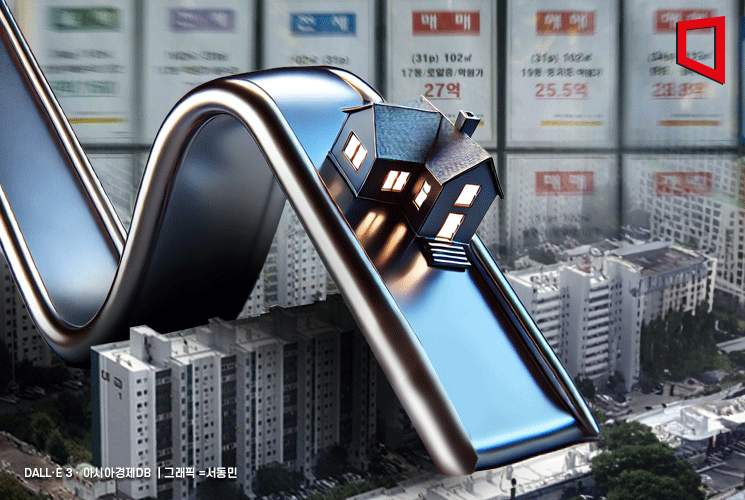
Due to regulations on mortgage loans, uncertainty caused by the impeachment political situation, and the seasonal off-peak winter period, nationwide housing prices fell last month for the first time in seven months. However, only Seoul continued to see price increases, deepening the polarization between regions.
According to the "December 2024 Nationwide Housing Price Trend Survey" released by the Korea Real Estate Board on the 15th, the nationwide housing (including apartments, row houses, and detached houses) sales price index fell by 0.07% compared to the previous month. This marks the end of a six-month upward trend that began last June when prices rose by 0.04%.
Seoul saw a 0.08% increase, maintaining its upward trend, although the rate of increase slowed compared to the previous month (0.20%). The metropolitan area remained flat (0.00%), while provincial areas declined by 0.14%, a larger drop than the previous month’s 0.09%. A Korea Real Estate Board official stated, "Localized price increases are observed mainly in well-maintained residential complexes in Seoul and the metropolitan area, but due to seasonal off-peak effects and loan regulations, market watchfulness is expanding."
By housing type, apartments in Seoul rose by 0.09%, but fell by 0.02% in the metropolitan area and 0.21% in provincial areas. Nationwide apartment prices dropped by 0.11%, marking a decline. Row houses showed a similar pattern: rising by 0.08% in Seoul but falling by 0.01% in the metropolitan area and 0.13% in provincial areas, resulting in a 0.04% nationwide decrease. Detached houses increased across the board: 0.18% in Seoul, 0.15% in the metropolitan area, and 0.06% in provincial areas, with a nationwide rise of 0.08%.
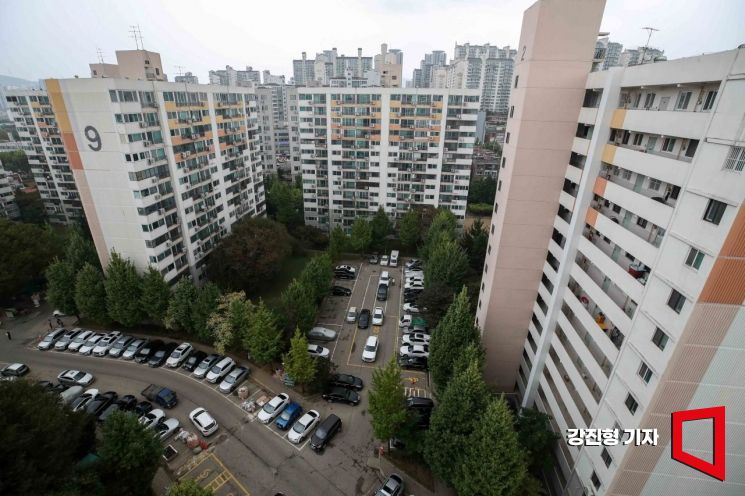 On the 15th, Seongsan Sijeong Apartment in Seongsan-dong, Mapo-gu, Seoul. Seongsan Sijeong Apartment is a complex completed in 1986, consisting of 33 buildings with up to 14 floors and 3,710 households. Photo by Jin-Hyung Kang aymsdream@
Nationwide housing jeonse (long-term lease) prices rose by 0.01%, continuing the upward trend but with a smaller increase than the previous month’s 0.09%. The monthly rate of increase has been decreasing steadily: 0.22% in August last year, 0.19% in September, 0.16% in October, and 0.09% in November. In Seoul (0.15% to 0.02%) and the metropolitan area (0.19% to 0.03%), the rate of increase narrowed compared to the previous month, while provincial areas shifted from a 0.01% increase to a 0.01% decline.
In Seoul, jeonse prices continue to rise mainly in preferred complexes. However, some areas saw declines due to new housing supply and loan interest burdens, resulting in an overall reduced rate of increase. Seocho-gu (0.20%) and Gangnam-gu (0.15%) in Seoul maintained upward trends, but Gangdong-gu fell by 0.21% due to the impact of new residents moving into Olympic Park Foret. In the metropolitan area, Gyeonggi Province rose by 0.06%, while Incheon fell by 0.08%. Among provincial areas, Daegu dropped by 0.29% due to oversupply.
By housing type, apartment jeonse prices rose nationwide (0.02%), in Seoul (0.03%), and in the metropolitan area (0.05%), but remained flat (0.00%) in provincial areas. Row houses declined everywhere except Seoul (0.02%), falling by 0.01% in the metropolitan area, 0.09% in provincial areas, and 0.03% nationwide. Detached house jeonse prices rose in Seoul (0.06%) and the metropolitan area (0.04%) but fell by 0.1% nationwide.
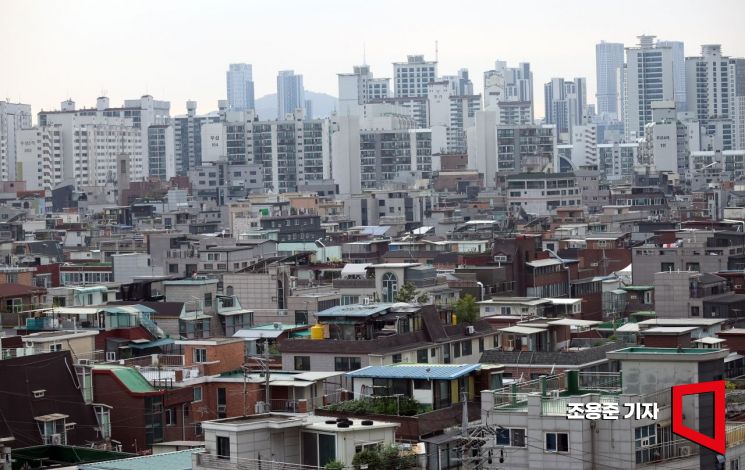 Seoul Walking Column - A residential complex in downtown Seoul where apartments and houses coexist. Photo by Yongjun Cho jun21@
The nationwide monthly rent price index rose by 0.10%, though the rate of increase slowed by 0.02 percentage points compared to the previous month. Both Seoul (0.18% to 0.10%) and the metropolitan area (0.21% to 0.15%) saw increases, but with reduced growth rates. In contrast, provincial areas saw an increase in the rate of growth from 0.03% to 0.05%.
A Korea Real Estate Board official stated, "In Seoul, monthly rent demand continues mainly in preferred complexes with good residential conditions such as school districts and mid- to small-sized units." Notably, apartment monthly rents rose by 0.12% in Seoul and 0.17% in the metropolitan area, showing higher growth rates compared to other housing types.
© The Asia Business Daily(www.asiae.co.kr). All rights reserved.














